

Hi, Imaginauts! Thanks for stopping by for another helping of sci-fi nostalgia. Today, I invite you to step into the mesmerizing realm of Paul Lehr, a visionary illustrator who transformed the landscape of science fiction and fantasy art. Born in 1930, Lehr’s artistic journey began at the prestigious Pratt Institute, where he honed his skills under the guidance of renowned mentors. Little did he know that his unique style would soon captivate the imaginations of readers worldwide, making him an icon in the realm of speculative fiction.
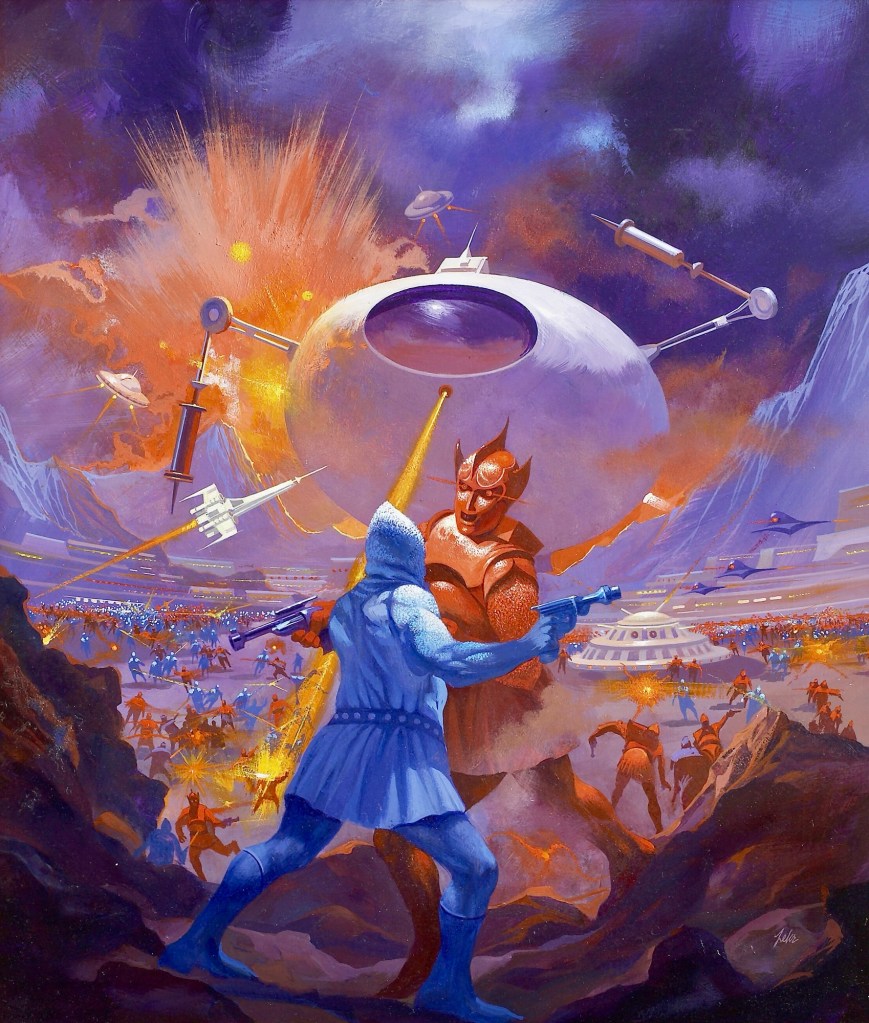
The Birth of a Surrealistic Master
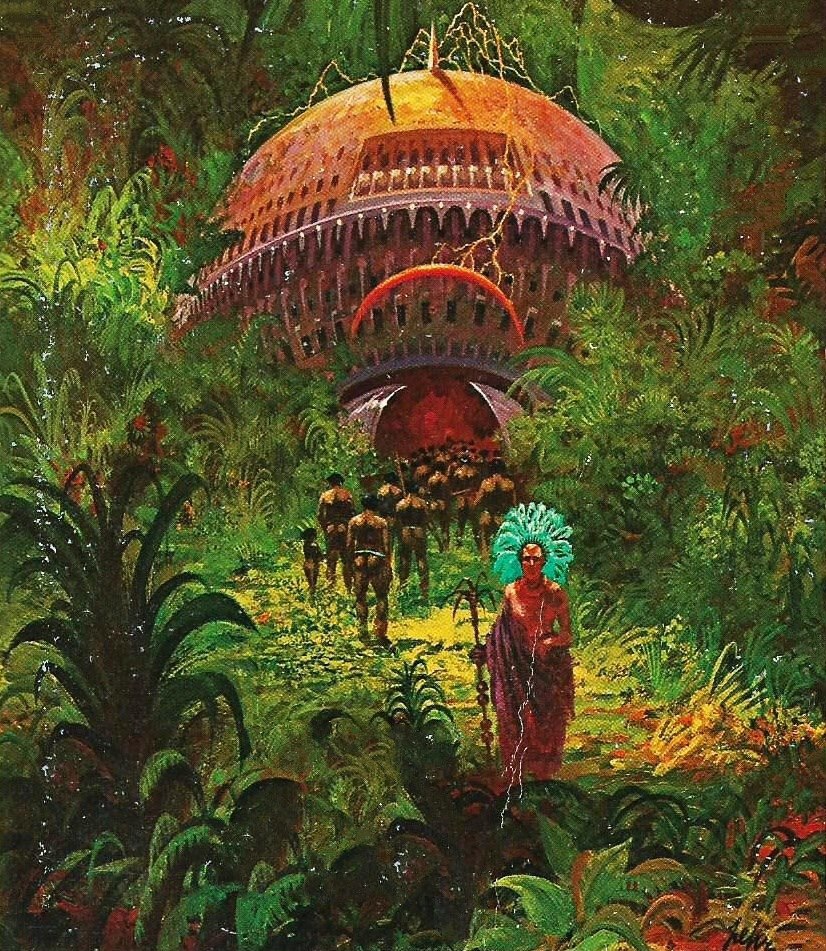
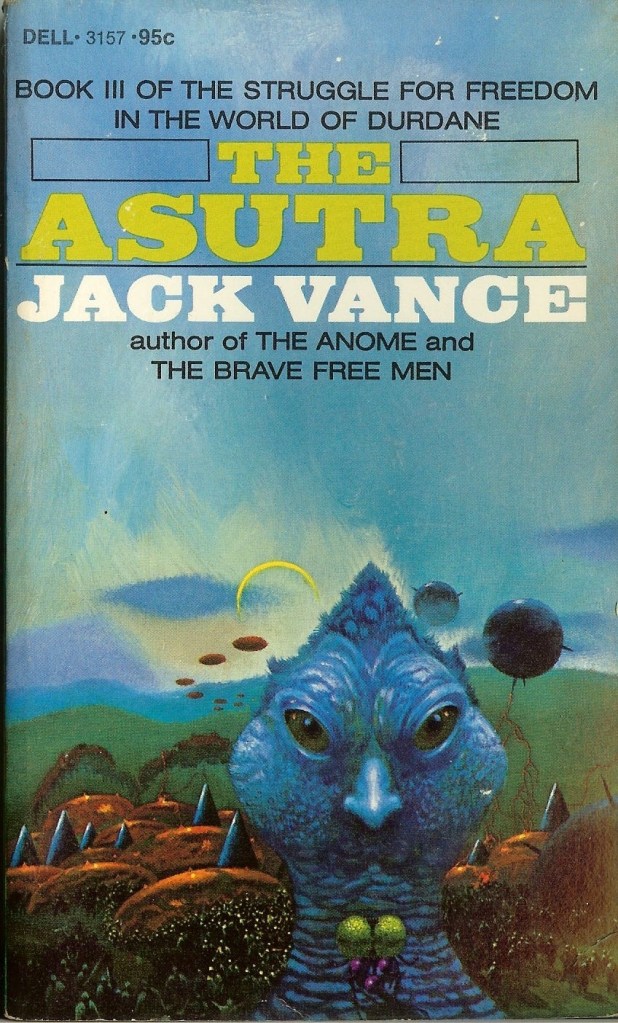
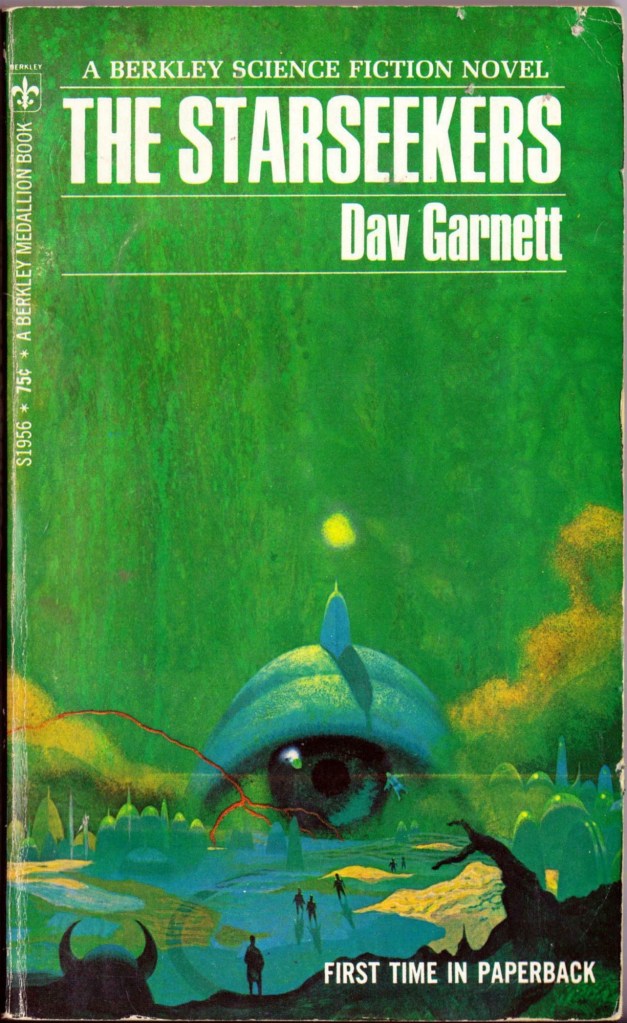
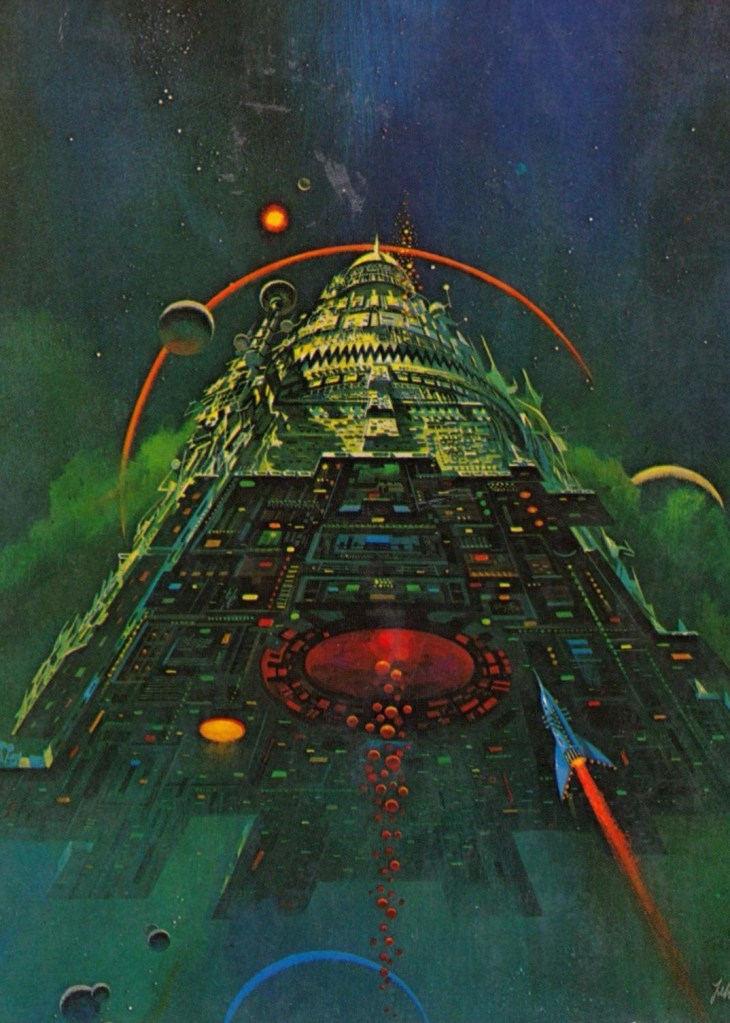
As Lehr’s career took flight, he found himself gravitating towards the surreal and abstract. Inspired by the works of Richard Powers, Lehr began to infuse his art with a touch of the otherworldly. His paintings became atmospheric masterpieces, built around saturated colors and harmonies that evoked the very essence of science fiction. Gone were the days of foregrounded figures; instead, Lehr’s landscapes were dominated by gargantuan egg-like structures and spherical objects, dwarfing the human presence.
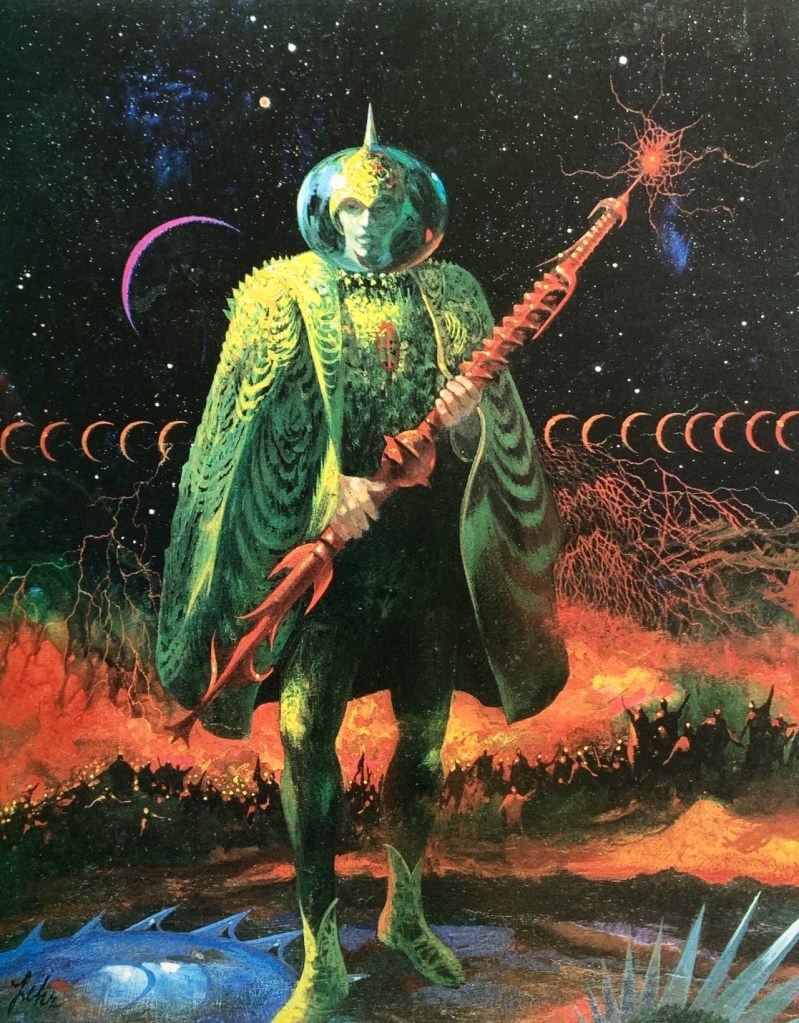
Crafting Iconic Book Covers
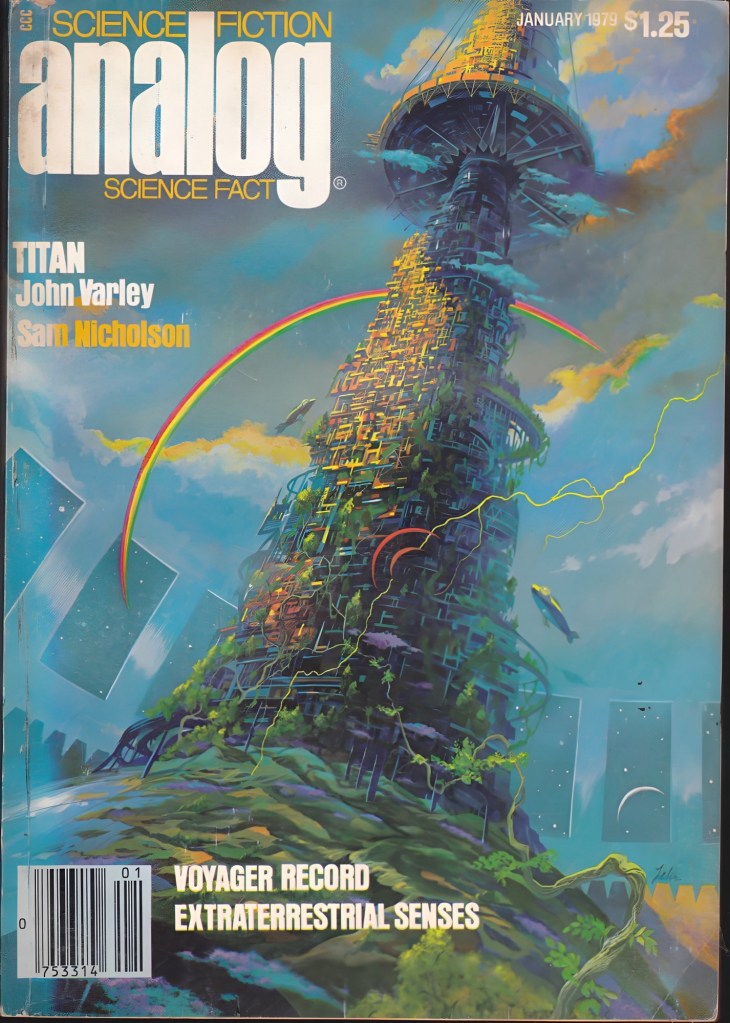
Lehr’s distinctive style soon caught the attention of publishers, and he found himself crafting covers for literary giants such as Robert A. Heinlein, Arthur C. Clarke, Ray Bradbury, Isaac Asimov, and Frank Herbert. His artwork graced the pages of countless science fiction and fantasy novels, as well as non-genre publications like Life, Time, and Playboy. Each cover was a testament to Lehr’s unparalleled ability to capture the imagination and transport readers to distant worlds.
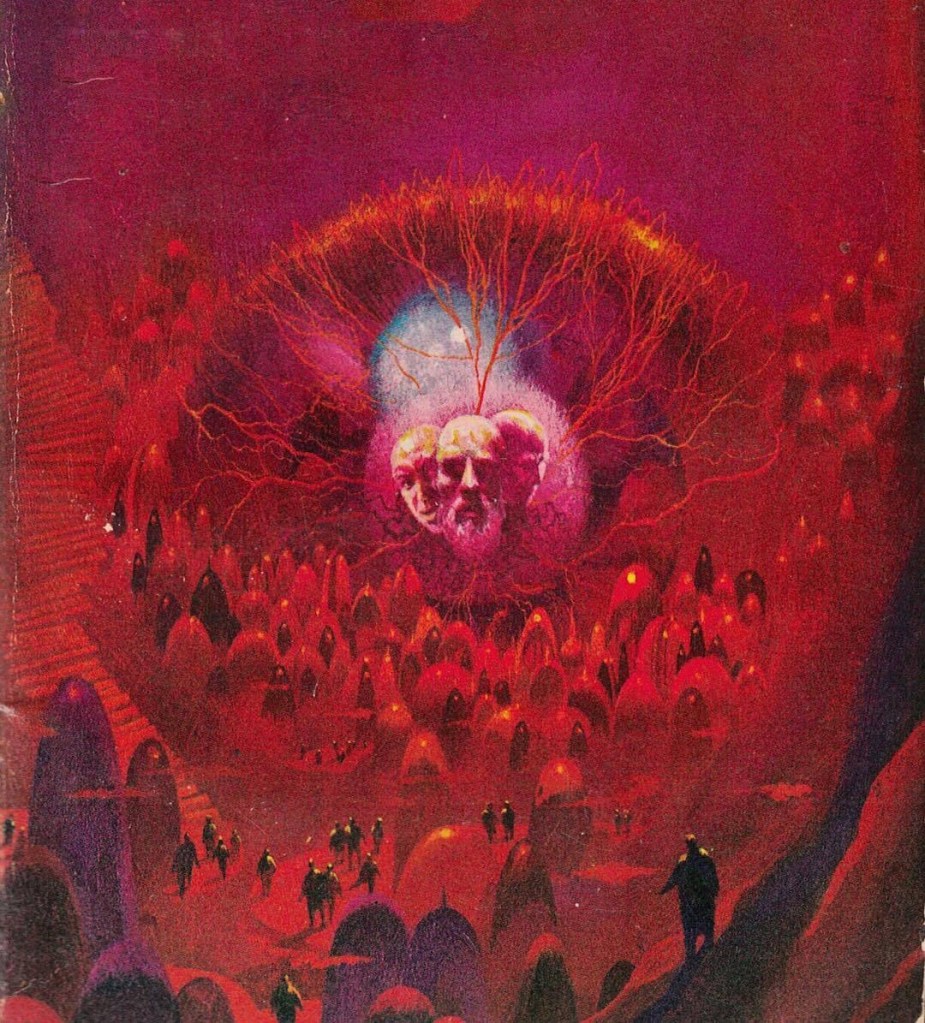
The Surreal ’70s: Lehr’s Golden Age
The 1970s marked a golden era for science fiction art, and Paul Lehr was at the forefront of this visual revolution. Along with contemporaries like Richard Powers and John Schoenherr, Lehr helped define the abstract style that would become synonymous with the decade. His paintings were a kaleidoscope of vibrant acrylics and surrealistic elements, creating a visual language that spoke to the heart of the genre. It was during this time that Lehr’s influence on the field of science fiction illustration became undeniable.
Timeless Masterpieces
Throughout his career, Paul Lehr created an astounding array of iconic works. Here are a few of his timeless works:
1. The Door Into Summer” (1959) – This cover for Robert A. Heinlein’s novel is one of Lehr’s early works and showcases his distinctive style that blends futuristic elements with a surrealistic approach.
- “The Seedling Stars” (1959) – Another significant cover by Lehr, this artwork was for a collection of science fiction stories by James Blish. It is noted for its imaginative and otherworldly visuals.
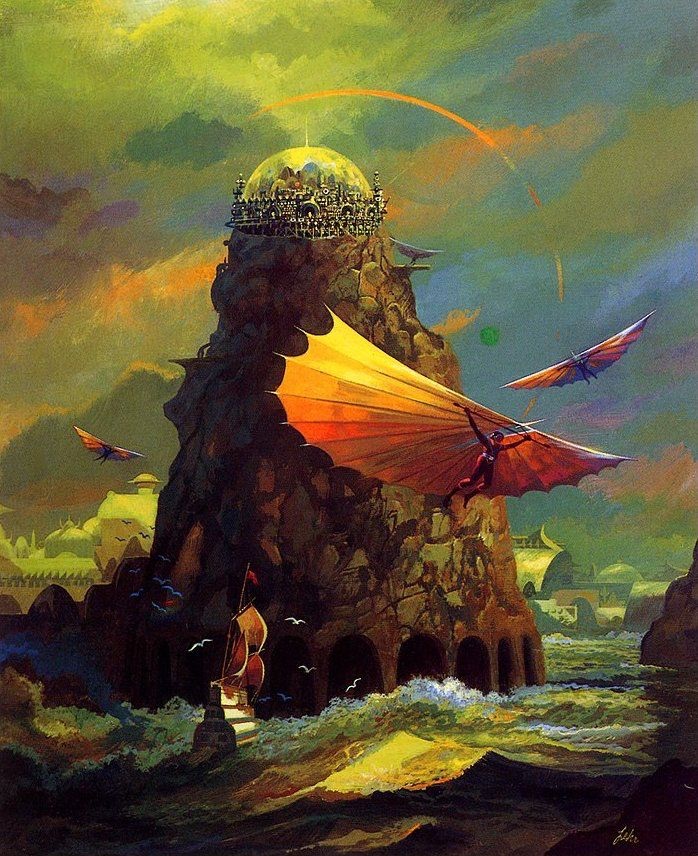
- “Island City in Green” (1988) – This later work is a prime example of Lehr’s evolution towards more saturated colors and detailed, surreal landscapes, which became a hallmark of his style in the late 1980s and 1990s.
- “A for Anything” – This artwork achieved a record price at auction, highlighting its significance and the high regard in which Lehr’s work is held among collectors and enthusiasts of science fiction art.
- Covers for H.G. Wells’s “The Food of the Gods and How It Came to Earth” (1967) and Robert Sheckley’s “Dimension of Miracles” (1968) – These covers are notable for their use of strange, egg-shaped objects and vivid, imaginative compositions that became trademarks of Lehr’s style.

These works exemplify Lehr’s contribution to the field of science fiction and fantasy illustration, showcasing his ability to evoke the essence of the genre through his unique artistic vision.
Mentoring the Next Generation
In addition to his prolific career as an illustrator, Paul Lehr was also dedicated to nurturing the next generation of artists. He served as a judge for the prestigious Illustrators of the Future Contest from its inaugural year until his passing. This contest, established by L. Ron Hubbard, aims to discover and promote talented new illustrators in the science fiction and fantasy genres. Lehr’s involvement in the contest showcased his commitment to fostering young talent and ensuring the continuity of the art form he so deeply cherished.

The Smithsonian Connection
Paul Lehr’s influence extended beyond the realm of book covers and into the world of scientific illustration. In a remarkable feat, his double-page painting of the first moon landing appeared in the Saturday Evening Post’s August 8, 1959 issue, a full decade before the historic event took place. This prescient work, along with two other original oil paintings by Lehr, now resides in the permanent collection of the National Air and Space Museum at the Smithsonian Institute in Washington, D.C., cementing his place in the annals of space exploration art.
Lehr’s Enduring Influence
The impact of Paul Lehr’s work on the science fiction and fantasy genres is immeasurable. His covers not only graced the works of literary luminaries but also helped shape the visual identity of the genres themselves. Lehr’s art has been extensively documented and celebrated in various art history books, such as Vincent Di Fate’s “Infinite Worlds,” which features Lehr’s work on the jacket cover. This recognition is a testament to the enduring nature of his contributions and the high regard in which he is held by the art community.

The Paul Lehr Estate
Although Paul Lehr may no longer be with us, his legacy is being preserved and promoted through the efforts of the Paul Lehr Estate. This dedicated organization works tirelessly to ensure that Lehr’s artwork continues to be seen, appreciated, and studied by new generations of fans and aspiring artists alike. Through exhibitions, publications, and online resources, the Paul Lehr Estate keeps the spirit of this visionary artist alive, ensuring that his impact on the world of science fiction and fantasy illustration will never be forgotten.

Lehr’s Philosophy
One of the most striking aspects of Paul Lehr’s career was his unwavering commitment to his unique artistic vision. He once famously stated, “Every artist should follow their own star.” This philosophy permeated every aspect of his work, from his bold use of color to his surrealistic compositions. Lehr’s art was a reflection of his inner world, a testament to the power of staying true to one’s creative instincts. This message continues to resonate with artists today, serving as a reminder that authenticity and originality are the keys to creating truly memorable and impactful art.
Paul Lehr’s contributions to the world of science fiction and fantasy illustration extend far beyond his individual works. Through his mentorship, his presence in prestigious collections, and his enduring influence on the genre, Lehr has left an indelible mark on the art world. As we continue to explore the fantastical realms he so vividly brought to life, we are reminded of the power of art to inspire, to challenge, and to transport us to places beyond our wildest dreams.
A Legacy That Endures
Although Paul Lehr passed away in 1998, his legacy lives on through the countless artists he inspired and the indelible mark he left on the world of science fiction and fantasy illustration. His evolution from realism to surrealism serves as a testament to his artistic journey and the impact he had on the visual language of the genre. Today, Lehr’s work is celebrated in art history books and online, ensuring that future generations will continue to be captivated by his fantastical visions.
Final Thoughts
Paul Lehr was more than just an illustrator; he was a visionary who transformed the way we perceive science fiction and fantasy art. Through his surrealistic masterpieces, he transported us to worlds beyond our wildest dreams, leaving an indelible mark on the genre. As we look back on his remarkable career, we cannot help but be inspired by the boundless creativity and imagination that fueled his work. In the end, Paul Lehr’s legacy serves as a reminder of the power of art to transcend reality and take us on journeys we never thought possible.


Discover more from Fear Planet
Subscribe to get the latest posts sent to your email.

Comments are closed.