

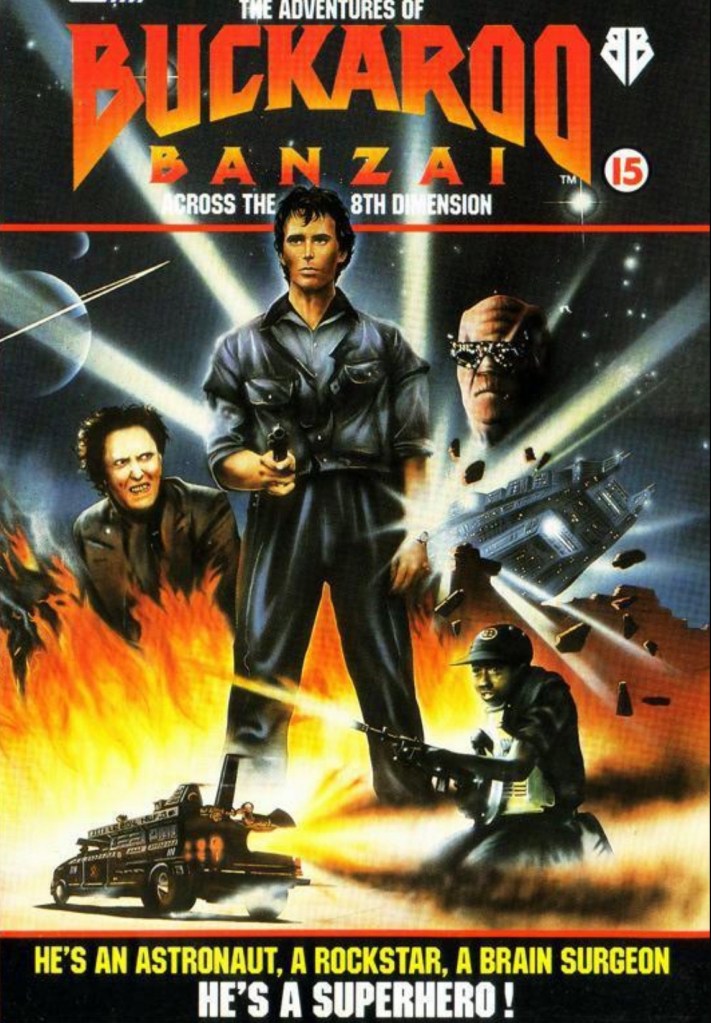
He’s an astronaut, a rock star, a brain surgeon… he’s a superhero!
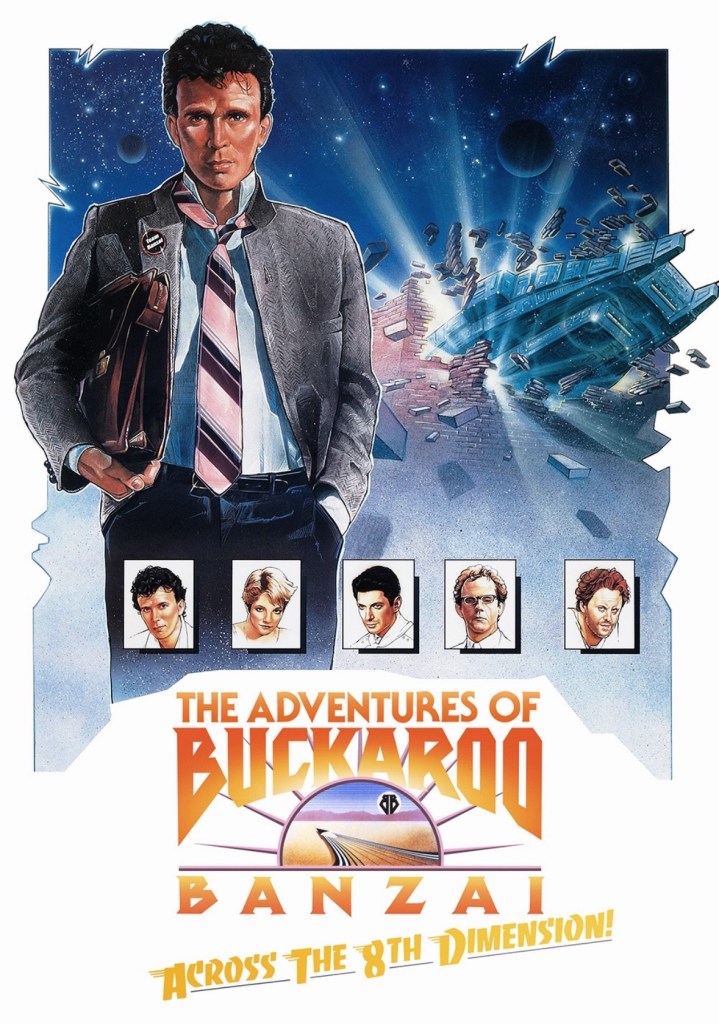
In my personal pantheon of 1980s nostalgic sci-fi films, few flicks stand out quite like “The Adventures of Buckaroo Banzai Across the 8th Dimension.” (A convoluted title, I know). And because I’m prone to the odd bit of nostalgia and sentimental rambling, I’m going to share my thoughts on this unsung masterpiece with you all.
This 1984 cult classic, helmed by W.D. Richter and penned by Earl Mac Rauch, continues to perplex, delight, and inspire me four decades after its release. At its core, it’s a film that refuses to be pigeonholed, blending genres with gleeful abandon and challenging movie buffs to keep up with its frenetic pace and labyrinthine plot.
So what more excuses do you need? Join Fear Planet as we leap headfirst into the weird and wonderful world of Buckaroo Banzai.
A Hero for All Seasons
At the center of this cinematic cyclone is Dr. Buckaroo Banzai himself, played with understated charm by Peter Weller. Banzai is a character that feels like he was dreamed up during a particularly vivid fever dream – a neurosurgeon, quantum physicist, test pilot, and rock star all rolled into one impossibly cool package. It’s a testament to Weller’s performance that Banzai never feels like a caricature, despite the outlandish nature of his character.
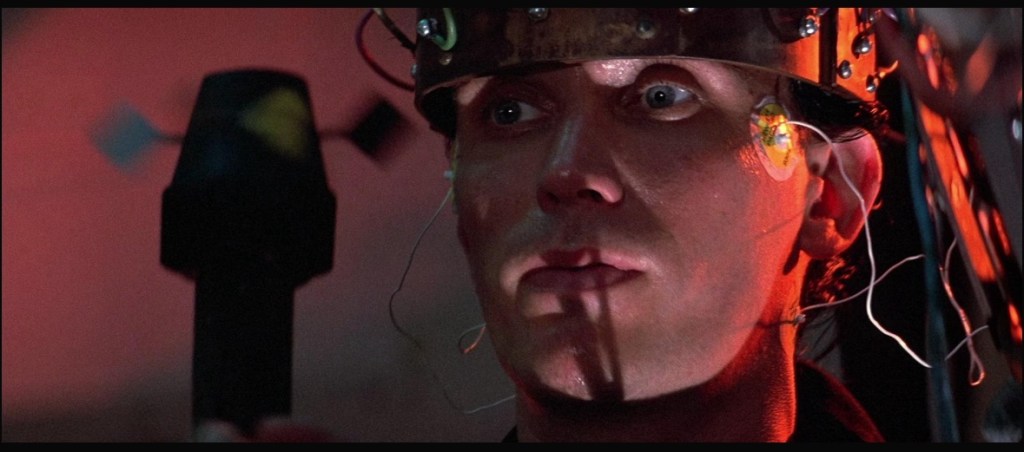
Weller imbues Banzai with a quiet confidence and intellect that grounds the film’s more outrageous elements. He’s the calm eye of the storm, a fixed point around which the chaos of interdimensional alien invasions and rock concerts can swirl. It’s a delicate balancing act, and Weller pulls it off with aplomb.
A Plot That Defies Description
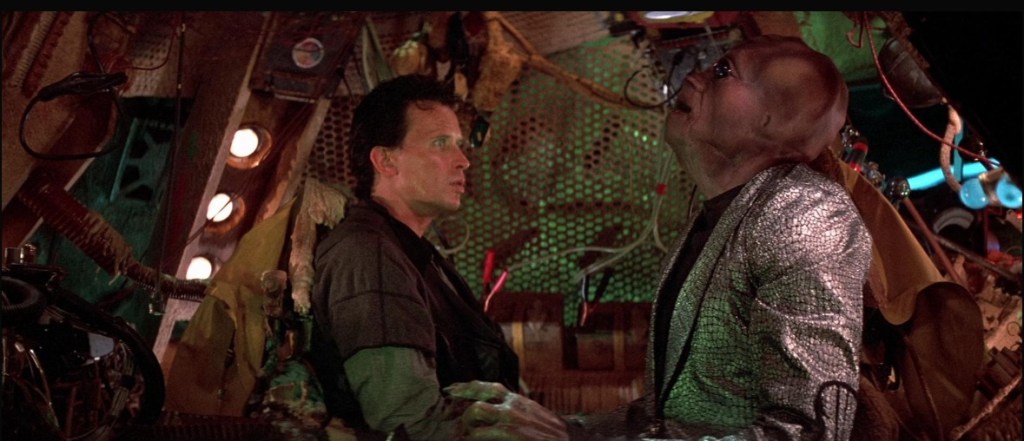
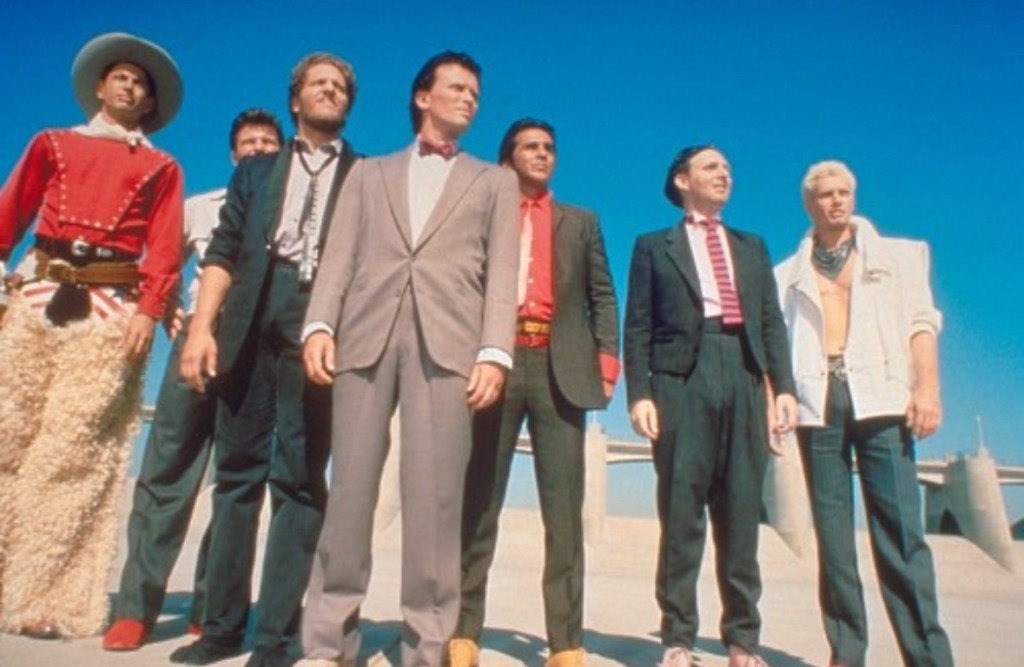
Trying to summarize the plot of “Buckaroo Banzai” is like attempting to nail jelly to a wall – it’s a messy, frustrating endeavor that’s likely to leave you questioning your life choices. On the surface, it’s about Banzai and his team of genius misfits (the Hong Kong Cavaliers) trying to save the world from an invasion of interdimensional aliens known as Red Lectroids. But that barely scratches the surface of the film’s narrative complexities.

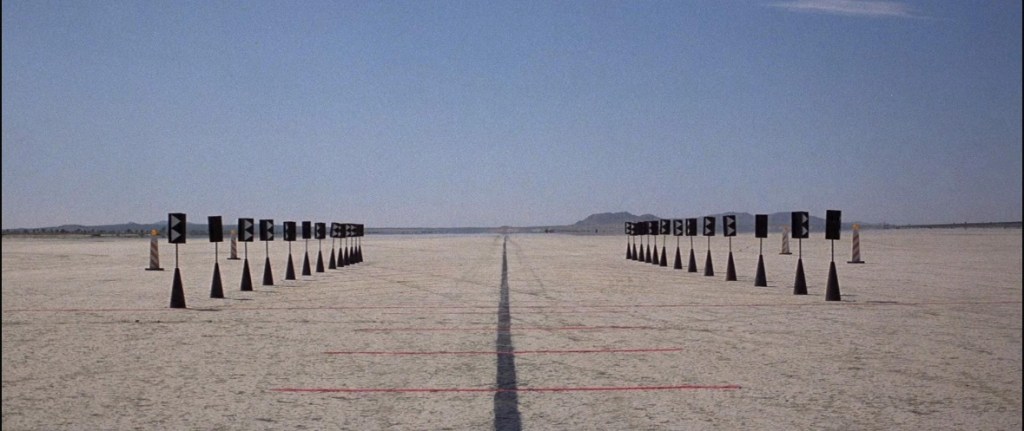
The story careens from one set piece to another with little regard for traditional narrative structure. One moment we’re watching Banzai pilot a jet car through a mountain, the next we’re embroiled in alien politics and government conspiracies. It’s a dizzying experience that can leave viewers feeling like they’ve missed a crucial piece of exposition – and maybe they have.

This density of plot is both the film’s greatest strength and its most glaring weakness. For those willing to surrender to its internal logic, “Buckaroo Banzai” offers a rich, endlessly rewatchable experience. Each viewing reveals new details and connections. However, for the uninitiated, it can be an exercise in frustration, a jumbled mess of ideas that never quite coalesce into a coherent whole.
A Cast of Eccentric Characters
While Weller’s Banzai anchors the film, it’s the supporting cast that truly brings the world to life. John Lithgow chews the scenery with gusto as the unhinged Dr. Emilio Lizardo, a scientist possessed by an alien consciousness. His performance is so gloriously over-the-top that it threatens to destabilize the entire film, yet somehow it works within the context of this bizarre universe.

Jeff Goldblum, in an early role, brings his trademark nervous energy to New Jersey, the newest member of Banzai’s team. Ellen Barkin plays Penny Priddy, Banzai’s love interest, with a mix of vulnerability and strength that adds emotional depth to the proceedings. And let’s not forget Christopher Lloyd as John Bigbooté, proving that his comedic talents extend far beyond Doc Brown.
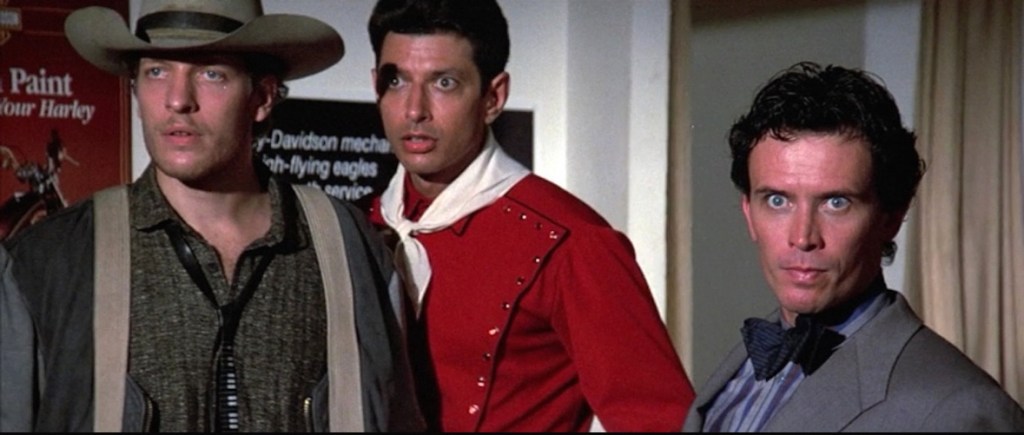
Each character feels like they’ve stepped out of their own movie, bringing with them a unique energy and backstory. It’s a credit to Richter’s direction that these disparate elements come together to form a cohesive (if chaotic) whole.
Visuals That Pop
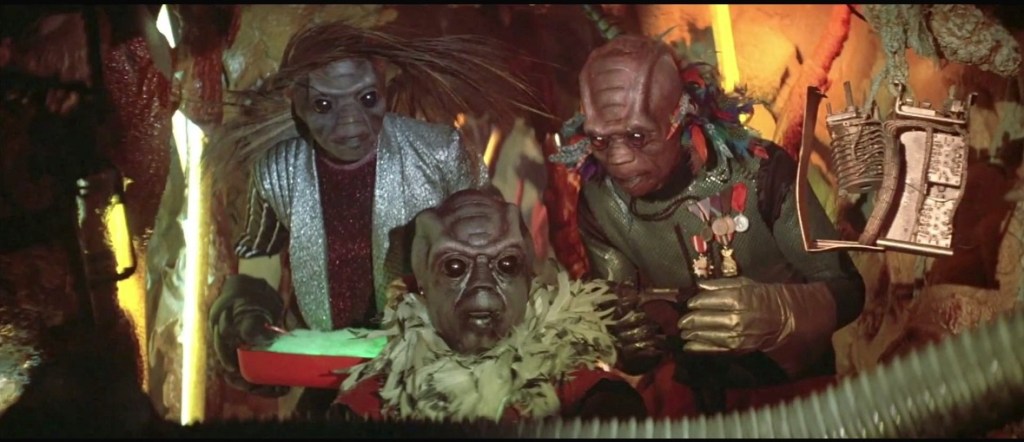
For a film made on a modest budget, “Buckaroo Banzai” boasts some impressive visual flair. The design of the Oscillation Overthruster – the device that allows Banzai to travel through solid matter – is a triumph of 80s sci-fi aesthetics, all blinking lights and retro-futuristic gizmos. The Red Lectroids, with their distinctive red eyes and bizarre mannerisms, are memorably creepy antagonists.
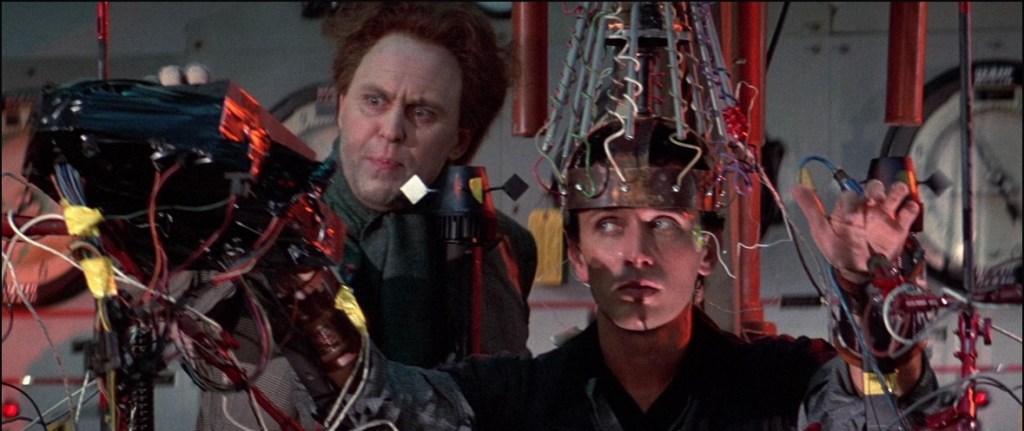
The film’s climactic battle, set in the bowels of Yoyodyne Propulsion Systems, is a riot of color and practical effects. It’s a sequence that exemplifies the film’s DIY spirit, making the most of limited resources to create something truly unique.
Themes and Subtext
Beneath its zany exterior, “Buckaroo Banzai” grapples with some weighty themes. The film touches on ideas of personal identity, the nature of reality, and the responsibilities that come with great power. Banzai himself embodies a kind of idealized Renaissance man, equally at home in a lab coat or on stage with a guitar. He represents a fusion of art and science, emotion and intellect.

The film also has something to say about teamwork and found family. The Hong Kong Cavaliers aren’t just Banzai’s backup band – they’re his support system, each bringing their own unique skills to bear in service of a greater cause. It’s a refreshingly positive portrayal of masculinity, emphasizing cooperation over competition.
Legacy and Influence
Despite its initial box office failure, “Buckaroo Banzai” has gone on to influence countless films and TV shows. Its DNA can be seen in everything from “Men in Black” to “Rick and Morty.” The film’s willingness to throw everything at the wall and see what sticks has inspired generations of creators to take risks and push boundaries.

The film’s cult following has only grown over the years, with fans dissecting every frame and line of dialogue. There’s even a long-standing inside joke among fans about a sequel, “Buckaroo Banzai Against the World Crime League,” which is referenced in the film’s end credits but was never actually made.

A Flawed Masterpiece
For all its inventiveness and charm, “Buckaroo Banzai” is not without its flaws. The breakneck pace of the plot can be exhausting, and there are moments where the film’s reach exceeds its grasp. Some of the humor falls flat, and certain plot threads are left frustratingly unresolved.
Moreover, the film’s treatment of its few female characters leaves something to be desired. While Penny Priddy is given some agency, she’s still primarily defined by her relationship to Buckaroo. The film’s cast is also overwhelmingly white and male, a common issue in 80s sci-fi but one that feels particularly glaring given the film’s otherwise progressive leanings.
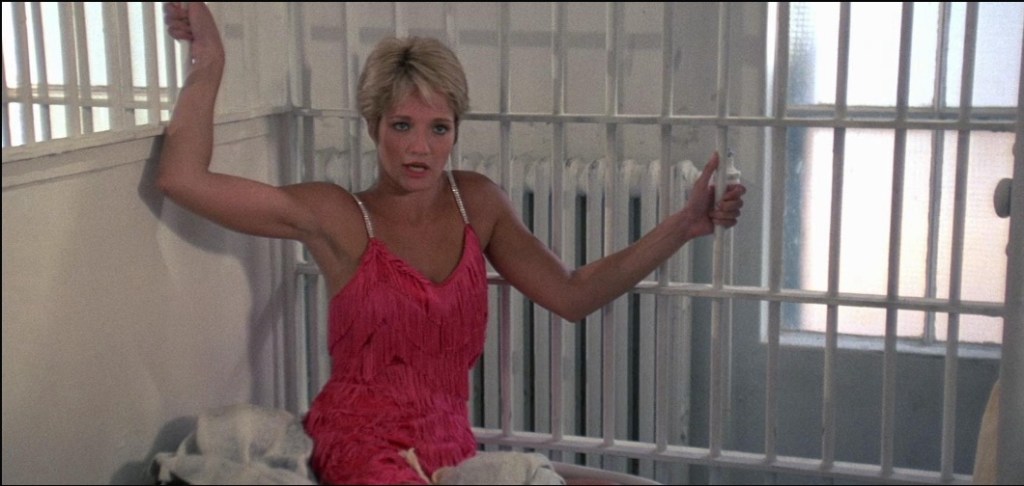
Despite these shortcomings, “The Adventures of Buckaroo Banzai Across the 8th Dimension” remains a singular cinematic experience. It’s a film that dares to be different, that revels in its own strangeness and invites viewers to do the same. In a world of increasingly homogenized blockbusters, Buckaroo Banzai stands as a testament to the power of unfettered creativity and the enduring appeal of truly original storytelling.

So the next time you’re in the mood for something completely different, why not take a trip across the 8th dimension? Just remember – no matter where you go, there you are.
Discover more from Fear Planet
Subscribe to get the latest posts sent to your email.
