
Intro: The Genius of Van Vogt
As I sit here, surrounded by my dog-eared paperbacks and the faint scent of their musty pages, I can’t help but feel a sense of awe when considering the works of A.E. Van Vogt. This Canadian-born author, with his wild imagination and penchant for the bizarre, has long been a polarizing figure in the science fiction community. Love him or loathe him, there’s no denying the profound impact he’s had on the genre we all hold dear, though.
In this overview, we’ll explore three of Van Vogt’s best works: “The World of Null-A,” “The Voyage of the Space Beagle,” and “Slan.” Each of these novels, in its own unique way, showcases Van Vogt’s ability to blend mind-melting concepts with pulse-pounding adventure. So, without further preamble, let’s head out on a trek through the labyrinthine mind of one of science fiction’s most enigmatic figures.
“The World of Null-A”: Reality Unraveled
A Philosophical Rollercoaster
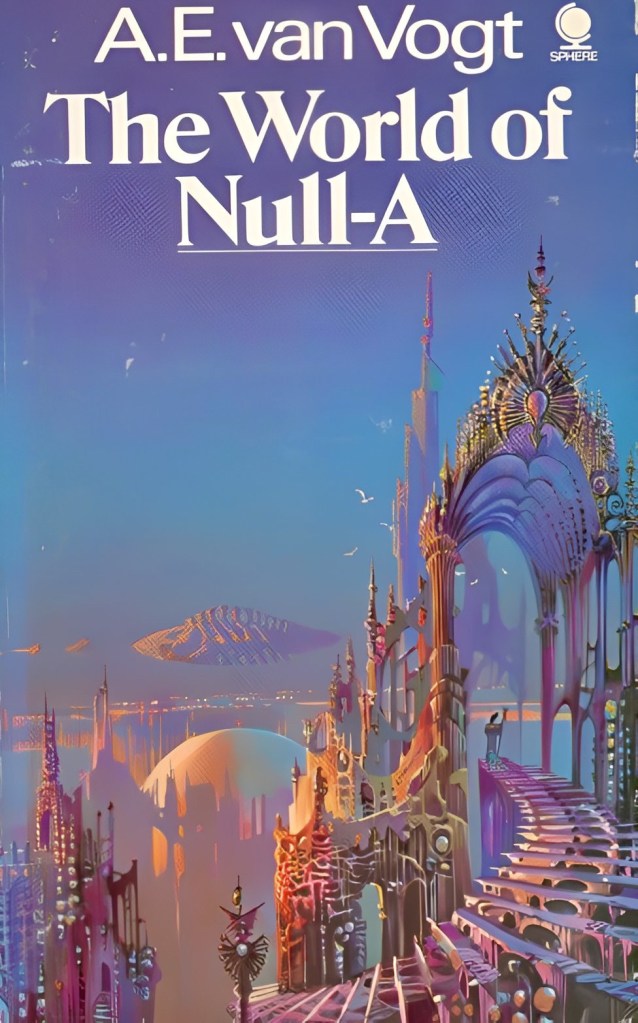
Picture this: It’s 1948, and the world is still reeling from the aftermath of World War II. Into this landscape of uncertainty steps Van Vogt with “The World of Null-A,” a novel that dares to question the very nature of reality itself. As I first cracked open this book, I remember feeling a mix of excitement and trepidation. Little did I know I was about to embark on a philosophical journey that would leave my mind reeling for days.
Gilbert Gosseyn: The Man Who Wasn’t
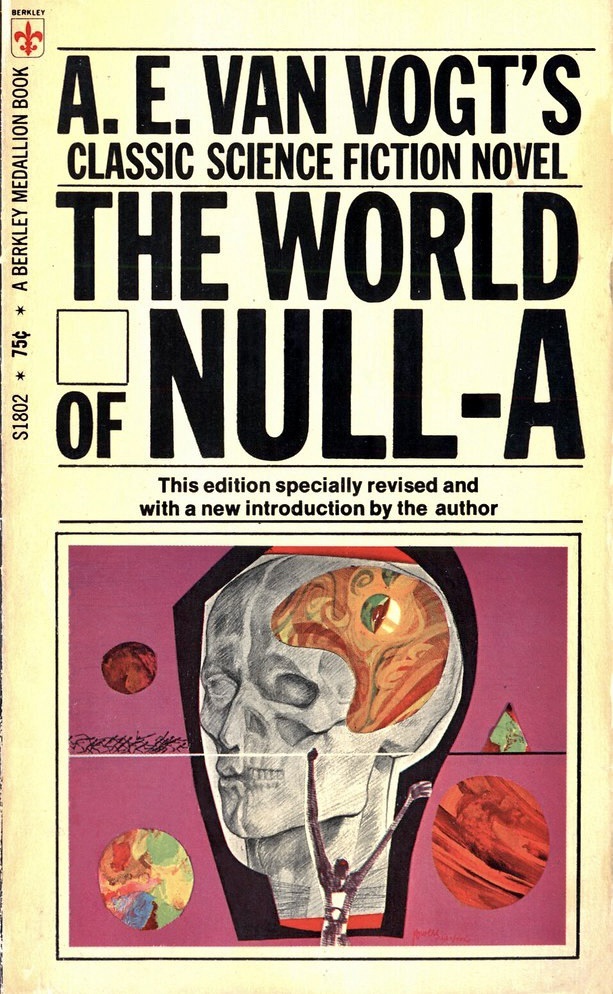
At the heart of this mind-bending tale is Gilbert Gosseyn, a protagonist who discovers that his memories are false and his identity is a fabrication. Talk about an identity crisis! As Gilbert navigates a world governed by the principles of non-Aristotelian logic (Null-A), we’re taken on a wild ride that challenges our perceptions of self and reality.
Van Vogt’s narrative style in “Null-A” is like a fever dream – disjointed, intense, and often bewildering. Critics have torn their hair out trying to make sense of it all. The infamous Damon Knight once quipped that reading Van Vogt was like “watching a sleepwalker cross a busy highway, stepping between the cars and buses with perfect calm.” Harsh? Maybe. But it captures the exhilarating unpredictability of Van Vogt’s storytelling.
The Lasting Ripples
Despite (or perhaps because of) its complexity, “The World of Null-A” has left an indelible mark on science fiction. Its exploration of identity and reality has echoed through the decades, influencing works like Philip K. Dick’s “Do Androids Dream of Electric Sheep?” and the mind-bending films of Christopher Nolan.
As a reader, I found myself alternately frustrated and fascinated by “Null-A.” It’s a book that demands multiple readings, each pass revealing new layers of meaning. It’s not an easy read, but then again, the best science fiction rarely is.
“The Voyage of the Space Beagle”: Terror in the Cosmos
A Pioneering Space Opera
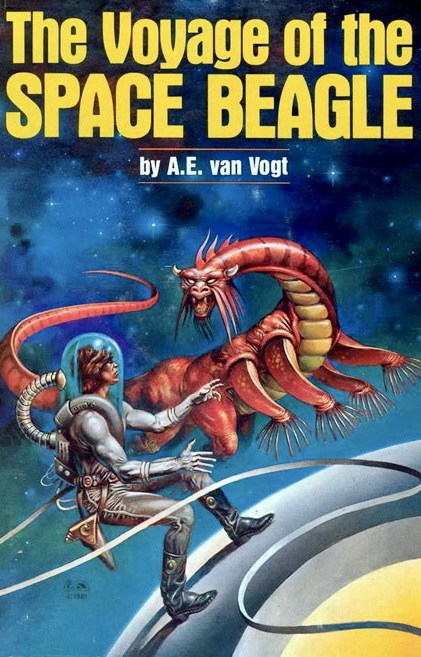
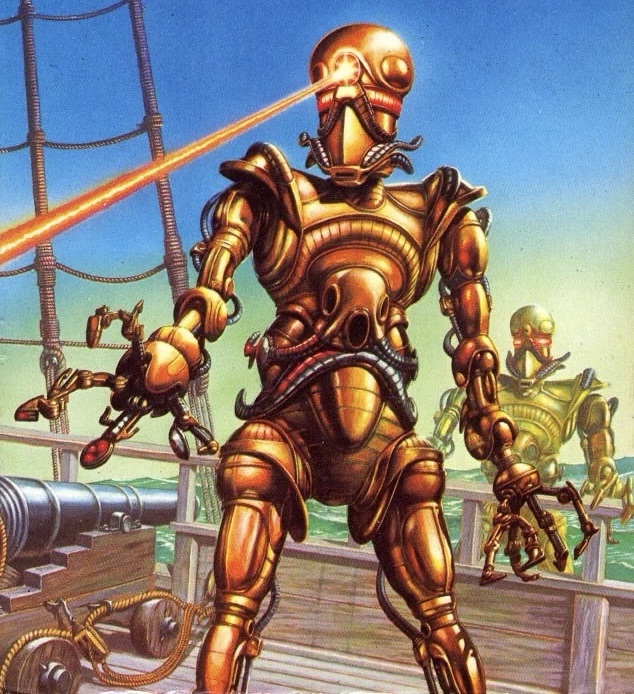
If “Null-A” is Van Vogt at his most philosophical, then “The Voyage of the Space Beagle” is the author at his most thrilling. Published in 1950, this novel is a “fix-up” of earlier stories, including the groundbreaking “Black Destroyer.” As a fan of both classic sci-fi and modern space operas, I can’t overstate the importance of this work.
Echoes in the Void
The premise is deceptively simple: a crew of explorers encounters a series of deadly alien life forms. But Van Vogt’s execution is anything but straightforward. The tension builds with each encounter, creating a sense of cosmic dread that lingers long after you’ve closed the book.
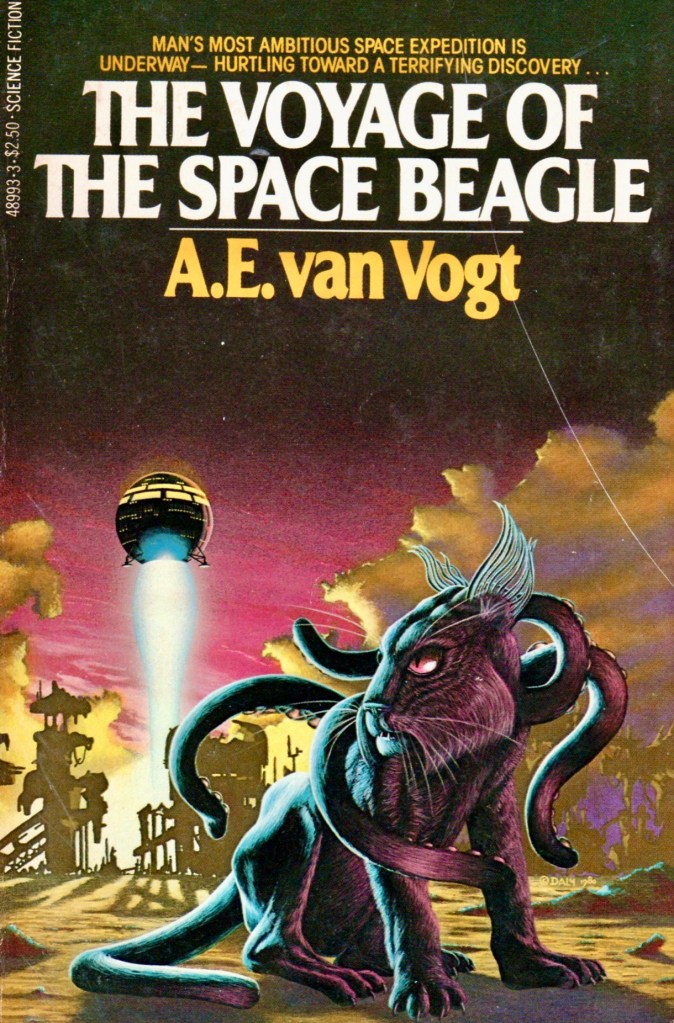
I’ll never forget the first time I read about the Coeurl, the predatory alien from “Black Destroyer.” Its description – a catlike creature with tentacles sprouting from its shoulders – sent shivers down my spine. It’s no wonder that many see the Coeurl as a precursor to the xenomorph in Ridley Scott’s “Alien.”
More Than Just Monsters
But “Space Beagle” isn’t just about alien encounters. Van Vogt uses the premise to explore themes of human nature, teamwork, and the unknown. The protagonist, Dr. Elliott Grosvenor, must use his knowledge of Nexialism (an interdisciplinary science) to save the crew. It’s a testament to Van Vogt’s imagination that he could create a fictional science that feels so plausible and necessary.
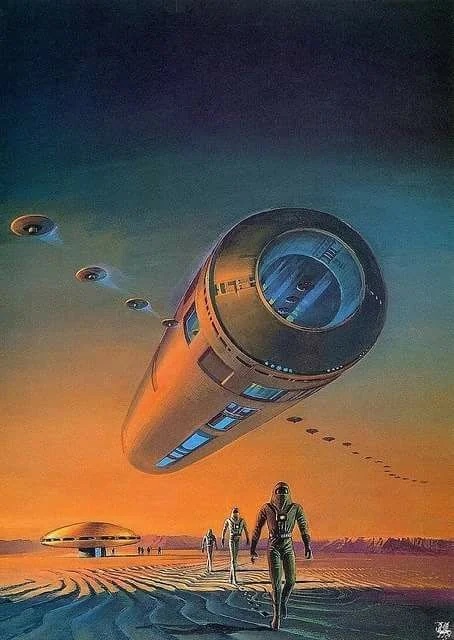
Reading “Space Beagle” today, I’m struck by how fresh it feels. Yes, some of the scientific concepts are dated, but the sense of wonder and terror at the vastness of space remains timeless. It’s a reminder of why we fell in love with science fiction in the first place.
“Slan”: An Outsider’s Anthem
A Tale of Persecution and Power
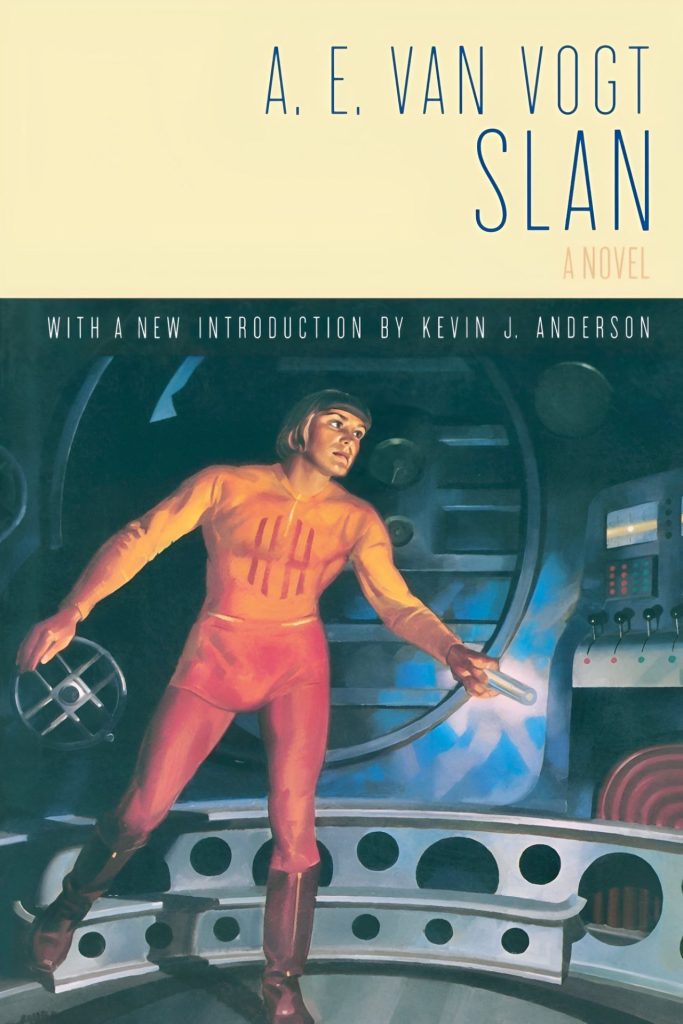
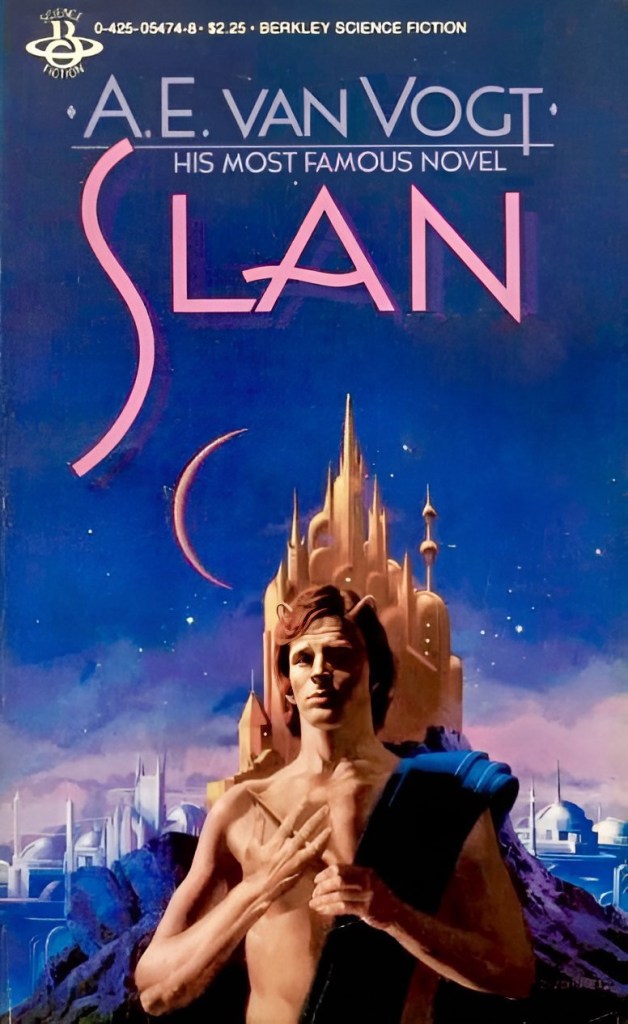
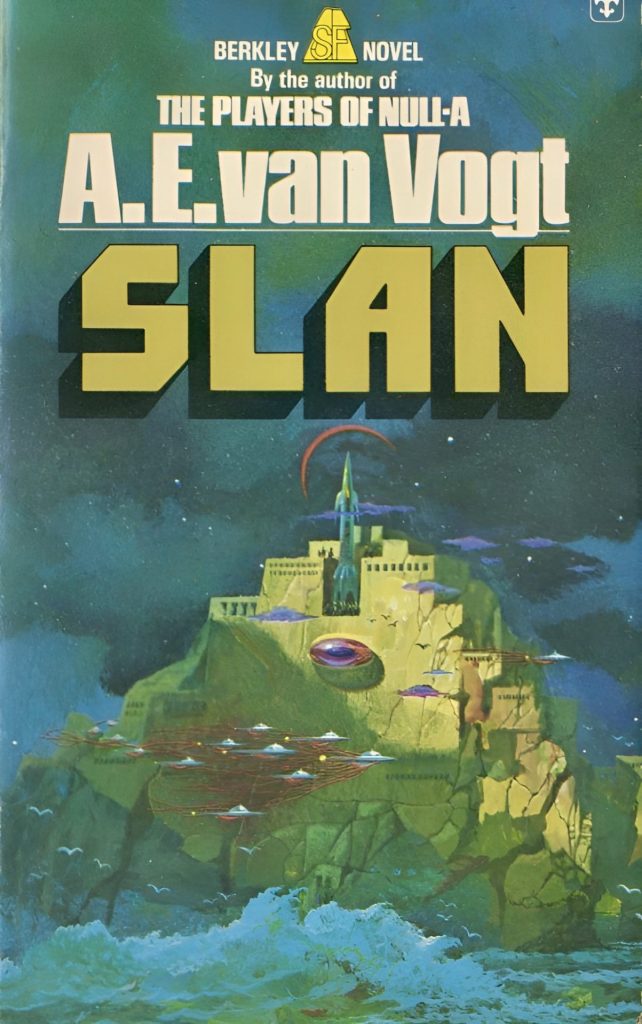
Published in 1946, “Slan” holds a special place in my heart. It’s a novel that speaks to anyone who’s ever felt like an outsider, wrapped in the trappings of a fast-paced science fiction thriller.
Jommy Cross: The Reluctant Hero
The story follows Jommy Cross, a young Slan (a genetically superior human with telepathic abilities) in a world where his kind are hunted and persecuted. Van Vogt’s portrayal of Jommy’s struggle for survival and acceptance is both heart-wrenching and inspiring.
What strikes me about “Slan” is how relevant its themes remain today. The fear and hatred directed at the Slans mirror real-world prejudices that continue to plague our society. It’s a sobering reminder that, for all our technological advancements, we still grapple with the same human flaws.
A Community United
“Slan” resonated so deeply with science fiction fans that it gave rise to the phrase “Fans are slans.” This sense of kinship among readers who felt misunderstood or ostracized is a testament to Van Vogt’s ability to tap into universal human experiences.
As I revisit “Slan” today, I’m reminded of the power of science fiction to address social issues through the lens of the fantastic. It’s not just an escape; it’s a mirror that reflects our own world back at us, allowing us to examine our prejudices and fears from a safe distance.
Coda
As I look back on these three seminal works, I’m struck by the breadth of Van Vogt’s imagination and the depth of his themes. Yes, his writing can be challenging. Yes, his plots can sometimes defy logic. But isn’t that what great science fiction should do? Challenge us, confound us, and ultimately expand our minds?
A.E. Van Vogt may have left this world in 2000, but his influence lives on. From the mind-bending realities of “The World of Null-A” to the cosmic horrors of “The Voyage of the Space Beagle” and the poignant struggles of “Slan,” his work continues to inspire and provoke.
To those who’ve never read Van Vogt, I say: take the plunge. You may not understand everything, you may not even like everything, but I guarantee you’ll come away with your mind expanded and your sense of wonder ignited.
And to my fellow Van Vogt fans, I raise a glass. Here’s to the man who dared to dream big, write wild, and leave an indelible mark on the genre we love. May his legacy continue to inspire generations of readers and writers to come.
After all, in a universe as vast and strange as ours, who’s to say we’re not all slans, sailing our own space beagles through the null-A of existence?
Discover more from Fear Planet
Subscribe to get the latest posts sent to your email.
