

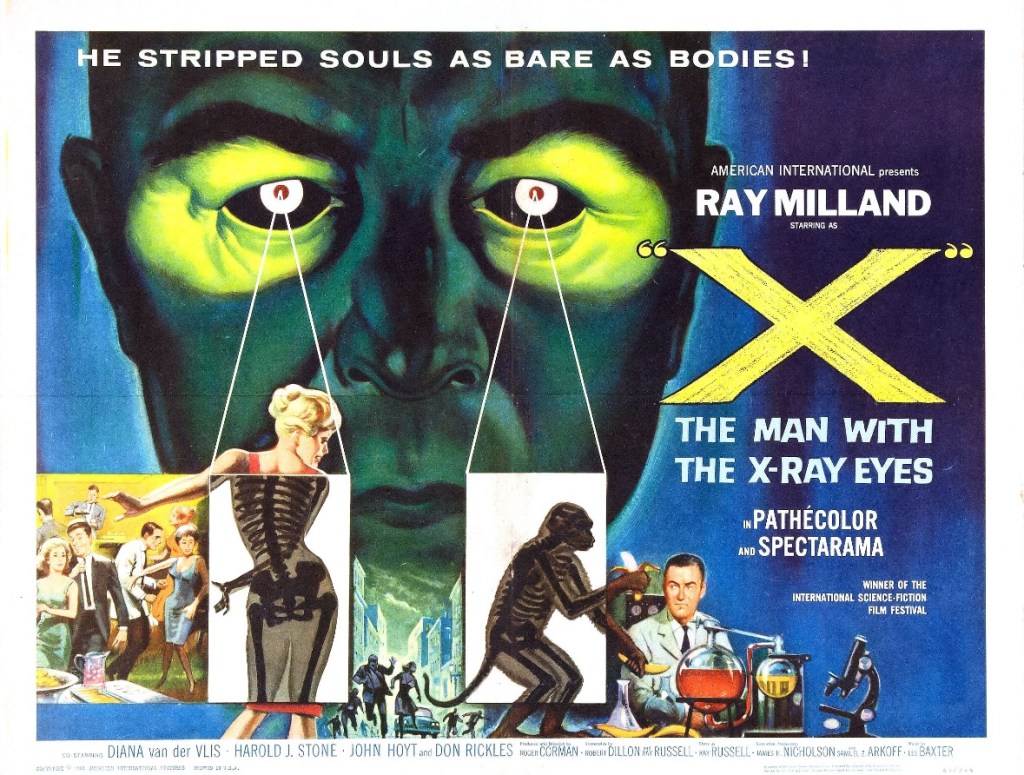
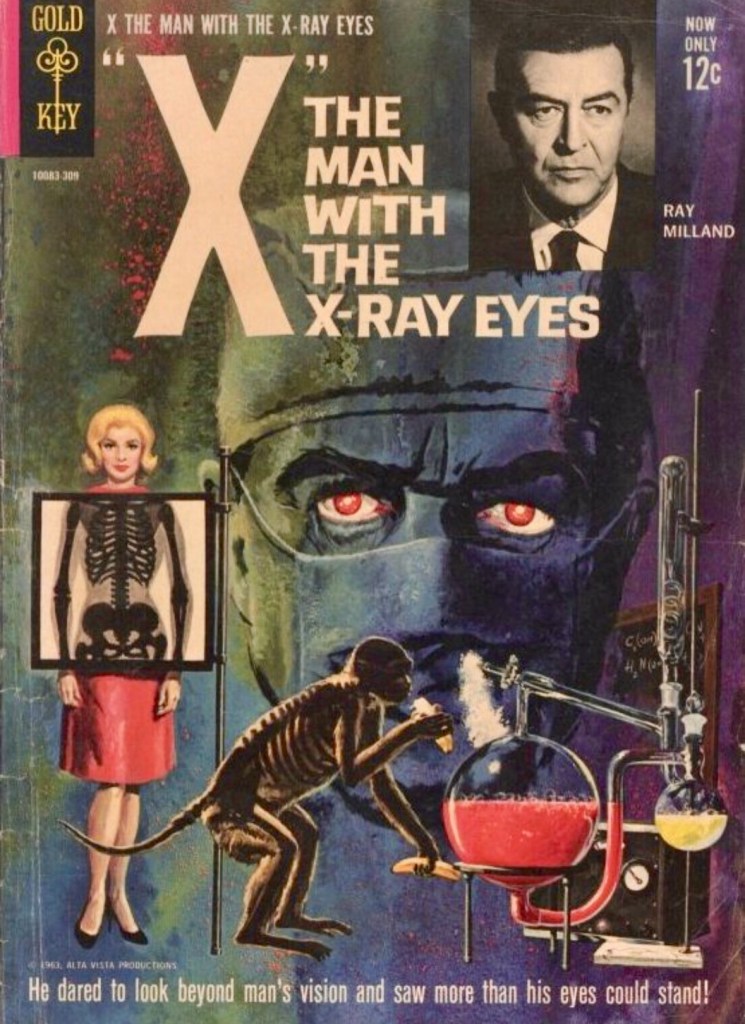
In the blasted and apocalyptic landscape of 1960s horror/sci-fi cinema, few films dare to venture as deep into the realm of cosmic horror and philosophical inquiry as Roger Corman’s X: The Man with the X-Ray Eyes (1963). While Corman might be better known for his quick-and-dirty B-movies, this gem stands as proof that sometimes the most profound cinematic experiences emerge from modest budgets and tight schedules.
Beyond the Surface: A Masterclass in Sci-Fi Horror
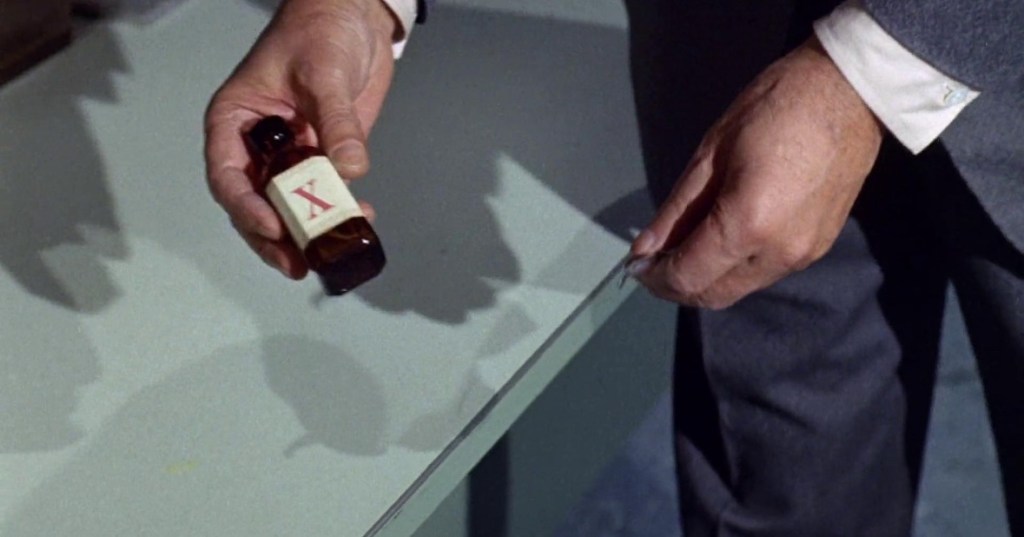
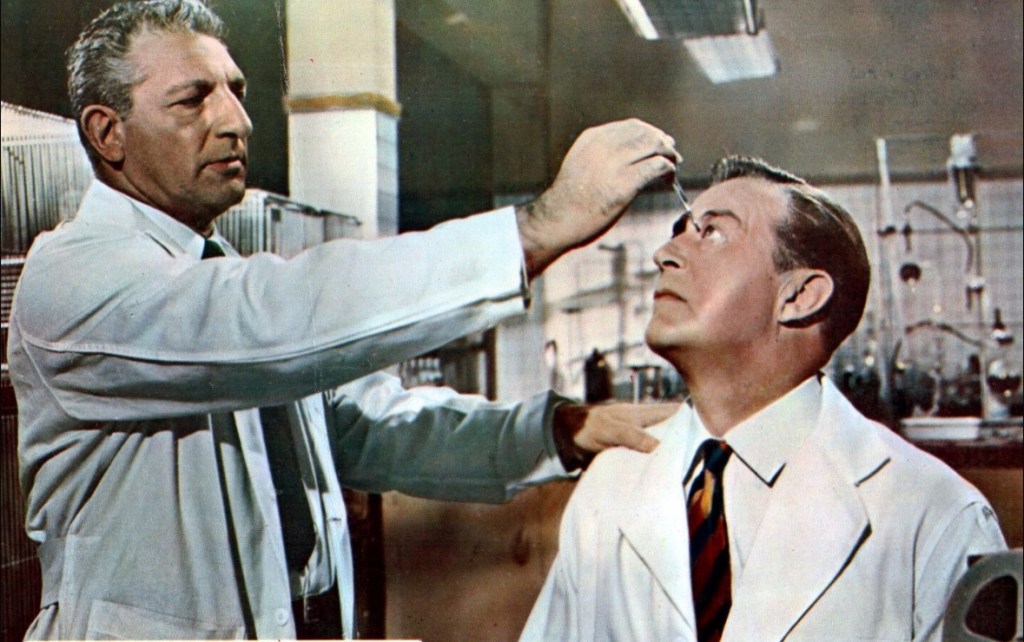
What makes X particularly fascinating is how it transforms a seemingly pulpy premise—a scientist developing x-ray vision—into a haunting meditation on the dangers of unrestricted scientific progress and the cosmic horrors that might lie just beyond our perception. Ray Milland’s Dr. James Xavier isn’t your typical mad scientist; he’s a tragic figure whose noble pursuit of knowledge leads him down a path of no return.
The Perfect Storm of Talent
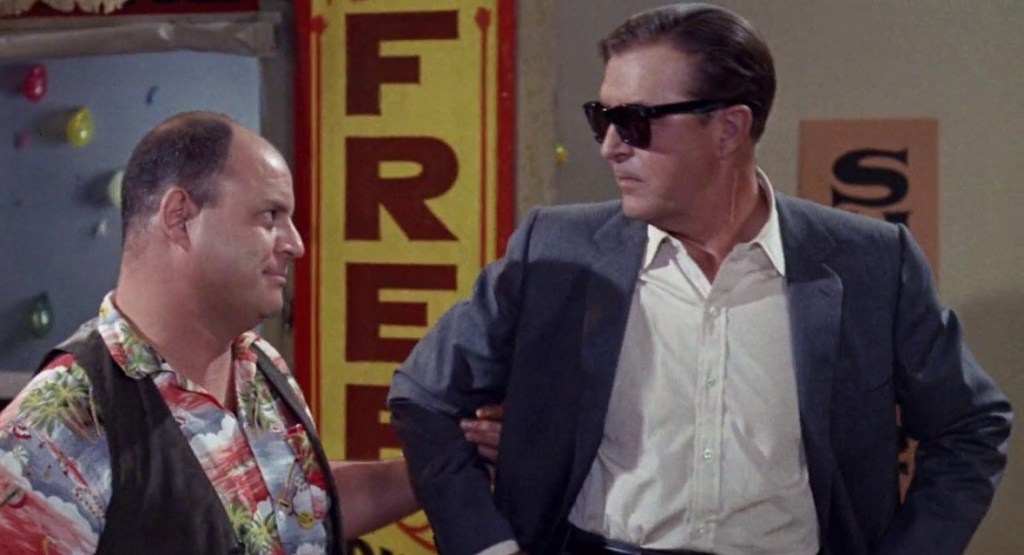
With a mere $300,000 budget and a three-week shooting schedule, Corman and his team achieved something remarkable. Ray Milland, an Oscar-winning actor, brings gravitas to Xavier that elevates the material far above its B-movie origins. Even Don Rickles, better known for his comedy, delivers a surprisingly nuanced dramatic performance as the manipulative carnival barker Crane.
A Visual Journey into Madness
The film’s special effects, while dated by today’s standards, serve their purpose brilliantly. The “Spectarama” sequences become increasingly abstract and unsettling as Xavier’s powers grow, effectively conveying the horror of seeing beyond human limitations. What could have been cheap tricks instead become powerful metaphors for Xavier’s deteriorating grip on reality.

Technical Achievements on a Shoestring
Consider these impressive accomplishments:
- Innovative visual effects created on a minimal budget
- Seamless integration of practical effects with psychological horror
- Progressive intensification of the visuals mirroring Xavier’s descent
- Effective use of color and abstraction in the “vision” sequences

Unforgettable Moments: The Film’s Most Striking Scenes
The movie delivers several sequences that burn themselves into viewers’ memory:
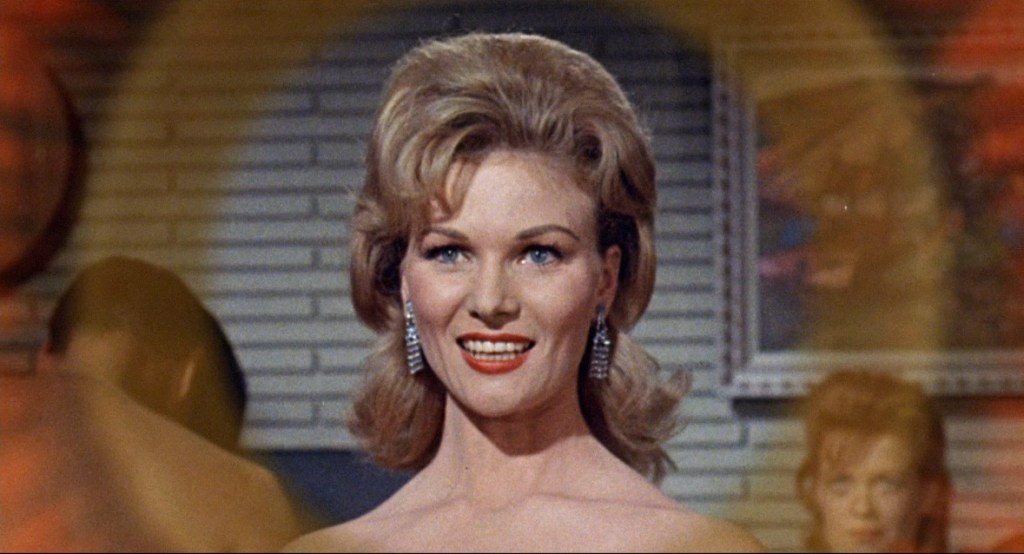
The Cocktail Party Revelation
- Xavier’s first public use of his enhanced vision
- Masterful blend of humor and growing unease
- Subtle commentary on social facades
The High-Stakes Surgery
- Demonstrates both the promise and peril of Xavier’s abilities
- Tense confrontation with medical establishment
- Pivotal moment in Xavier’s moral descent
The Carnival Sequence
- Don Rickles’ scene-stealing performance
- Perfect metaphor for Xavier’s degradation
- Dark commentary on exploitation
The Las Vegas Downfall
- Brilliant use of neon-lit setting
- Tension-filled casino sequences
- Xavier’s powers leading to his ultimate undoing
The Legendary Revival Tent Finale
- Perhaps the most discussed ending in 1960s sci-fi
- Shocking culmination of Xavier’s journey
- Perfect merger of scientific and religious themes

Themes That Resonate Today
What makes X: The Man with the X-Ray Eyes particularly relevant in our current era is its exploration of themes that continue to resonate:
The Price of Progress
- The ethical boundaries of scientific research
- Personal cost of breakthrough discoveries
- Responsibility of scientists to society
The Nature of Perception
- Limitations of human understanding
- Reality versus observable truth
- The psychological impact of expanded consciousness
The Burden of Knowledge
- Isolation of knowing too much
- Impossibility of returning to ignorance
- The weight of unique responsibility

Why It Still Matters
In our age of CRISPR, artificial intelligence, and quantum computing, X‘s warnings about the dangers of pushing beyond human limitations feel more relevant than ever. The film suggests that some knowledge might be too much for human minds to bear—a notion that grows more pertinent as our technological capabilities expand.
Legacy and Influence
The film’s DNA can be found in countless later works exploring enhanced human perception and the psychological toll of supernatural abilities. Its influence extends beyond horror and science fiction into philosophical cinema, proving that genre films can tackle profound questions while remaining entertaining.
Modern Interpretations
Contemporary viewers might appreciate:
- The practical effects over CGI
- The measured pace of psychological deterioration
- The emphasis on character over spectacle
- The blending of science fiction with cosmic horror
Technical Mastery Within Constraints
Corman’s achievement becomes even more impressive considering the film’s limitations:
- Three-week shooting schedule
- $300,000 budget
- Practical effects only
- Limited locations
Yet these constraints forced creative solutions that often proved more effective than expensive alternatives might have been.
Final Verdict
X: The Man with the X-Ray Eyes stands as one of Roger Corman’s finest achievements—a thought-provoking exploration of scientific hubris wrapped in the trappings of a science fiction horror film. While some of its effects may appear dated, its core themes and psychological horror remain as potent as ever.
For modern viewers, the film offers a masterclass in how to create meaningful science fiction on a budget. It proves that compelling ideas and strong performances trump expensive special effects every time. In an era of CGI-heavy blockbusters, its emphasis on psychological horror and philosophical questions feels refreshingly mature.
Ray Milland’s performance alone makes the film worth watching, but it’s the way X builds from relatively mundane beginnings to cosmic horror that truly impresses. The film’s final moments, with Xavier’s famous encounter at the revival tent, remain among the most chilling in science fiction cinema.
Whether you’re a fan of classic science fiction, psychological horror, or thoughtful explorations of human hubris, X: The Man with the X-Ray Eyes deserves a place on your must-watch list. It’s a reminder that sometimes the most effective horror comes not from what we can see, but from the terrifying implications of seeing too much.

Discover more from Fear Planet
Subscribe to get the latest posts sent to your email.

Comments are closed.