
Intro: The Manga Visionary
When discussing science fiction manga and anime, one name deserves more time in the spotlight, at least among Western audiences, and that is the name Masamune Shirow. Born Masanori Ota in Kobe, Japan, on November 23, 1961, Shirow blazed a trail through the sci-fi landscape, creating some of the most iconic works in Japanese pop culture. His intricate stories, visionary worlds, and unforgettable characters broke new ground and raised the bar for what manga and anime could achieve. If you’re a fan of jaw-dropping art, thought-provoking themes, and badass female leads, you’ve probably already encountered Masamune Shirow’s works—or you’re about to add them all to your must-read list!
Let’s take a look at Shirow’s legacy, explore his standout creations, and talk about why his manga and their anime adaptations are essential for any sci-fi fan.
The Man Behind the Pen Name
First, let’s talk about the guy himself. Masamune Shirow isn’t the creator’s real name—it’s a pen name inspired by the legendary Japanese swordsmith Masamune. It’s fitting too, since Shirow’s works are just as sharp, precise, and enduring as a finely crafted blade.
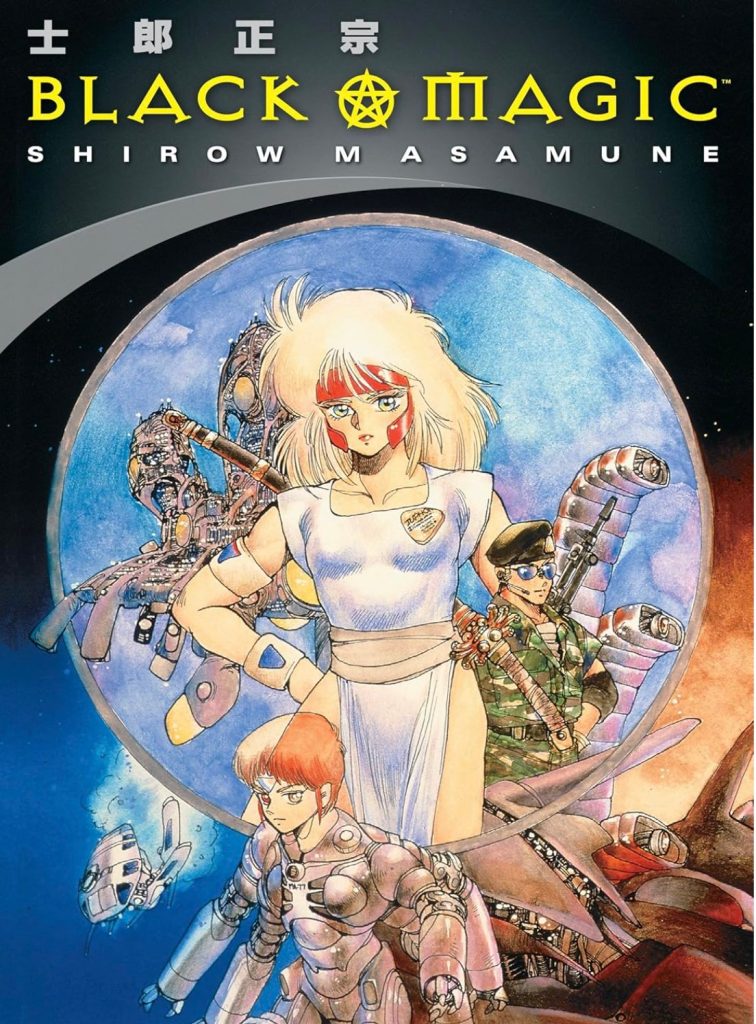
Shirow studied oil painting at Osaka University of Arts, but it wasn’t long before his passion for manga took over. His first foray into the field was a self-published dōjinshi called Black Magic in 1983. That piece caught the attention of publishers and launched him into the professional manga world. While Black Magic is a bit rough around the edges, it’s fascinating to see the seeds of Shirow’s genius begin to sprout.
Key Works: Where to Start with Masamune Shirow
Shirow’s catalog is stacked with timeless classics, but three works stand out as his masterpieces: Appleseed, Dominion: Tank Police, and, of course, Ghost in the Shell. Let’s discuss what makes each of these works unforgettable, both in manga and anime form.
1. Appleseed (1985-1989)
“Humans live alongside androids, and technology holds both salvation and peril.”
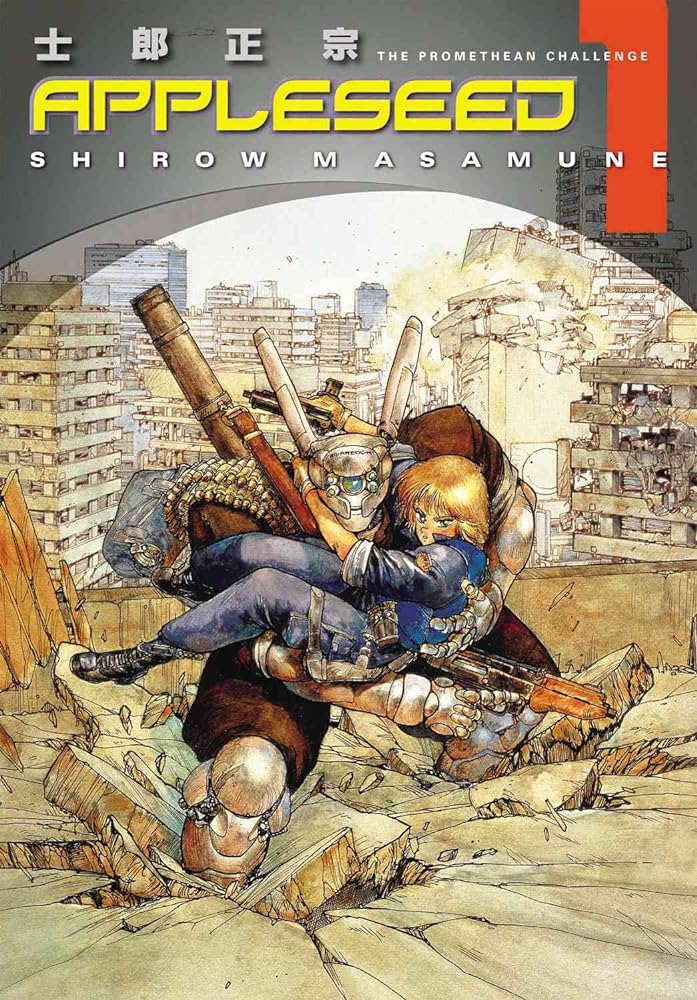
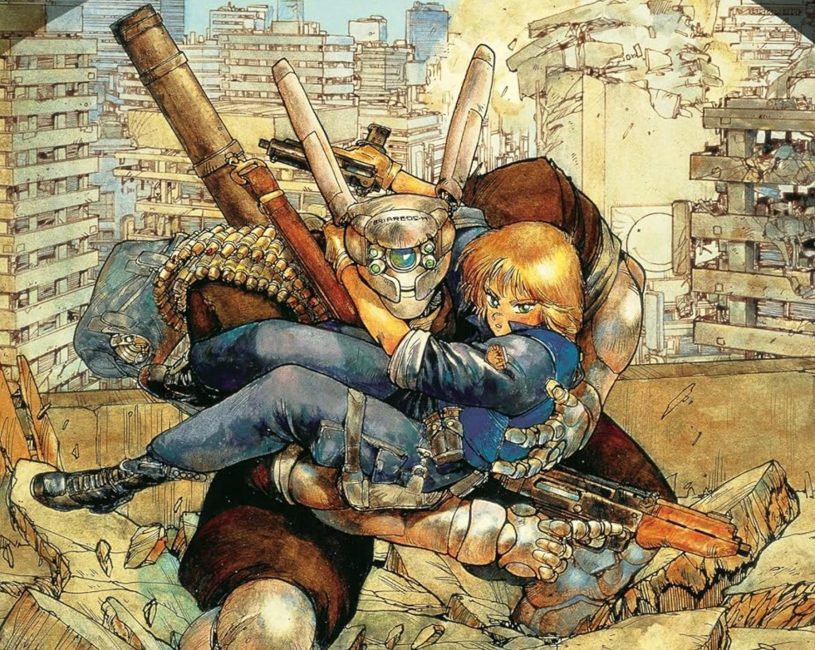
If you’re a fan of speculative sci-fi packed with philosophical musings, action, and incredible world-building, Appleseed is a must-read. Set in the aftermath of World War III, the story follows Deunan Knute, a highly skilled soldier, and her cyborg partner Briareos Hecatonchires as they navigate the utopian city of Olympus. Beneath the city’s shiny, high-tech exterior lies a society grappling with questions of freedom, governance, and the role of artificial lifeforms.
Shirow’s genius for creating detailed, believable worlds shines in Appleseed. Instead of relying solely on spectacle, the story digs into complex themes like democracy, authoritarianism, and the ethics of merging human and machine. And let’s not forget the art—Shirow’s meticulous attention to mechanical design brings Olympus and its tech to life with jaw-dropping realism.
An OVA of Appleseed was released in 1988, though it didn’t quite capture the depth of the manga. Better adaptations came later with the 2004 and 2007 Appleseed CGI films. While not everyone loves the shift to 3D animation, these films retain the spirit of the original and offer some seriously cool action sequences.
2.Black Magic M-66
“Journalist Sybel becomes entangled in a deadly chase to save the granddaughter of a scientist from an unstoppable rogue military android after a transport crash accidentally activates its kill circuits.” (The Anime)
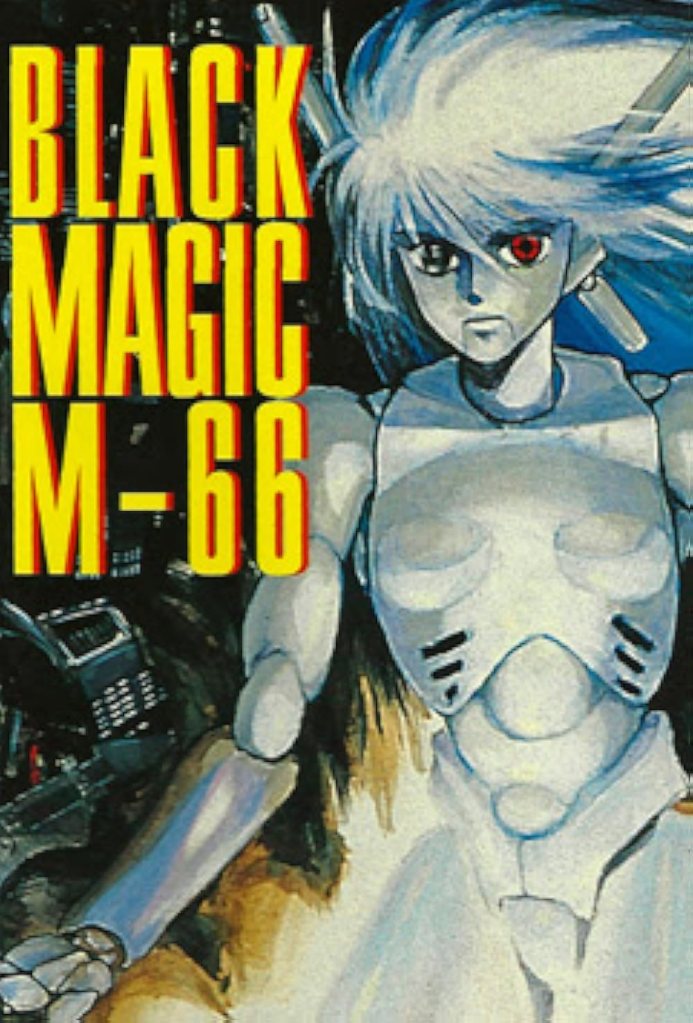
The anime differs slightly from the manga. The story begins with a military helicopter crash that releases two experimental M-66 androids—highly advanced, emotionless assassin robots. Due to a programming error, one of the androids targets Ferris, the granddaughter of its creator, Professor Matthews. The narrative follows Sybel, a fearless freelance journalist, as she becomes entangled in the chaos. Sybel takes it upon herself to protect Ferris from the relentless android while evading both the military and the destructive machine.
The plot is straightforward but engaging, focusing on Sybel’s efforts to outwit the android and save Ferris amidst intense action sequences. The military Special Forces also play a significant role, depicted as highly competent and tactical in their attempts to neutralize the rogue androids.
The OVA blends elements of science fiction, cyberpunk, and action thriller genres. It explores themes such as the dangers of advanced technology and artificial intelligence when mishandled. The M-66 androids are particularly striking as villains—not because they are inherently evil but due to their cold, mechanical efficiency and lack of humanity, reminiscent of The Terminator.
Shirow’s influence is evident in the detailed military technology and cyberpunk atmosphere. While the animation quality varies (notably lower-budget scenes in forest settings), certain sequences—like Sybel’s tense encounters with the android—are praised for their fluidity and creativity.
3.Dominion: Tank Police
“Leona Ozaki, the first female member of Newport City’s Tank Police, navigates a chaotic dystopian world of over-the-top law enforcement tactics, destructive tank battles, and bizarre criminal schemes.”
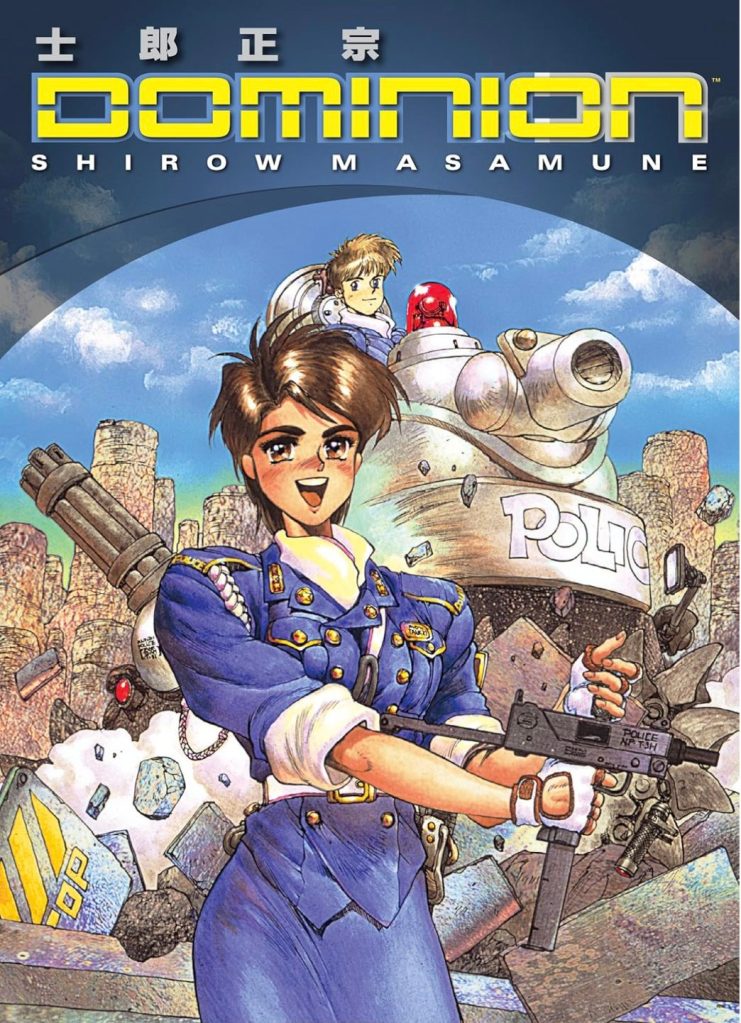
This is one of Masamune Shirow’s most unique and entertaining works, blending action, comedy, and political satire in a dystopian cyberpunk setting. Set in the polluted, crime-ridden future city of Newport, the story follows Leona Ozaki, a feisty officer who transfers to the Tank Police—a militarized police unit equipped with tanks to combat rampant crime. Leona quickly proves her worth by building her own compact tank, “Bonaparte,” after accidentally destroying her commander’s prized vehicle. Together with her partner Al and the rest of the eccentric squad, she takes on criminals like Buaku and his android accomplices, the mischievous Puma Sisters.
The series is both a critique and a parody of authoritarian policing, showcasing the Tank Police’s over-the-top methods that often cause more destruction than the criminals they pursue. Shirow uses absurd humor, exaggerated action sequences, and likable characters to explore themes like environmental degradation, unchecked militarization, and societal collapse. Despite its satirical tone, Dominion: Tank Police also delivers heartfelt moments through Leona’s determination and camaraderie with her team.
With its chaotic energy and sharp commentary, Dominion: Tank Police remains an iconic example of Shirow’s ability to mix serious themes with outrageous fun. It’s a must-watch (or read) for fans of cyberpunk and 1980s anime aesthetics.
4.Ghost in the Shell
“Cyborg Agent Motoko Kusanagi investigates a mysterious hacker known as the Puppet Master while questioning her identity, consciousness, and what it means to be human.”
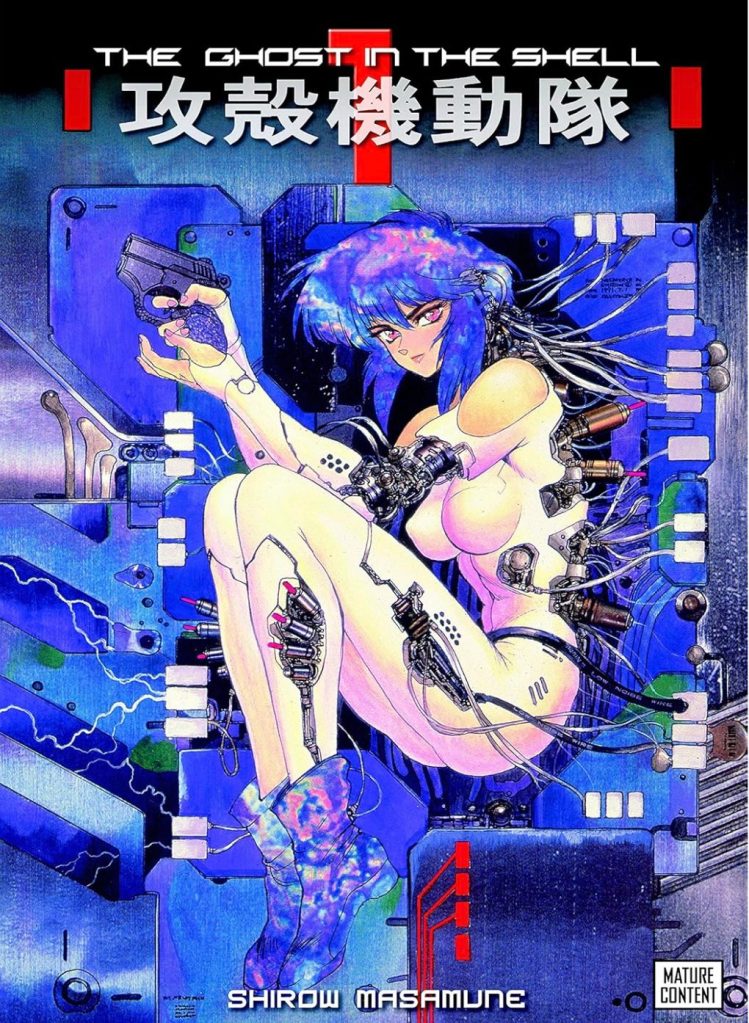
This is probably Masamune Shirow’s magnum opus, a genre-defining cyberpunk masterpiece that blends high-octane action with profound philosophical exploration. Originally published as a manga in 1989, it is set in a hyper-urbanized, technologically advanced future where humanity and machines have become deeply intertwined. The story follows Major Motoko Kusanagi, a cyborg operative working for Section 9, an elite counter-cyberterrorism unit. As she investigates a mysterious hacker known as the Puppet Master, Kusanagi grapples with existential questions about identity, consciousness, and what it means to be human in a world dominated by cybernetic enhancements and artificial intelligence.
At its core, Ghost in the Shell examines the blurred lines between human “ghosts” (souls or consciousness) and their artificial “shells” (cybernetic bodies). The narrative dives into themes of selfhood, autonomy, and evolution, particularly through the Major’s journey of self-discovery and her eventual merging with the Puppet Master—a sentient AI seeking to transcend its programmed existence. Shirow’s intricate world-building is complemented by his detailed commentary on sociological issues, technological ethics, and metaphysical questions, making the manga as intellectually stimulating as it is visually captivating.
The manga’s influence extends far beyond its pages. Its themes and aesthetics have inspired countless works in science fiction, most notably The Matrix.
What Makes Shirow’s Works Stand Out?
Shirow isn’t just a storyteller—he’s a world-builder, a philosopher, and an artist who obsesses over details. Here’s what makes him one of the all-time greats:
- Detailed Worlds: Shirow’s settings aren’t just backdrops; they’re living, breathing ecosystems with their own history, technology, and politics. Whether it’s the utopian Olympus of Appleseed or the gritty, tech-driven landscape of Ghost in the Shell, his worlds feel real and immersive.
- Complex Themes: From transhumanism to the nature of consciousness, Shirow’s works tackle big ideas that make you think long after you’ve finished reading or watching.
- Strong Female Characters: Shirow’s heroines—like Major Kusanagi and Deunan Knute—are tough, smart, and layered. They’re not just eye candy; they’re leaders and warriors with agency and depth.
- Artistic Precision: Shirow’s mechanical designs are legendary. Whether it’s a cyborg body, a futuristic weapon, or an elaborate urban landscape, every detail is meticulously crafted.
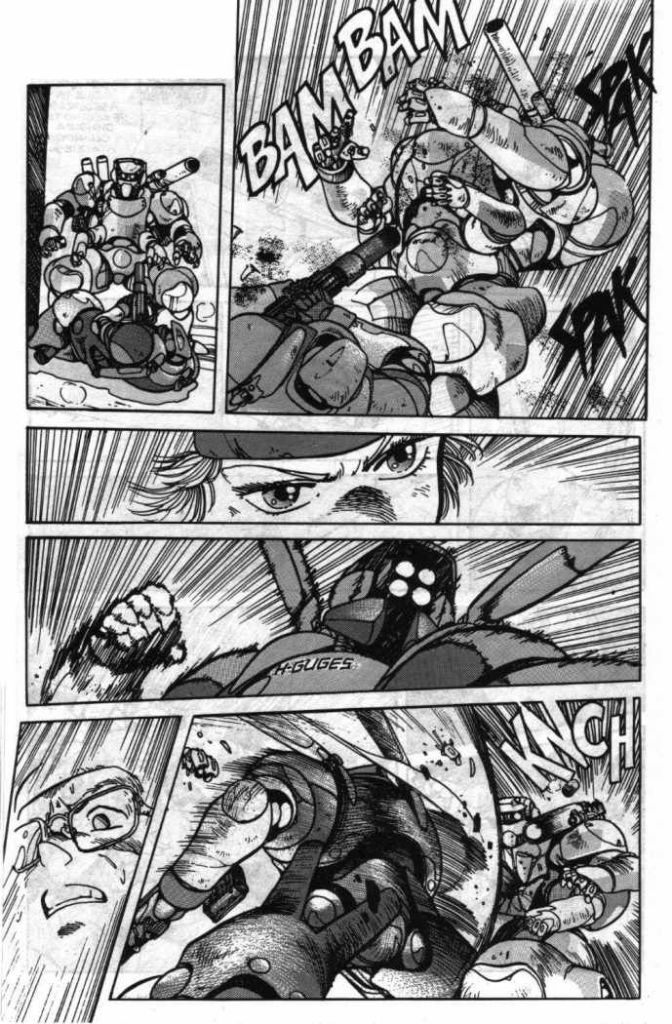
Shirow’s Later Years
In the 1990s, Shirow shifted away from creating new manga to focus on illustration work, producing jaw-dropping art books like Intron Depot. While he’s been less active in recent years, his influence is everywhere, from anime and video games to Hollywood. Without Shirow, we might not have The Matrix or the modern wave of cyberpunk storytelling.
Where to Start
If you’re new to Shirow, here’s my recommended roadmap:
- Start with the Ghost in the Shell 1995 anime—it’s a masterpiece that distills Shirow’s essence.
- Dive into the Appleseed manga for a deeper look at his world-building skills.
- Check out Dominion: Tank Police for a lighter, more action-packed break.
- If you’re hooked, read the original Ghost in the Shell manga to experience the full depth of Shirow’s vision.
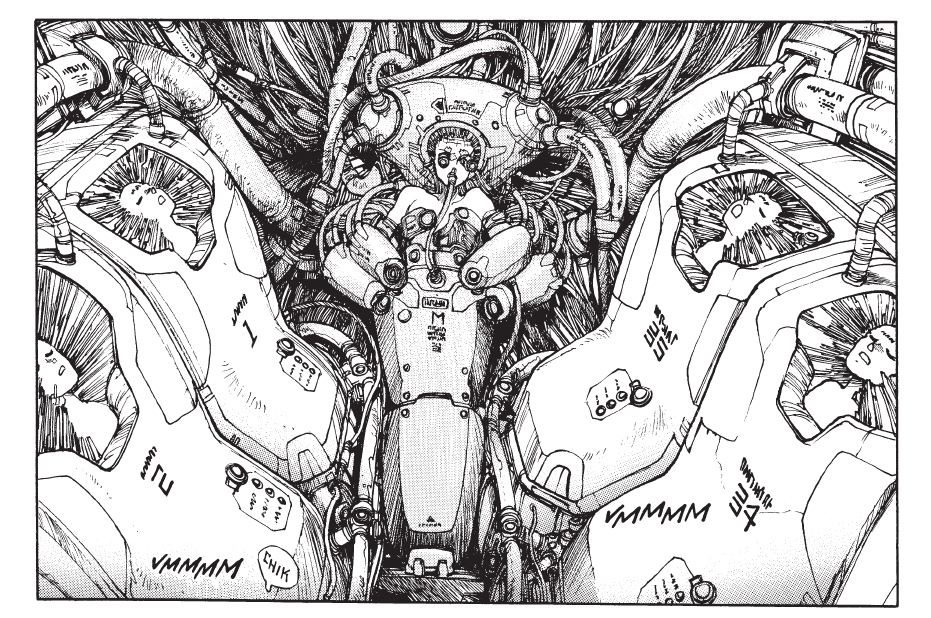
Coda
Masamune Shirow isn’t just a creator; he’s a visionary who redefined what manga and anime could be. Whether you’re a longtime fan or a newcomer, his works offer a rich, layered experience that’s worth revisiting again and again. So, grab a copy of Appleseed or queue up Ghost in the Shell tonight. Trust me—you’re in for quite a trip.
Until next time, stay curious and keep exploring the stars (or cyberspace)! And while you’re at it, mention your favorite Masamune Shirow work in the comments below, if you have one. Safe travels, Fear Planet Denizens.
Discover more from Fear Planet
Subscribe to get the latest posts sent to your email.
