

There are moments in every collector’s life when you discover an artist whose work has been hiding in plain sight throughout your entire journey. For me, Earl Norem represents that peculiar paradox – a creator whose illustrations adorned countless childhood treasures, yet whose name remained elusive, floating just beyond conscious recognition. Today, I’m rectifying that oversight by celebrating one of the most influential yet curiously under-celebrated illustrators in science fiction and fantasy art history.
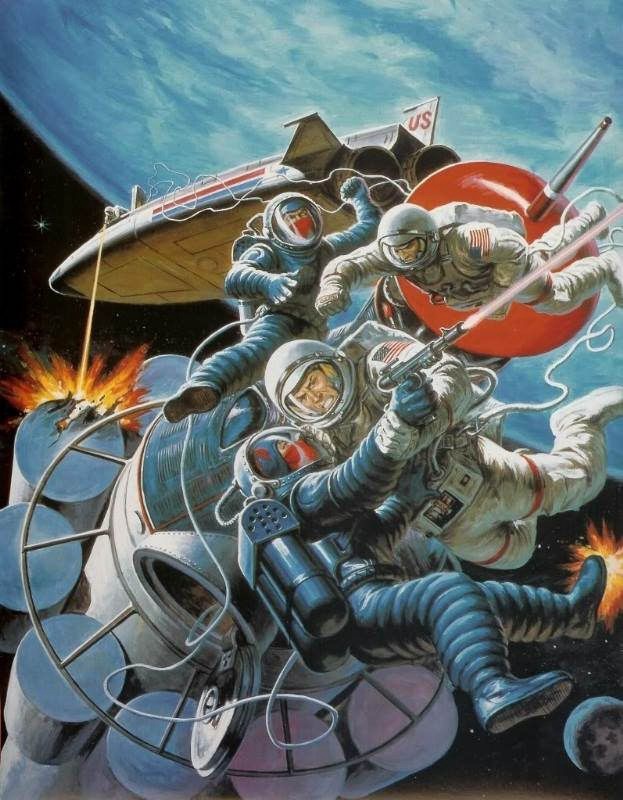
The War Veteran Who Painted Our Dreams
The trajectory of Norem’s life reads like a hero’s journey in itself. Before his brushes brought Conan’s rippling muscles and Martian invaders to life, Norem served as a squad leader and staff sergeant in the 10th Mountain Division during World War II – all by the tender age of 20. This firsthand experience with the brutal reality of combat perhaps explains the visceral authenticity that later permeated his battle scenes, whether depicting barbarian skirmishes or interplanetary warfare.

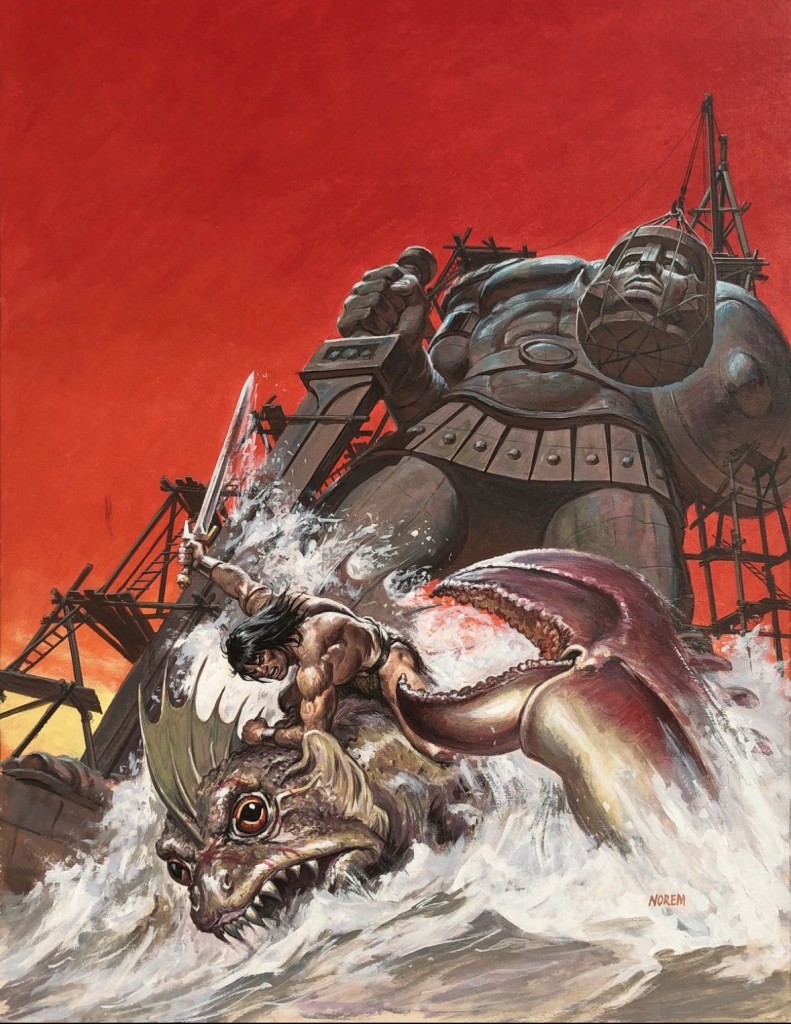
What strikes me most about Norem’s post-war artistic evolution is the fascinating tonal shift in his palette. His early illustrations for men’s adventure magazines employed earthy textures and muted colors that perfectly captured the gritty, testosterone-fueled narratives popular in the 1950s and 1960s. Yet as his career progressed, particularly when he ventured into superhero and fantasy realms, Norem embraced a vibrancy that would become his signature – a metamorphosis that parallels the medium’s own evolution from pulp obscurity to mainstream celebration.
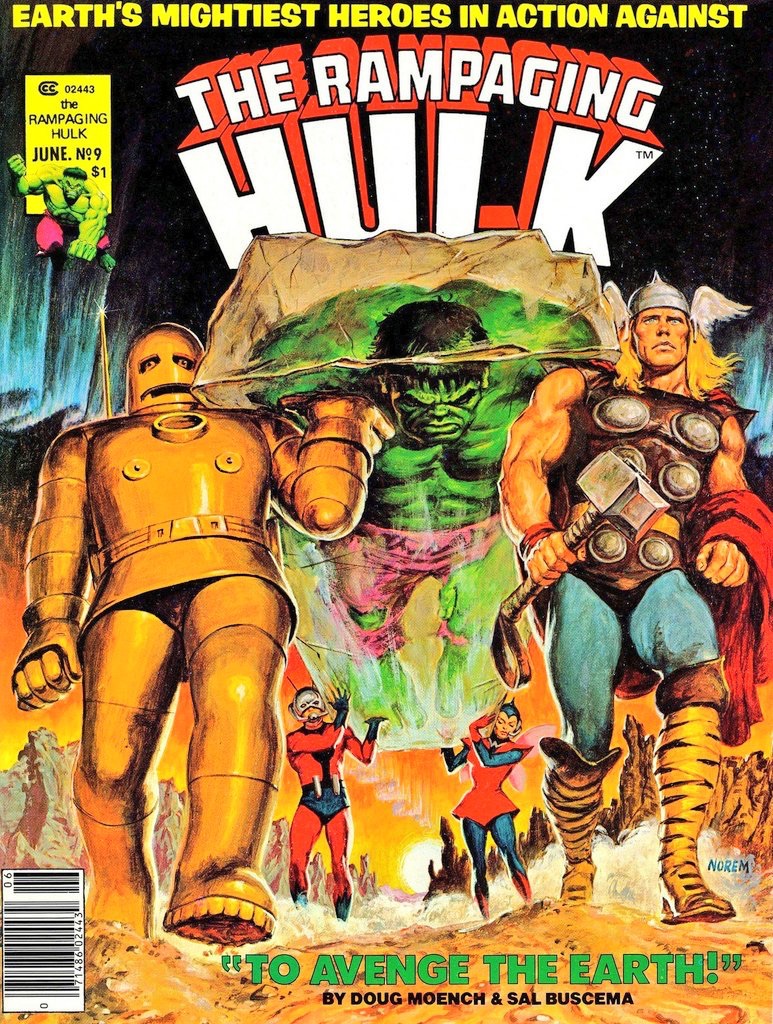

Marvel’s Secret Weapon
While browsing my collection recently, I pulled out several issues of Savage Sword of Conan featuring Norem’s covers. The dynamism leaps off the page even decades later – a testament to his compositional mastery. Norem contributed 48 covers to this series alone, creating a visual language for Conan that rivals even Frazetta’s definitive interpretation (blasphemous as that statement might seem to some collectors).

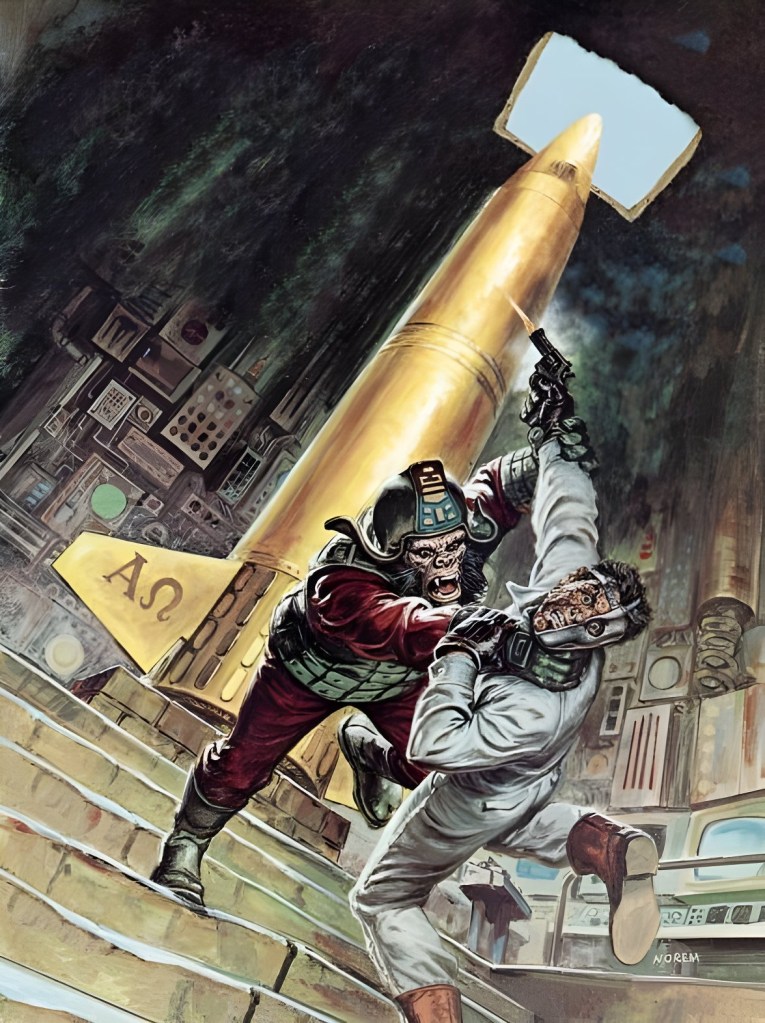
What distinguishes Norem’s Marvel work isn’t merely technical proficiency but an innate understanding of dramatic tension. His black-and-white magazine covers for Tales of the Zombie, Planet of the Apes, and various superhero titles don’t simply depict characters; they capture pivotal moments of psychological intensity. The comparison to James Bama’s Doc Savage covers feels particularly apt – both artists elevated commercial illustration to atmospheric storytelling, inviting viewers to imagine the narrative beyond the frame.

Toy Franchise Renaissance
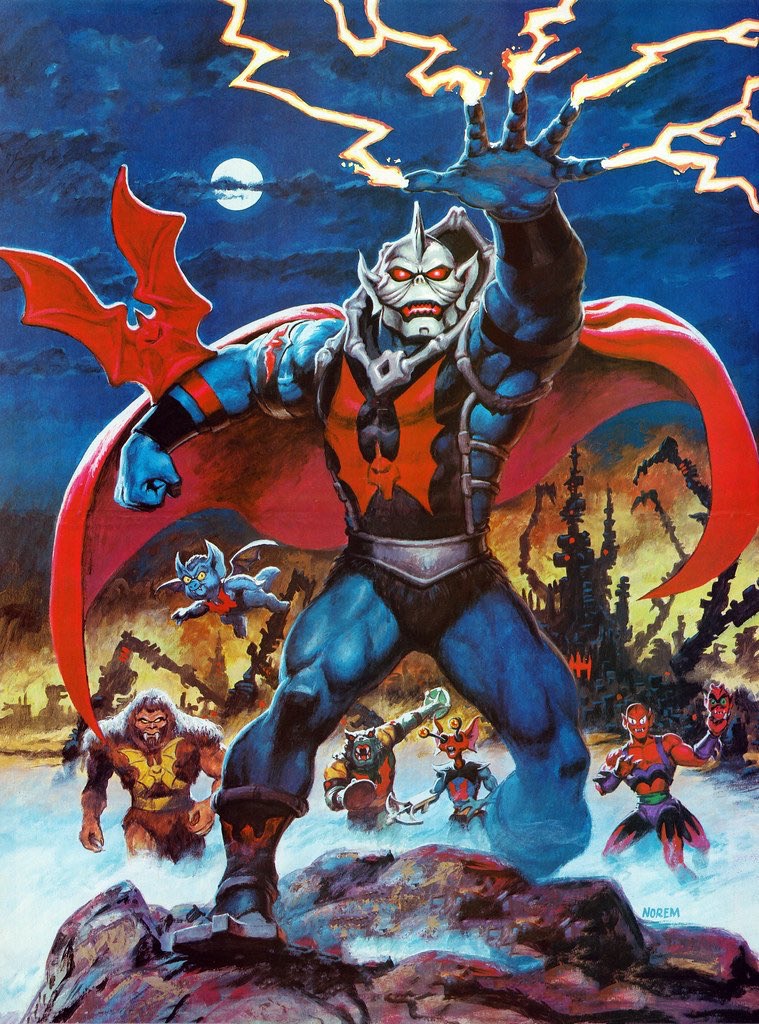
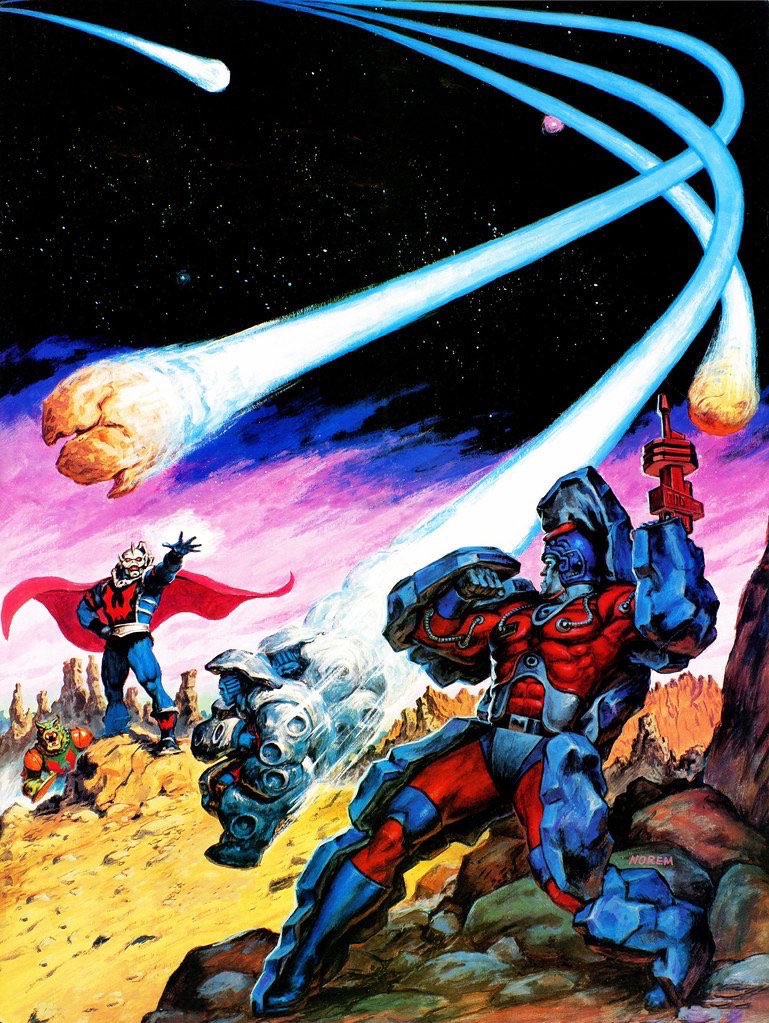
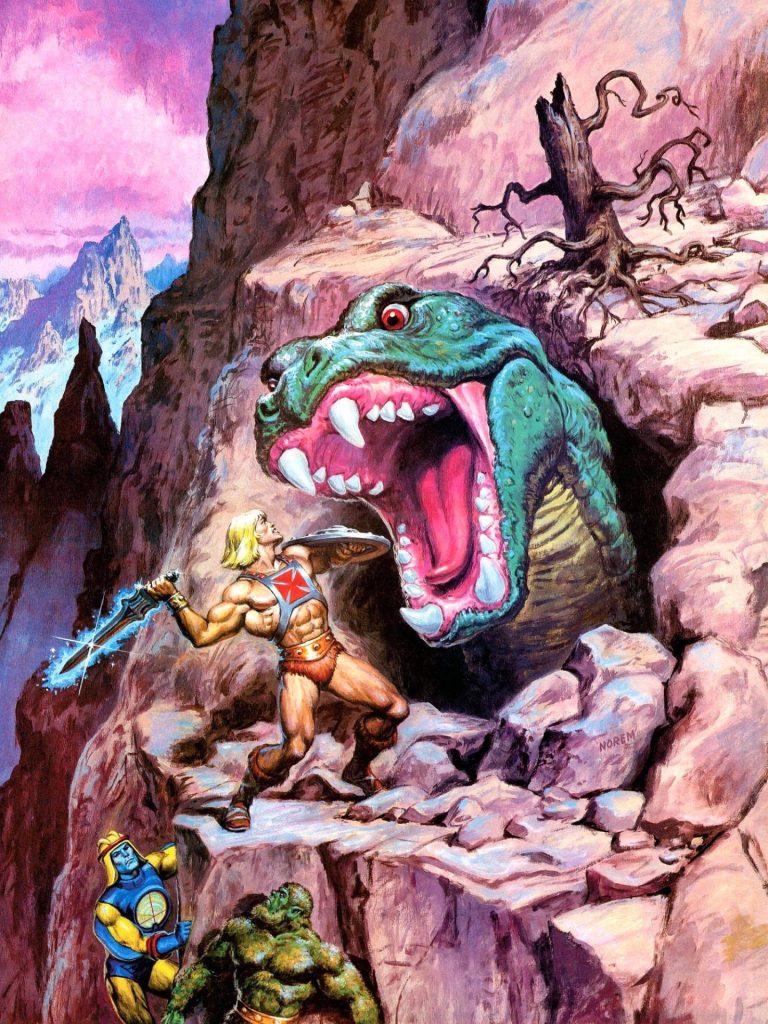
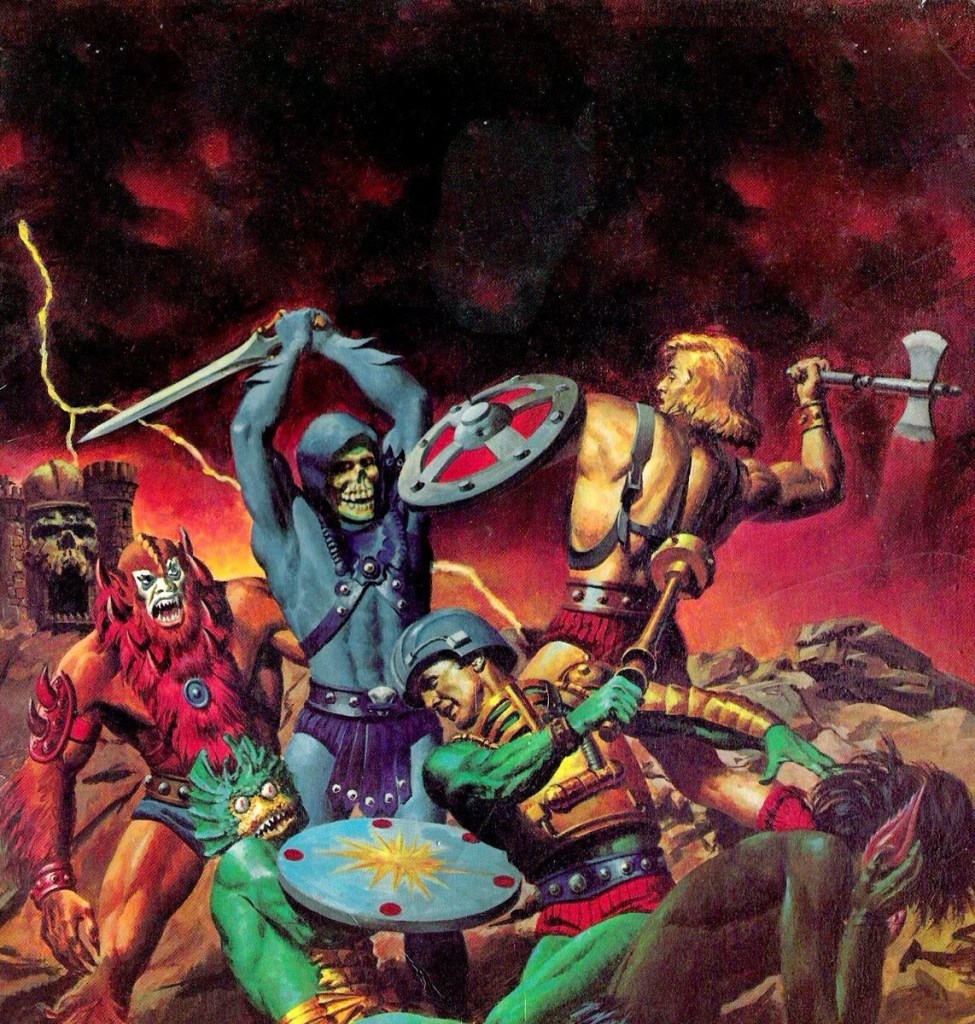
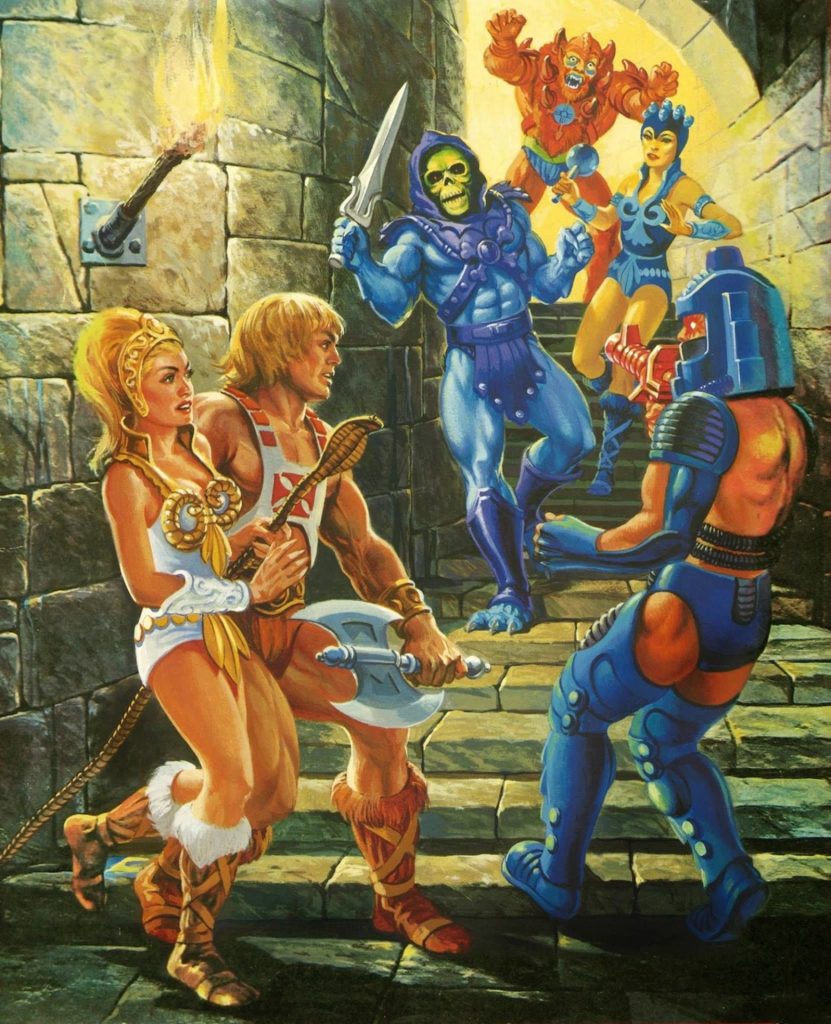
The 1980s represented Norem’s commercial zenith, coinciding with my own formative years immersed in action figure playsets and their accompanying media. His promotional art for Masters of the Universe, G.I. Joe, and Transformers defined the aesthetic vocabulary of an entire generation of fans. What I find most fascinating is Norem’s own assessment that the Masters of the Universe magazine was “one of the best accounts I ever had” – a reminder that artists often find fulfillment in projects overlooked by traditional art criticism.


Revisiting these illustrations now, I’m struck by their chromatic boldness. The splash of primary colors, the strategic use of silver-whites and magentas – these weren’t merely commercial choices but deliberate artistic decisions that captured the fantastical essence of these universes. Norem’s toy franchise work represents a master class in balancing client requirements with artistic integrity, creating marketing materials that transcended their commercial purpose to become legitimate cultural artifacts.

The Mars Attacks Revival: A Late-Career Renaissance
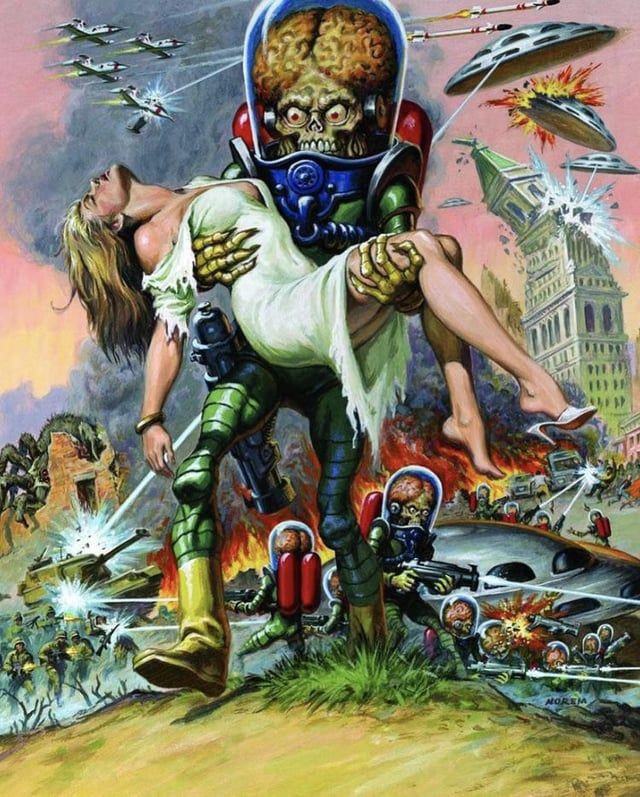
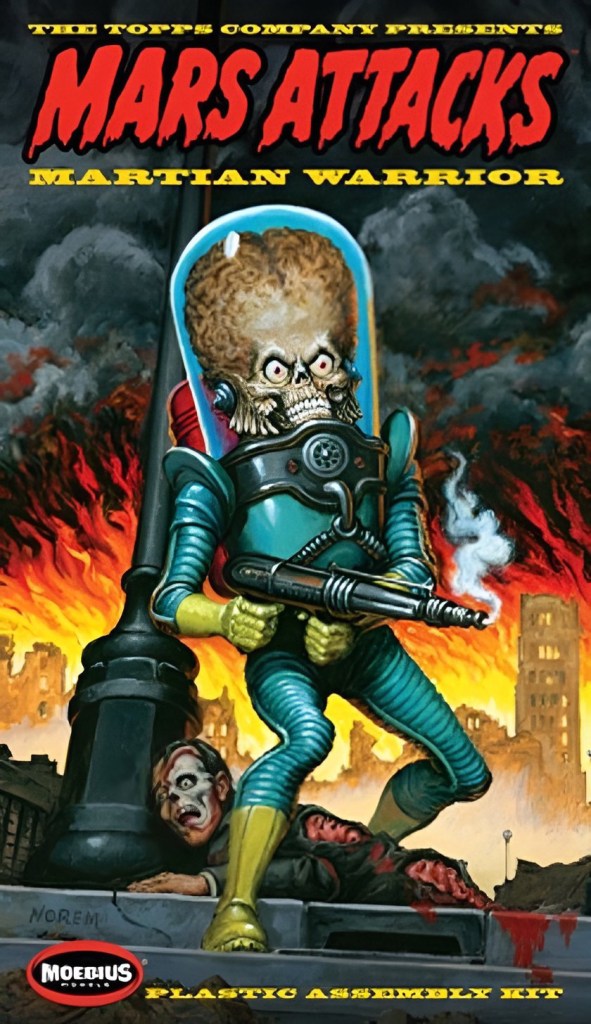
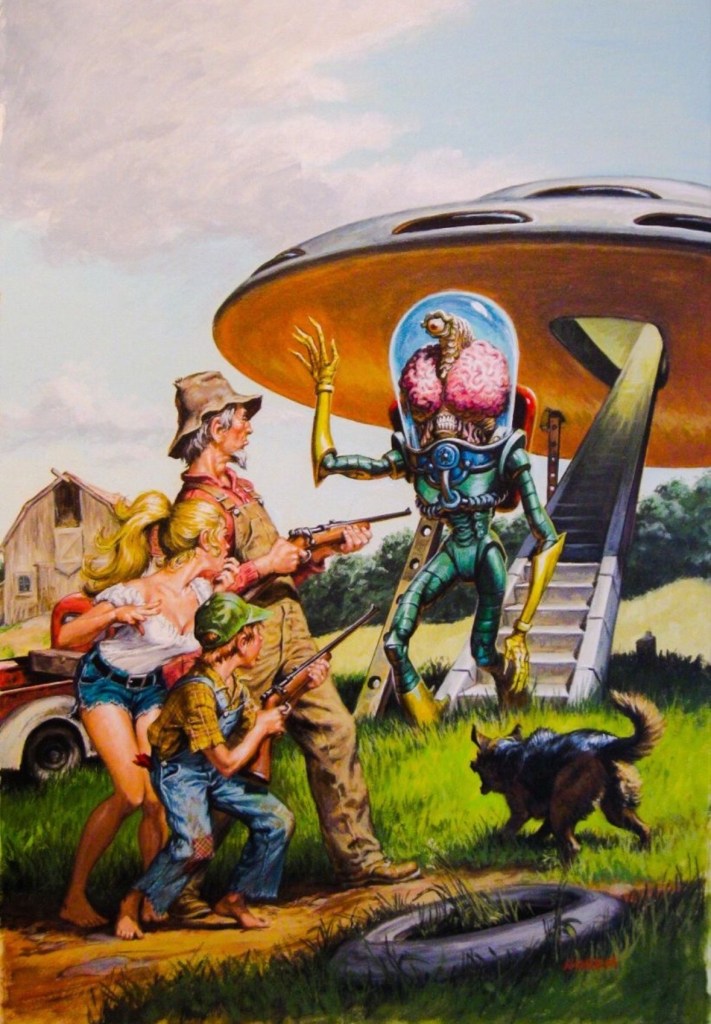
Perhaps what draws me most to Norem’s story is his late-career renaissance with the Mars Attacks franchise. In 2013, when many artists his age had long retired, Norem contributed to Topps’ “Mars Attacks: Invasion” trading card set, bringing fresh perspectives to a property with its own storied visual history. Cards like “Gang War” and “Race to Space” expanded the franchise’s narrative potential while maintaining its distinctive black comedy tone.

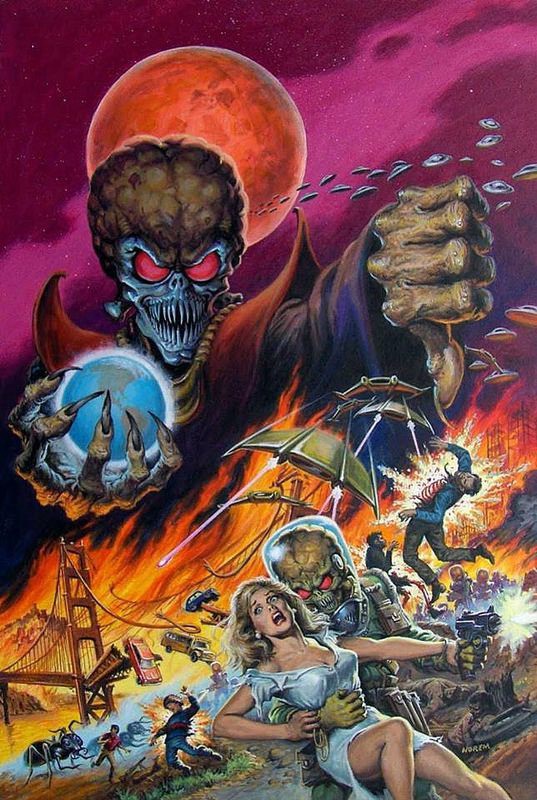
This phase of Norem’s career feels particularly poignant – an artist in his 90s returning to science fiction illustration not out of nostalgia but with fresh creative energy. At the time of his death in 2015, Norem was still actively working on another Mars Attacks card set, embodying a creative restlessness that continued until arthritis physically prevented him from painting in 2005.
The Paradox of Commercial Artistry
What I find most remarkable about Norem’s legacy is the tension between his commercial success and his artistic humility. Despite creating iconic images that permeated popular culture for decades, Norem viewed his work simply as “a commercial art job.” The disconnect between his self-perception and his cultural impact raises fascinating questions about how we value commercial art versus fine art – a dichotomy that seems increasingly outdated in our current era of pop culture appreciation.
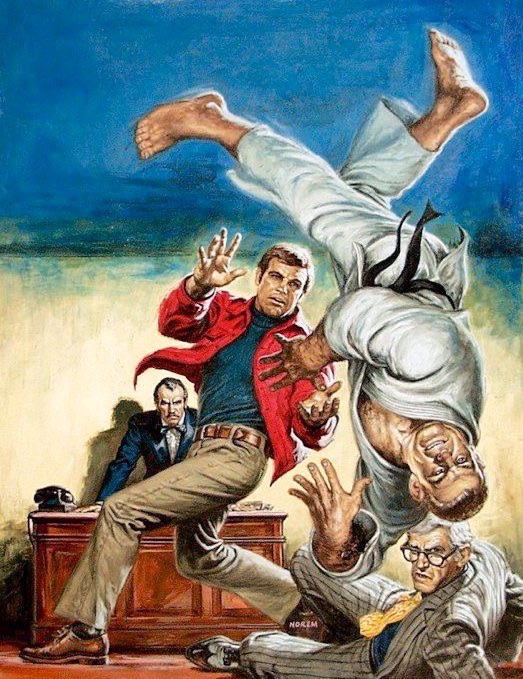
It wasn’t until late in life that Norem discovered his cult following among collectors and fans – a belated recognition that mirrors the delayed critical appreciation of many commercial illustrators. This paradox seems particularly prevalent in science fiction and fantasy art, where critical legitimacy often lags decades behind popular impact.
The Distinctive Norem Style
Attempting to categorize Norem’s aesthetic involves recognizing several consistent elements across his diverse portfolio. His compositions invariably convey kinetic energy – figures caught mid-action, muscles tensed, weapons brandished. This dynamism creates a narrative momentum that pulls viewers into the scene, transforming static images into suggestive storytelling.

Chromatically, Norem’s evolution from muted realism to vibrant fantasy parallels science fiction’s own journey from pulp marginalization to mainstream acceptance. The lurid hues of his 1980s work might initially read as commercial concessions, but they actually represent a sophisticated understanding of how color evokes emotional response in viewers.
Most importantly, Norem possessed that rarest of commercial art gifts – the ability to capture a franchise’s essence while maintaining his distinctive artistic voice. Whether depicting Conan, He-Man, or Martian invaders, his illustrations remain unmistakably Norem creations while honoring the properties they represent.

Personal Reflections: Finding Norem in My Collection
Researching this piece prompted me to excavate boxes from my own collection, where I discovered Norem’s work had been hiding in plain sight for decades. The Masters of the Universe magazine issues I’d preserved, several Transformers storybooks, and even some Mars Attacks cards – all featuring Norem’s distinctive aesthetic without my conscious awareness of the artist behind them.

This experience reflects a broader phenomenon in commercial illustration appreciation. We develop intimate relationships with these images long before we recognize their creators, absorbing their visual vocabulary into our personal mythologies without attribution. The belated recognition of the hands behind these formative images creates a curious temporal collapse – suddenly childhood artifacts reveal new dimensions of meaning and artistic intent.

The Ongoing Legacy
Norem’s influence permeates contemporary science fiction and fantasy illustration, often without explicit acknowledgment. His action-oriented compositions, strategic use of dramatic lighting, and ability to convey complex narratives through single images established templates that continue to influence movie posters, comic covers, and game art.
For collectors and scholars, Norem represents a crucial link between pulp illustration traditions and modern fantasy art. His career spans the transformation of science fiction from marginal interest to dominant cultural force, making his body of work not just artistically significant but historically valuable as documentation of this evolution.

As I wrap up this exploration, I find myself amazed by how Norem’s journey reflects the broader narrative of commercial illustration’s gradual ascension to critical recognition. His work, once dismissed as mere product packaging, now commands attention in galleries and auction houses – a transformation that parallels science fiction’s own path from cultural periphery to mainstream dominance.
Earl Norem’s legacy reminds us that the most profound cultural influences often operate below conscious awareness, shaping our visual vocabulary and narrative expectations through seemingly ephemeral commercial art. In digging up and celebrating these influences, we gain richer understanding not just of artistic evolution but of our own obsessive relationships with pop culture imagery.
Discover more from Fear Planet
Subscribe to get the latest posts sent to your email.

electrifying! Live Updates: Continuing Coverage of [Significant Political Development] 2025 chic
LikeLike