
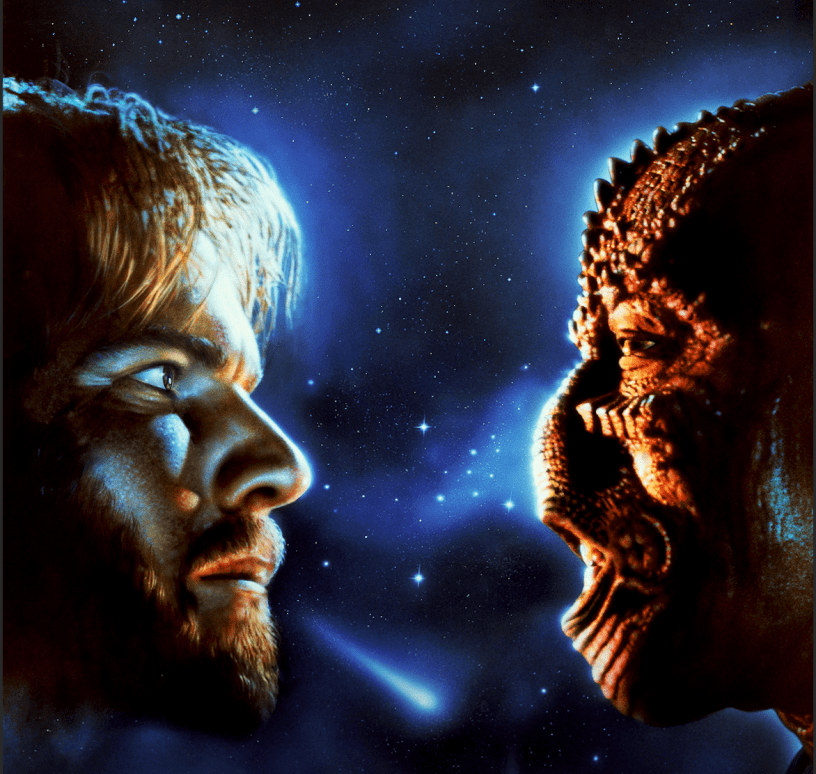
I first encountered “Enemy Mine” on a worn VHS tape back in 1986, just months after its theatrical release. As a teenager obsessed with science fiction, I was immediately drawn to its striking alien design and premise of enemies forced to cooperate. Now, in 2025, I’ve revisited this underappreciated gem of 80s sci-fi cinema to see if it holds up to my nostalgic memories.
What I discovered was both exactly as I remembered and surprisingly different—a film whose strengths and weaknesses have only become more pronounced with time.

Into the Heart of Conflict: A Plot Synopsis
Set in the late 21st century beginning in 2092, “Enemy Mine” drops us into an interstellar war between humans (the Bilateral Terran Alliance) and the Dracs, a reptilian humanoid species.
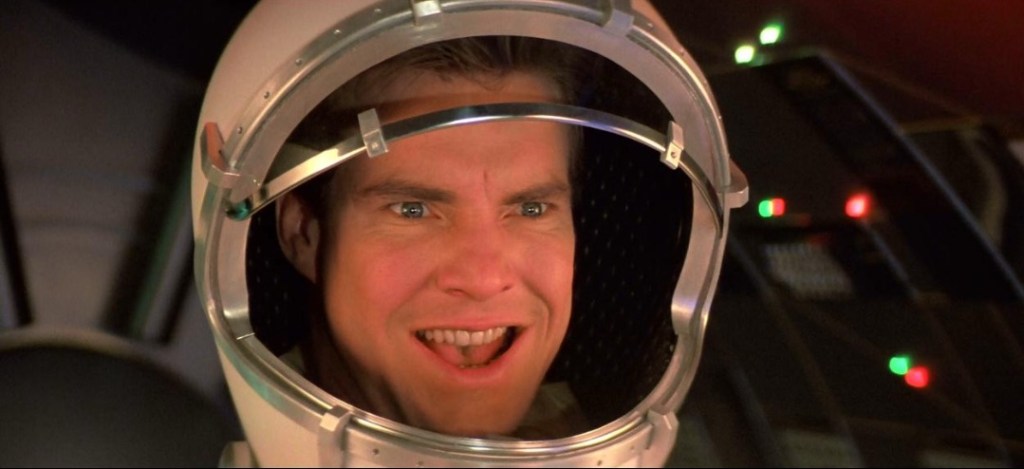
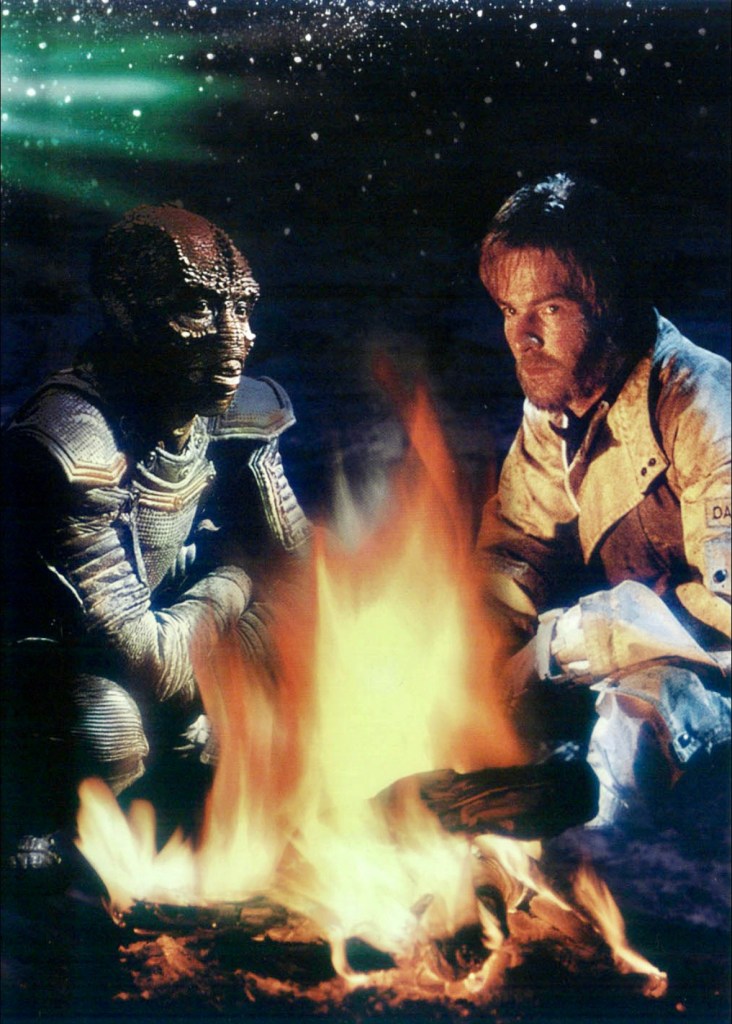
During an intense space battle, human fighter pilot Willis Davidge (Dennis Quaid) and Drac pilot Jeriba Shigan (Louis Gossett Jr.) engage in a vicious dogfight that culminates with both crash-landing on Fyrine IV, a hostile volcanic planet with meteor showers and other environmental hazards.
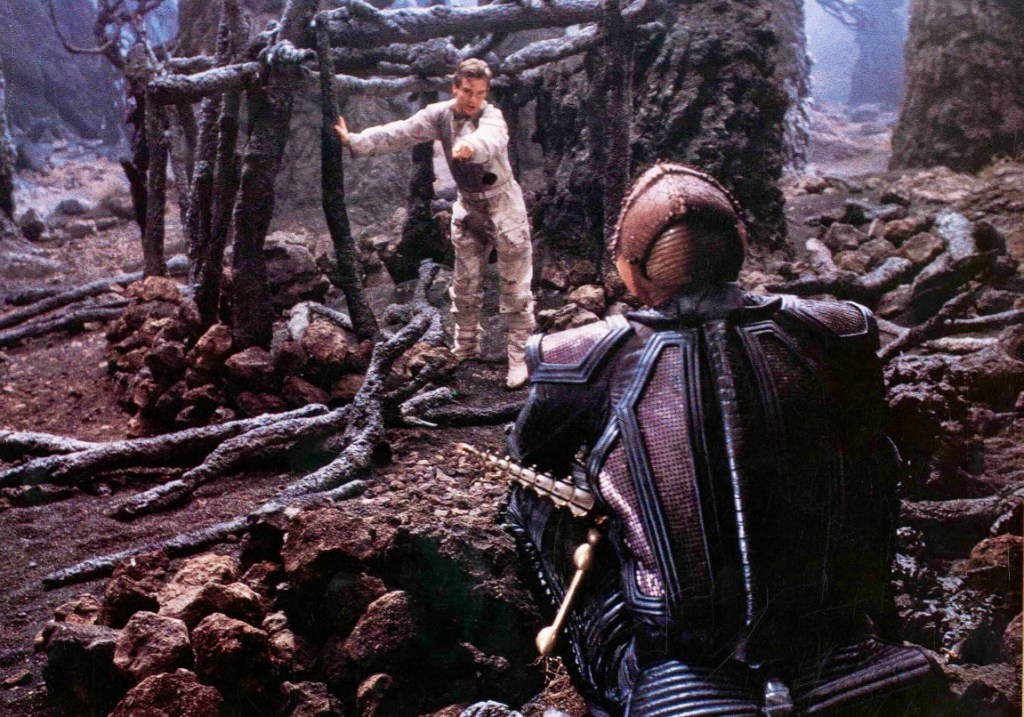
Initially, the two continue their personal war, hunting each other with murderous intent across the barren landscape. However, the planet’s extreme dangers force them to form an uneasy alliance. Gradually, over three years of shared survival, their relationship transforms. Davidge nicknames the Drac “Jerry,” and they painstakingly learn each other’s languages and customs. In one particularly charming scene, Davidge convinces Jerry that Mickey Mouse is a great Earth philosopher.
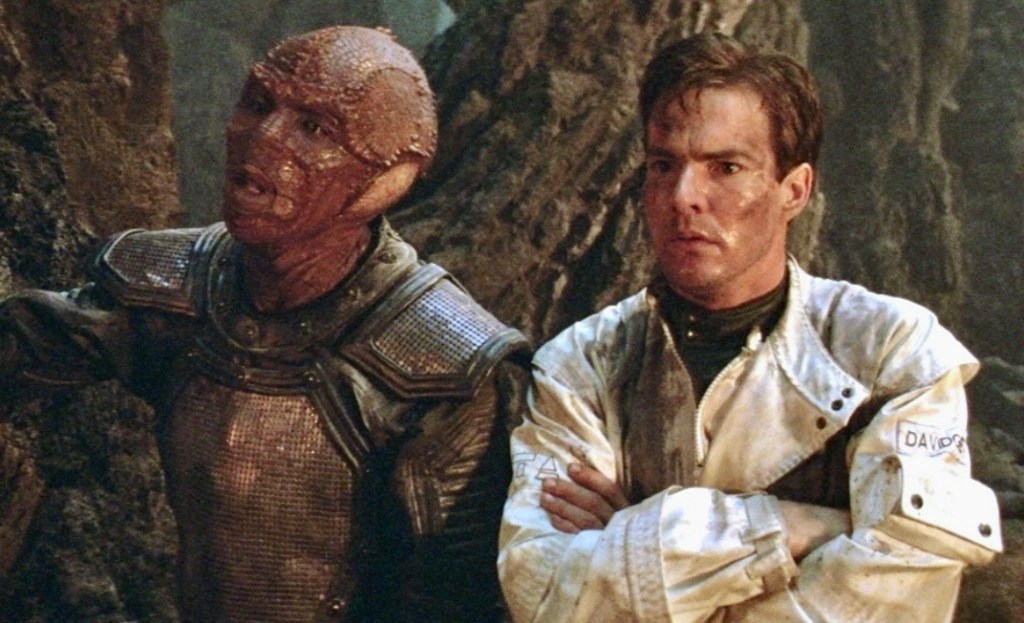
The relationship deepens when Jerry reveals that Dracs reproduce asexually and is pregnant. Before giving birth, Jerry teaches Davidge the intricate song of the Drac lineage—a crucial element for Jerry’s child to be accepted in Drac society. When Jerry dies during childbirth, Davidge promises to take the child, named Zammis, to the Drac homeworld and recite the Jeriba lineage before their council.
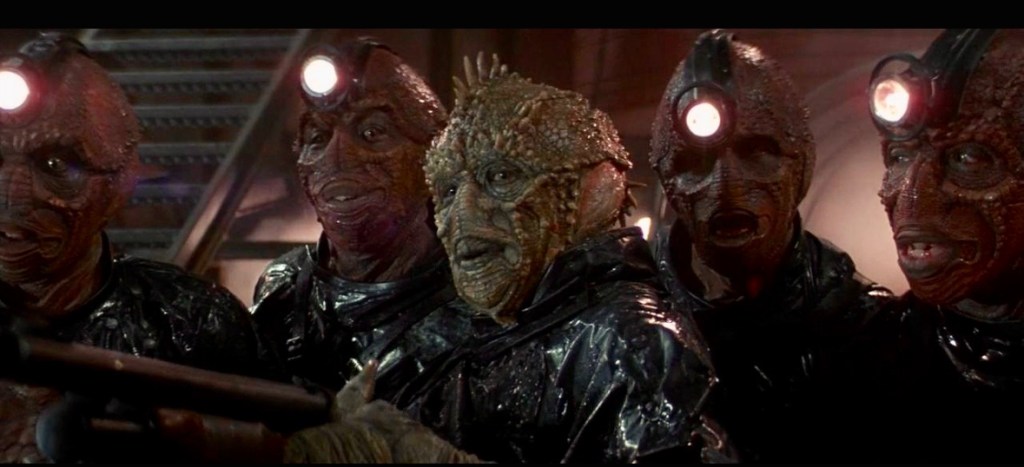
Davidge raises Zammis as his own, creating a peaceful existence until human scavengers arrive on the planet. These brutal miners use captured Dracs as slaves for their operations. When Zammis is captured, Davidge attempts a rescue but is shot and left for dead.
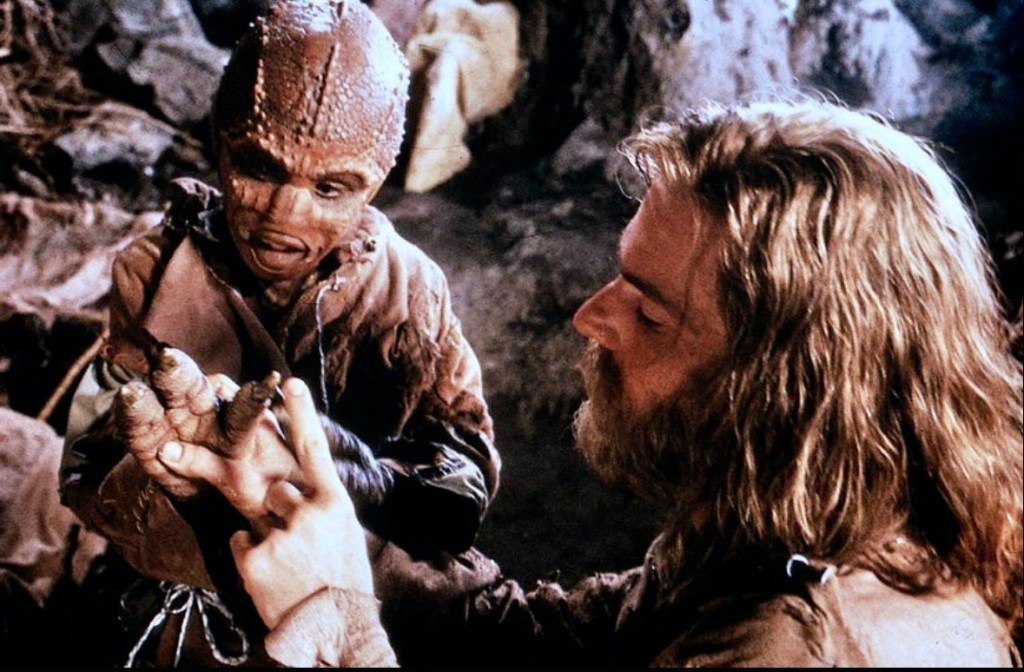
Recovered by a BTA patrol ship, Davidge awakens during his own funeral ceremony. After reinstatement to a desk job, he becomes obsessed with returning to rescue Zammis. Unable to secure official help, he steals a fighter and returns to Fyrine IV. There, he infiltrates the mining operation, battles the scavengers, and helps incite a revolt among the enslaved Dracs. With unexpected assistance from the BTA crew who pursued him, Davidge reunites with Zammis.
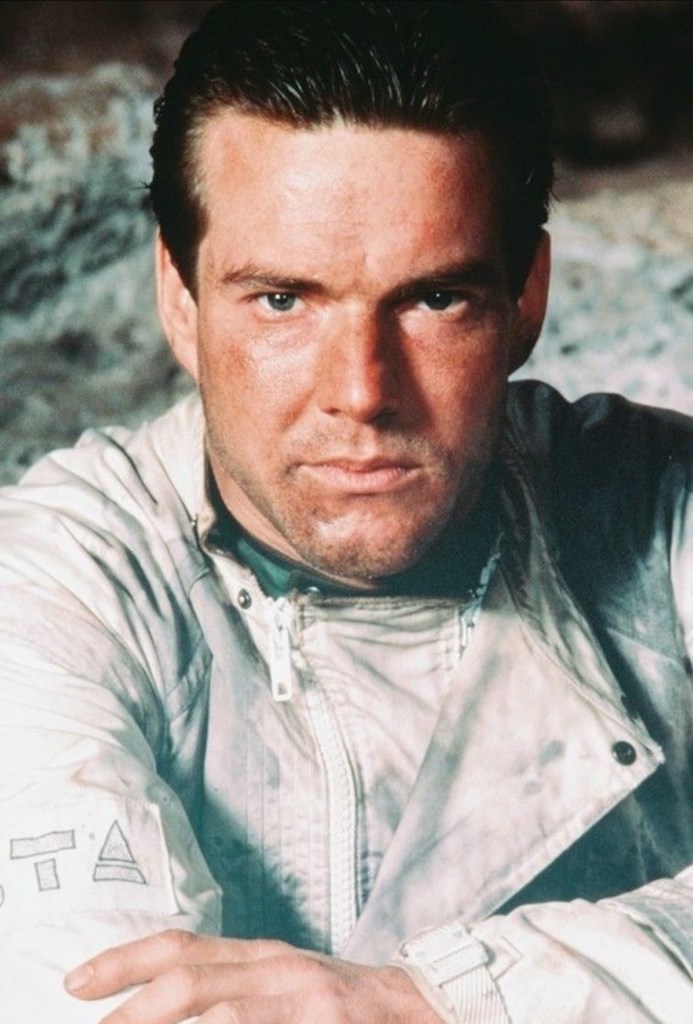
The film concludes on the Drac homeworld, where Davidge fulfills his promise by reciting the Jeriba family lineage before the Drac council, proudly adding his own name to the line of Jeriba.
A Critical Retrospective
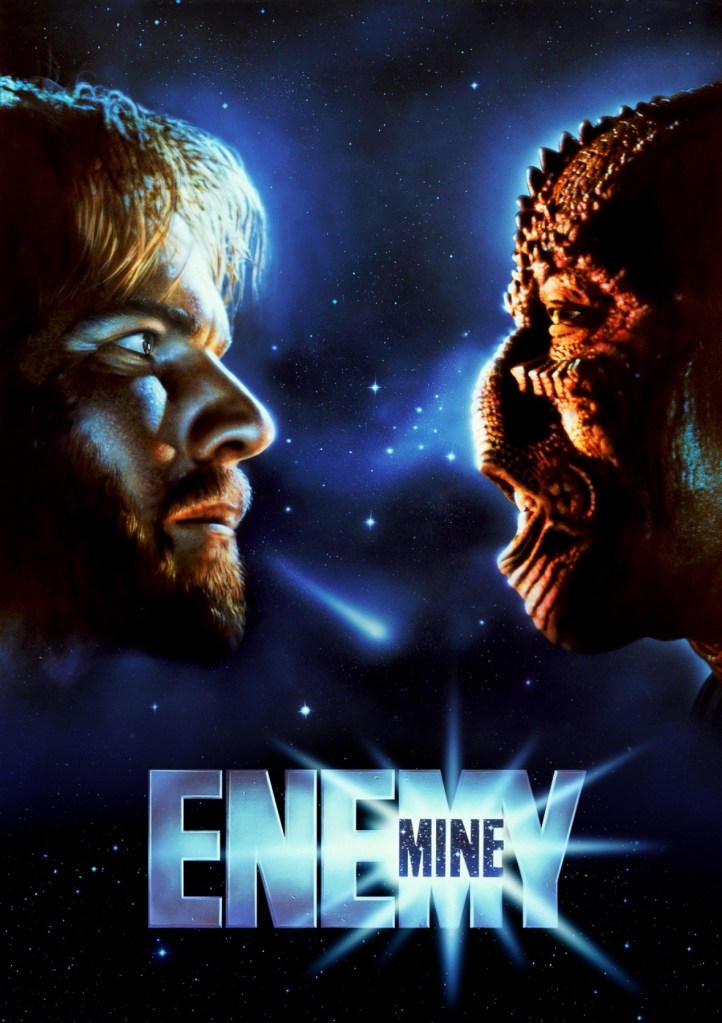
Revisiting “Enemy Mine” in 2025, I’m struck by how much of the film still resonates. At its core, Wolfgang Petersen’s sci-fi drama offers something increasingly rare—a character-driven narrative that prioritizes relationship development over spectacle. The film’s central premise—enemies forced to overcome prejudice and form a profound bond—remains as relevant today as it was in 1985.
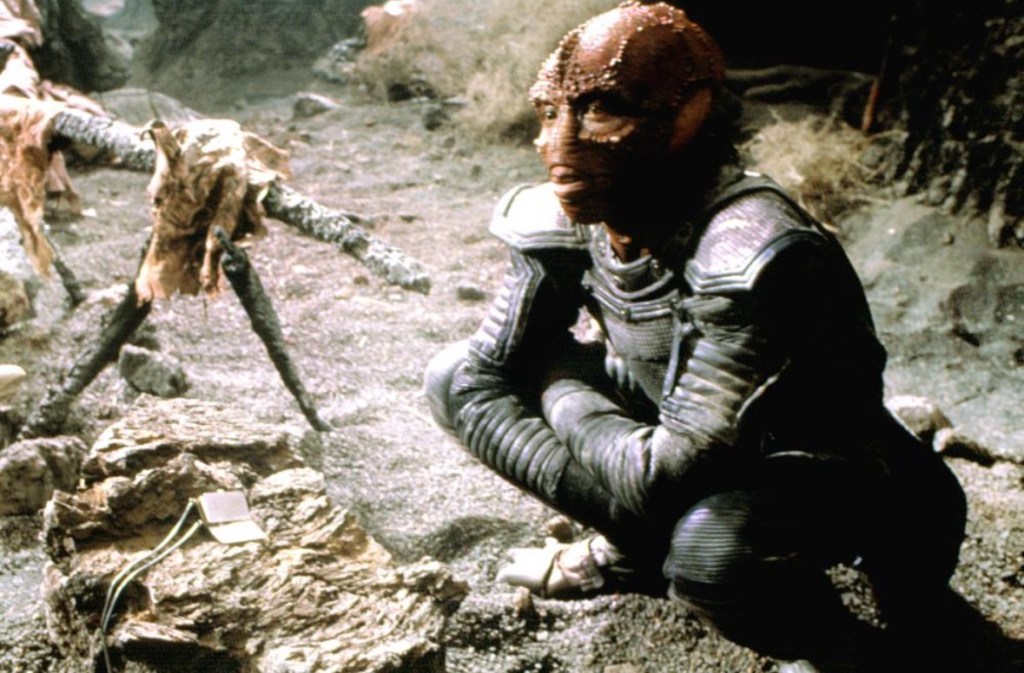
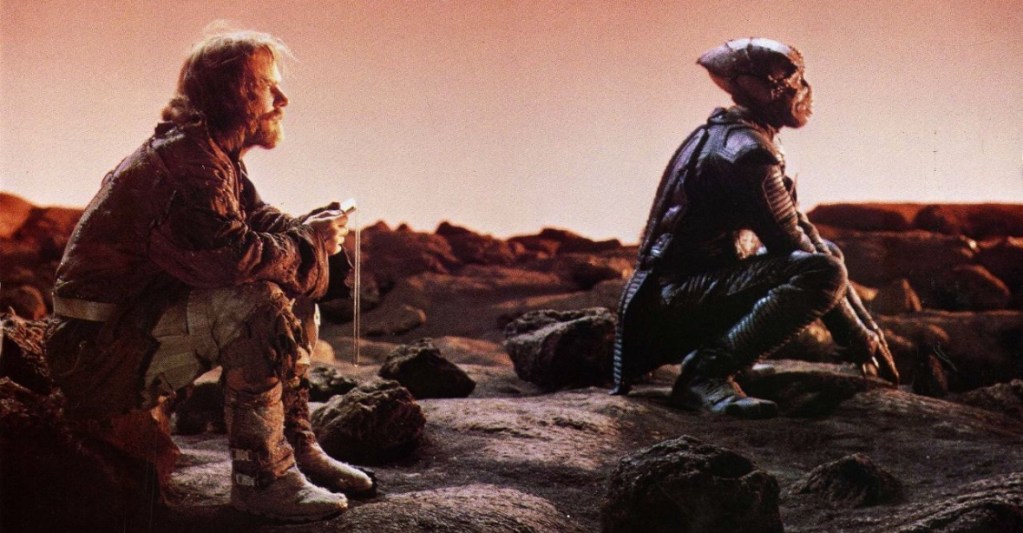
Louis Gossett Jr.‘s performance as Jerry is nothing short of remarkable. Hidden beneath layers of prosthetics that must have been torturous to wear for long shoots, he delivers a nuanced portrayal that never feels like a human in alien makeup. His physicality, vocal patterns, and emotive capabilities create a genuinely believable alien character. Dennis Quaid, meanwhile, effectively conveys Davidge’s transformation from xenophobic warrior to compassionate father figure.
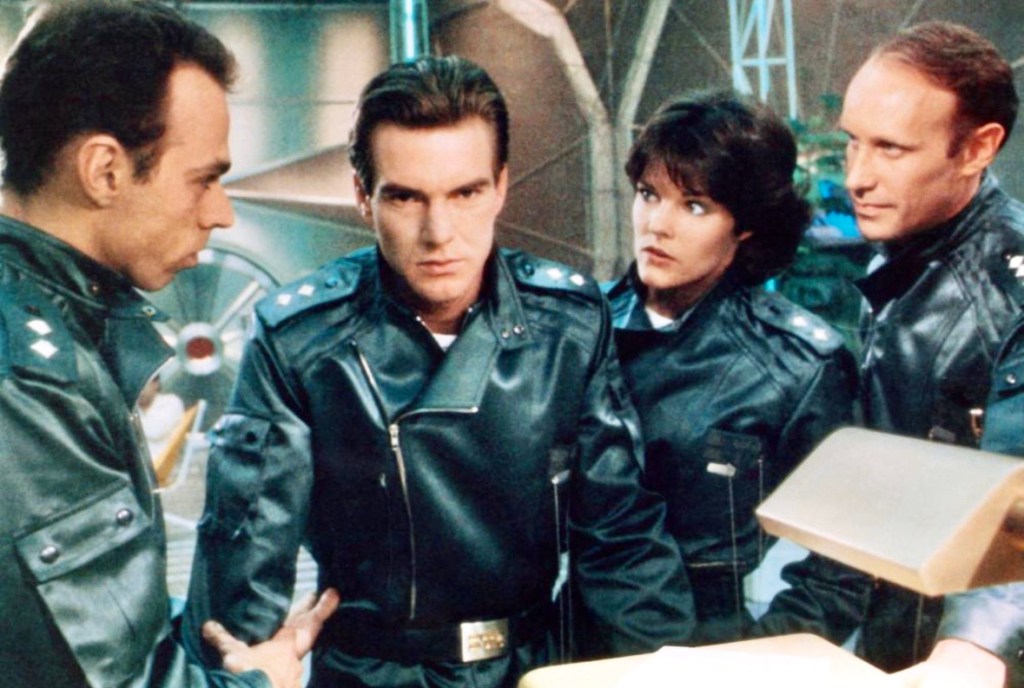
The production design still impresses, particularly the practical alien makeup effects. In an era before CGI dominated the industry, the team created a convincingly alien world through clever use of matte paintings, practical sets, and environmental effects. The Drac physiology feels biologically plausible rather than merely decorative.
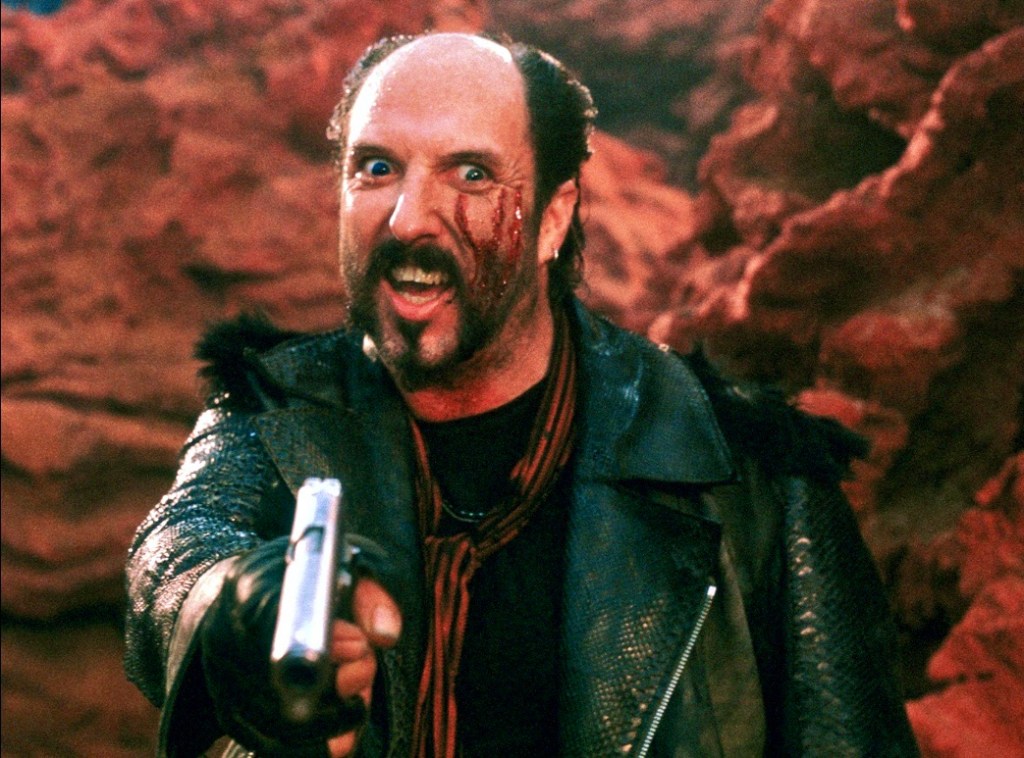
However, time has also exposed the film’s weaknesses. The pacing suffers from imbalance—the first half’s intimate character study gives way to a more conventional action-rescue plot that feels somewhat tacked on. The scavenger villains, particularly Brion James’s one-dimensional Stubbs, lack the depth given to our protagonists. They exist primarily as plot devices rather than fully realized characters.
Some dialogue exchanges, especially in the early going, feel heavy-handed in their messaging. The film occasionally tells rather than shows its anti-war and anti-prejudice themes, particularly in the opening narration and exposition.
The production’s troubled history—originally directed by Richard Loncraine before Wolfgang Petersen took over—may explain some of these inconsistencies. What began as a $17 million project ballooned to over $40 million, and the seams occasionally show in the finished product.
Yet despite these flaws, “Enemy Mine” possesses a sincerity that’s disarming. In an era of increasingly cynical blockbusters, its earnest exploration of connection across seemingly insurmountable differences feels refreshing. The film’s emotional core—Jerry teaching Davidge the lineage song, Davidge raising Zammis, the fulfillment of promise at the council—delivers moments of genuine poignancy.
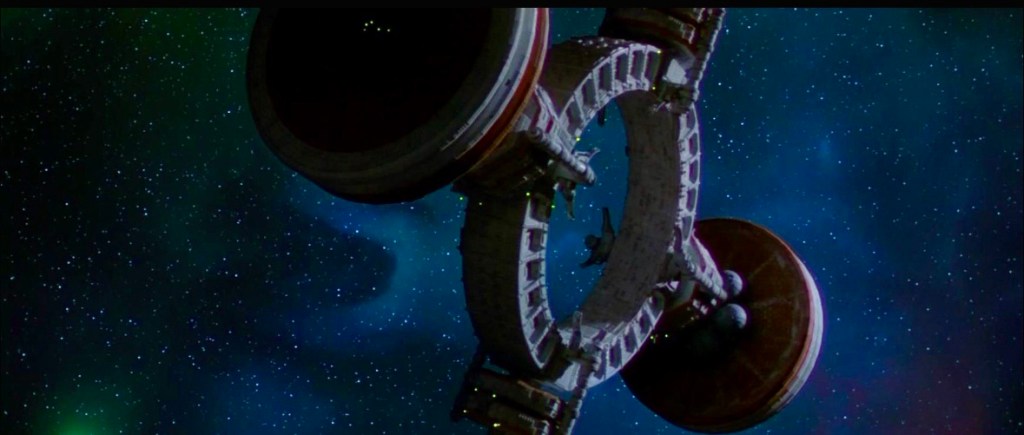
The central metaphor remains potent: if a human and alien can overcome generations of hatred to form a family bond, what excuse do we humans have for our persistent divisions? It’s not subtle messaging, but it’s delivered with such conviction that it largely works.
Final Verdict: 3.5/5 ⭐️
“Enemy Mine” remains a flawed but affecting piece of science fiction cinema. Its ambitious themes, committed performances, and imaginative world-building compensate for its structural inconsistencies and occasional heavy-handedness. While not quite achieving the masterpiece status of contemporaries like “Blade Runner” or “Aliens,” it offers something different—a more intimate, character-focused exploration of otherness.
Coda
Watching it again after nearly four decades, I appreciate how it stands apart from today’s franchise-focused sci-fi spectacles. “Enemy Mine” is content to tell a single, complete story about two beings learning to see beyond difference. In that sense, it feels almost radical in 2025—a modest film with immodest ambitions about the human (and alien) capacity for growth and connection.
For fans of thoughtful science fiction that prioritizes character over spectacle, “Enemy Mine” remains well worth discovering—or rediscovering.
Discover more from Fear Planet
Subscribe to get the latest posts sent to your email.
