
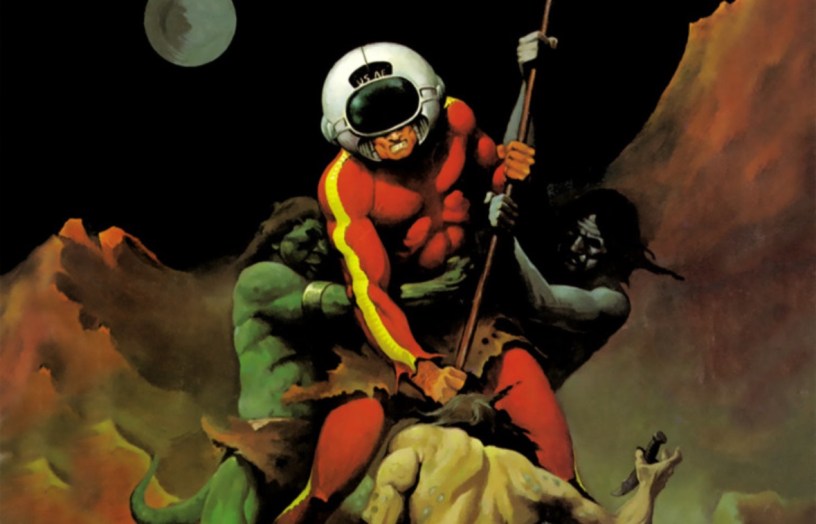
I’ve got to come clean about something, Fear Planet denizens – I’ve always harbored an intense fascination with fictional bounty hunters. There’s something magnetic about these moral outliers operating in shadowy territories between justice and revenge. Johnny Alpha/Strontium Dog (my favorite) with his mutant Alpha eyes, the permanently scarred Jonah Hex bringing his particular brand of frontier retribution, Sam Slade solving cases with cynical wit in a future overrun by mechanical miscreants…
But Hunter from Eerie Magazine? He’s in a category all his own – a category situated somewhere between horror and SF, a place we affectionately refer to as The Weird.
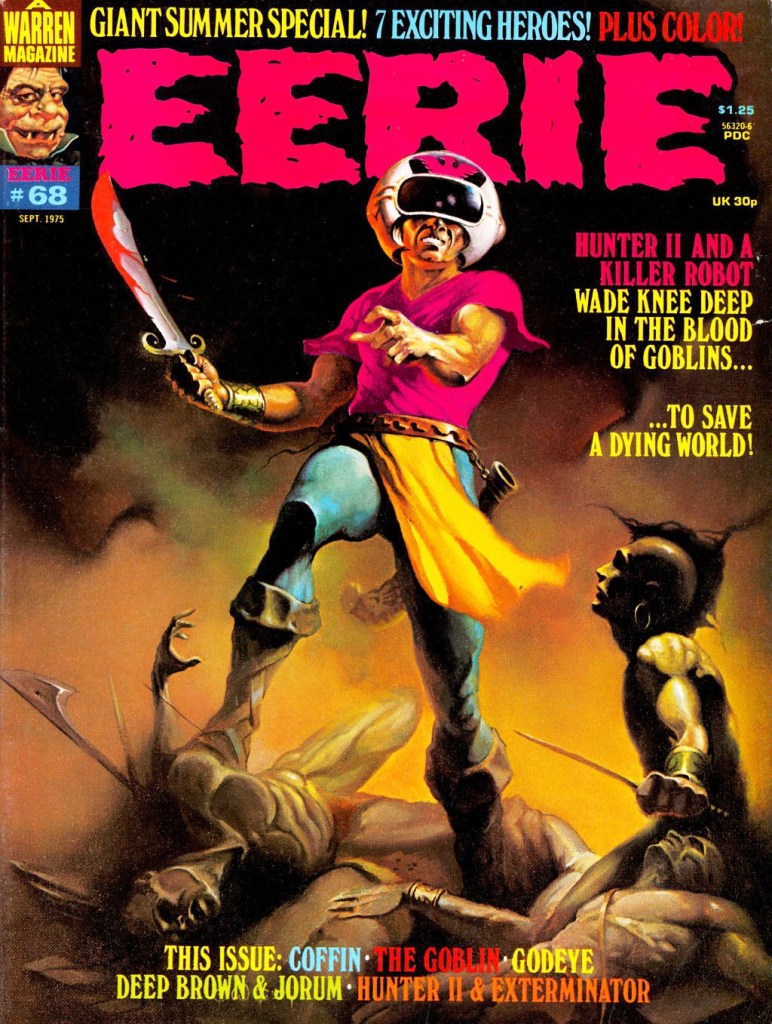
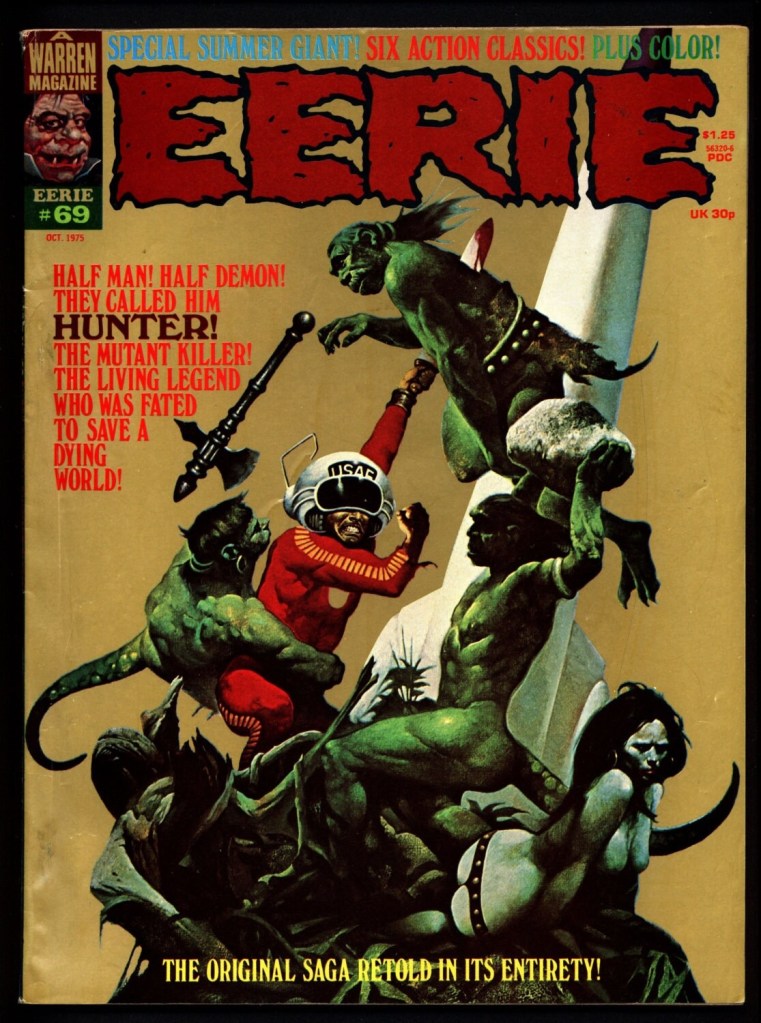
If you were thumbing through Warren magazines in the 1970s, you might have stumbled across this copper-skinned, slit-eyed warrior in the black-and-white pages of Eerie. For me, discovering Hunter felt like uncovering a secret transmission from a parallel comics universe – one where storytelling conventions were demolished and rebuilt from radioactive dust.
THE HYBRID AVENGER
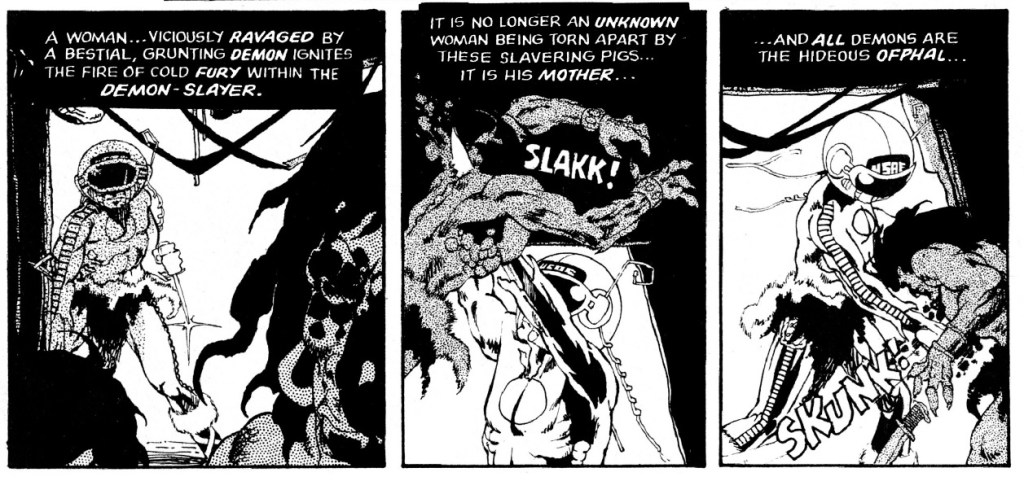
First appearing in Eerie #52 (November 1973), Hunter emerged during Warren’s transition from standalone horror tales to serialized narratives. Born from the violent union between mutant general Ophal and a human woman, Hunter existed as neither fully human nor fully “demon” (Warren’s term for post-nuclear mutants). His copper skin and distinctive slit-gold eyes marked him as perpetual outsider.
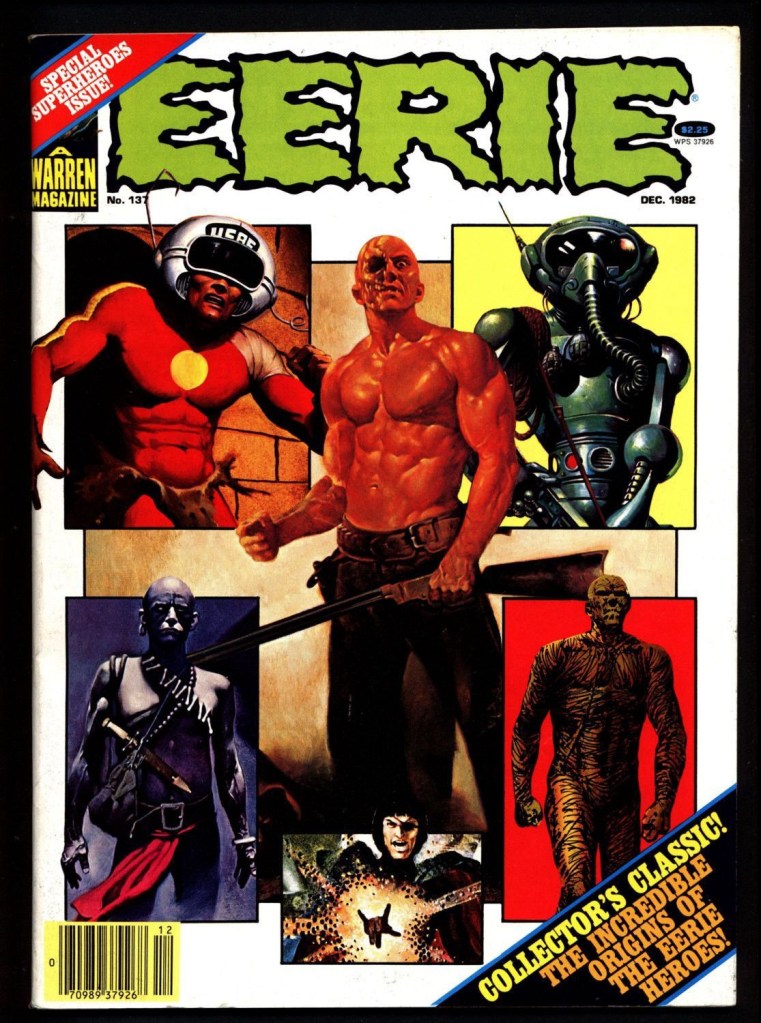
This wasn’t just another post-apocalyptic warrior – this character’s very DNA embodied the Cold War anxieties of the era. Hunter represented the literal fallout of human conflict, protecting settlements that would never fully accept him while hunting the mutant general responsible for his existence.
NEARY’S VISUAL LANGUAGE
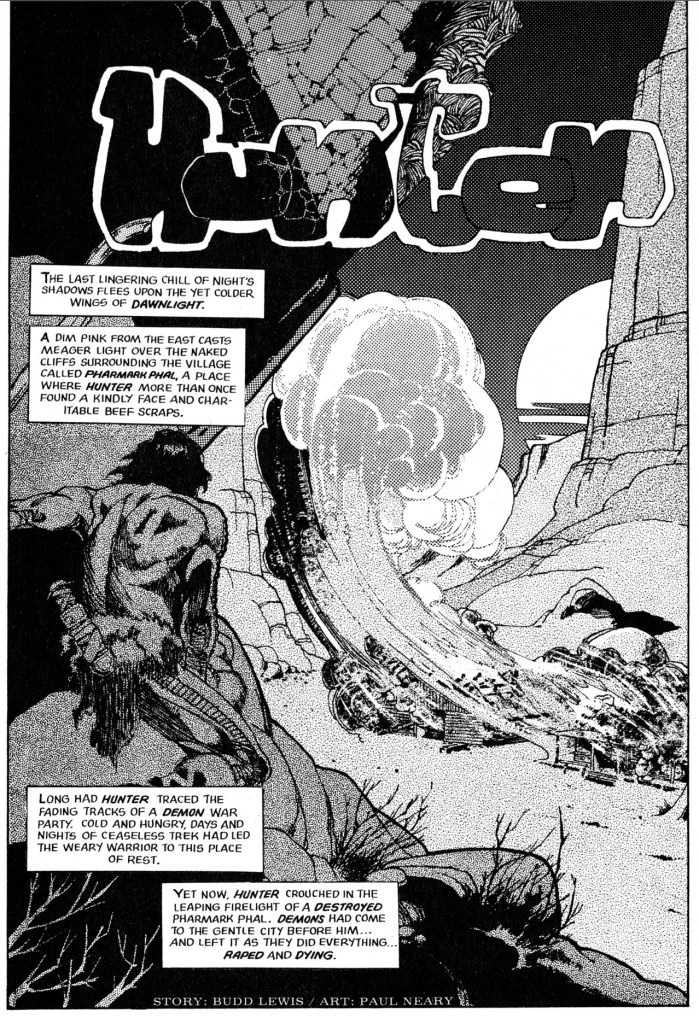
Paul Neary’s artwork created Hunter’s world through ornate, highly stylized illustration that transformed desolation into dark poetry. Those intensely detailed black-and-white pages captured apocalyptic America with a visual density that rewarded close examination.
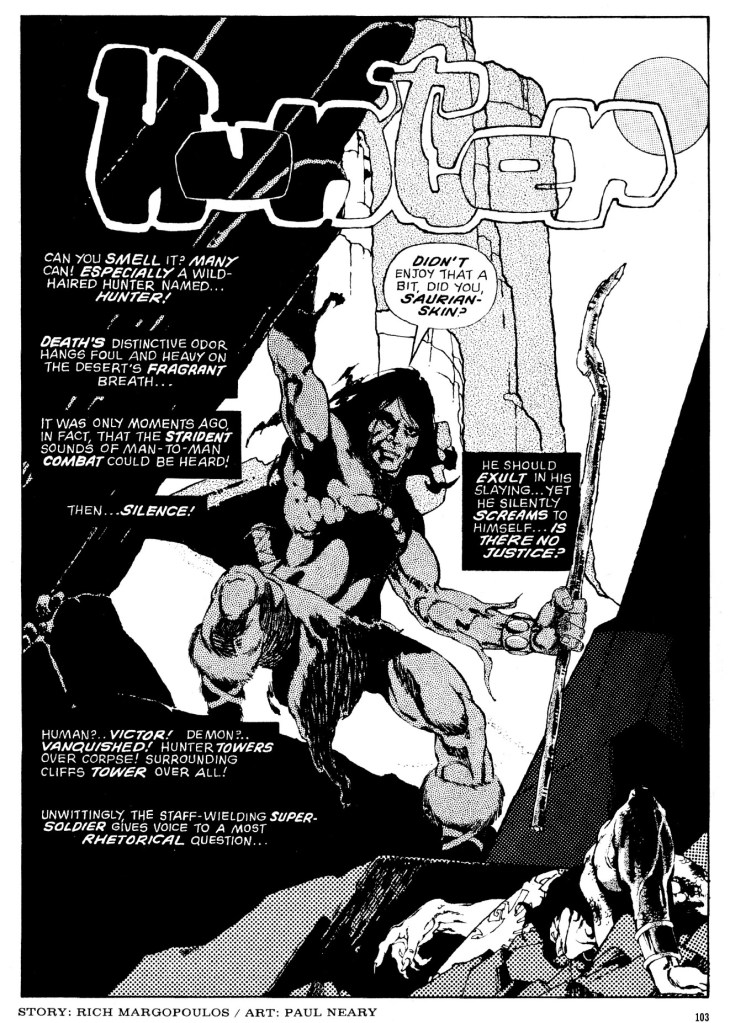
Neary understood something fundamental about comic storytelling – that facial expressions can convey more than dialogue ever could. The way he rendered Hunter’s slit-gold eyes communicated volumes about the character’s isolation without requiring exposition. A glance could contain multitudes.
WARREN’S CONNECTED UNIVERSE
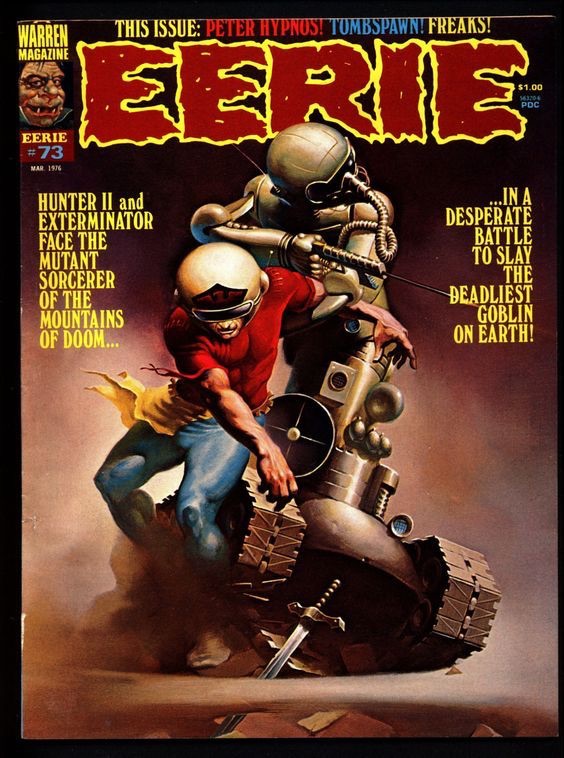
Hunter occupied the “Hunter Timeline” within Warren’s interconnected universe, linking to series like “Schreck” and “Darklon the Mystic” long before shared comic worlds became industry standard. His popularity secured him position as Warren’s fourth most popular character behind only Vampirella, the Rook, and Pantha.
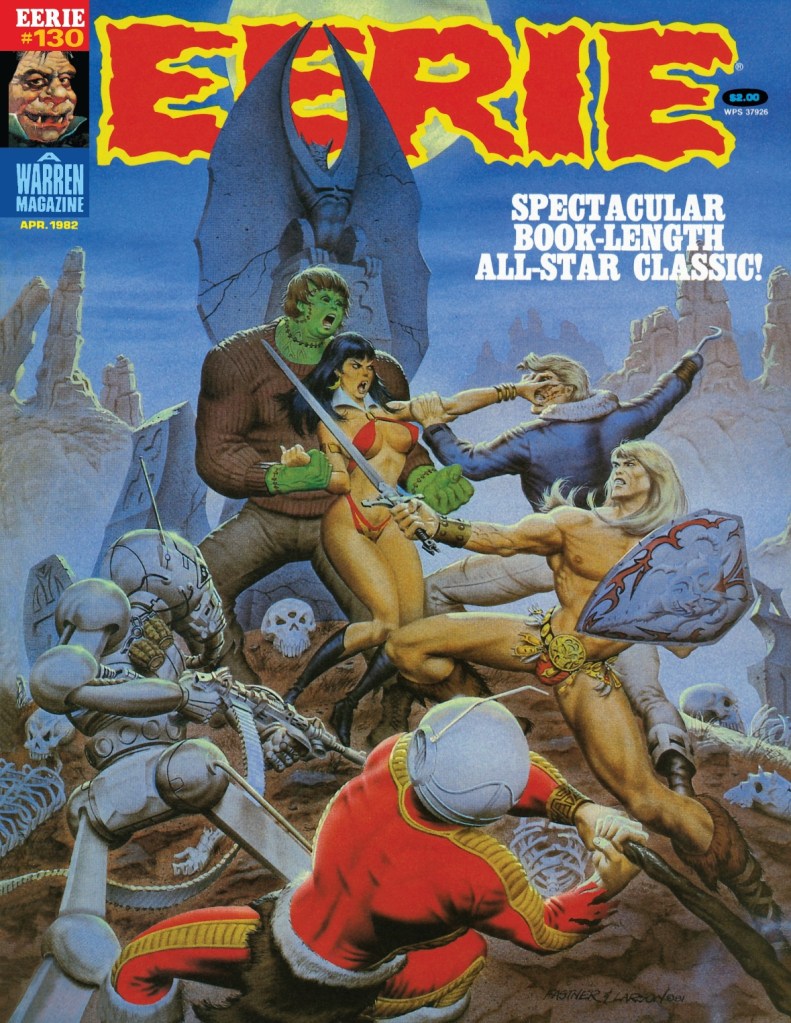
This culminated in Eerie #130 (April 1982) with Hunter joining a major character crossover – Warren’s version of an Avengers team-up, if those Avengers operated in a radiation-soaked hellscape.
BEYOND THE MAINSTREAM
Hunter never promised restoration or redemption – he simply existed in a broken world, dealing with the consequences of humanity’s failures. His half-breed status rejected simplistic tribal affiliations, forcing readers to question binary thinking decades before such themes became common in mainstream fiction.
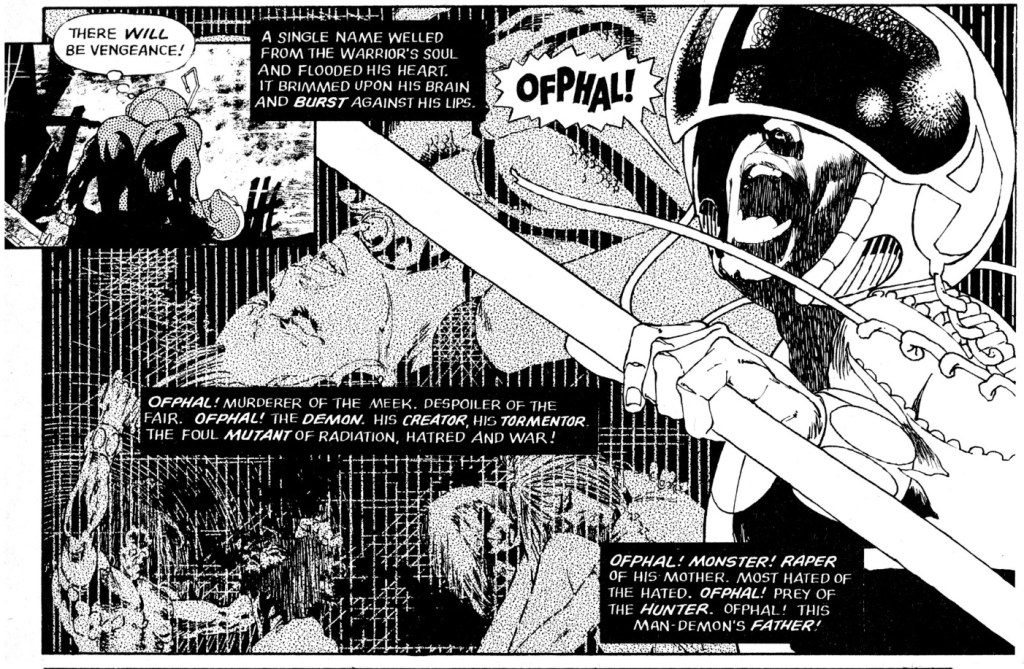
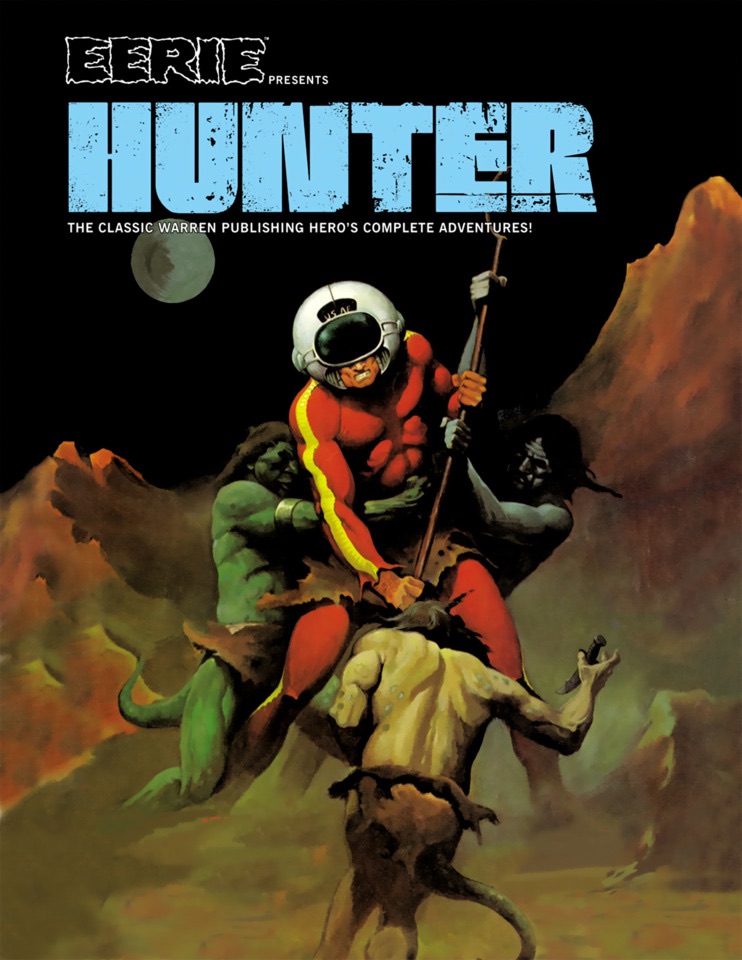
For years, collecting Hunter’s complete saga required tracking down individual Eerie issues – until Dark Horse Comics published “Eerie Presents: Hunter” in 2012, collecting 15 stories in hardcover form. Reading them in sequence reveals a surprisingly cohesive narrative vision that was often obscured by their original serialized publication.
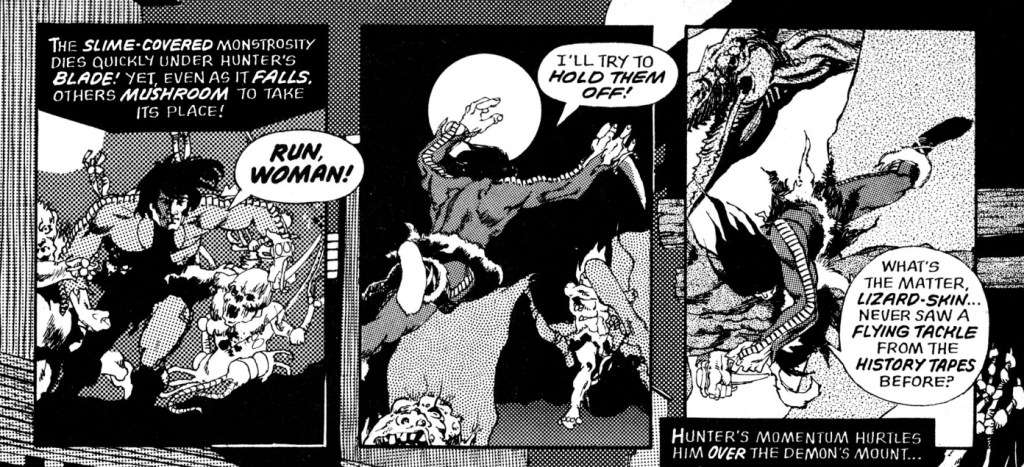
In the end, Hunter represents what comics can achieve when freed from commercial constraints and allowed to explore darker territories. In a medium often remembered for colorful caped crusaders, this black-and-white anti-hero proved that the industry’s most compelling innovations often emerge from its shadowy corners.
Hunter wasn’t just another post-apocalyptic warrior. He was the embodiment of an era’s anxieties, rendered in stark black and white, fighting through a wasteland that eerily mirrored our own darkest fears about where society might be headed. And for that reason, he’ll always remain one of my favorite Warren characters – a copper-skinned reminder of comics’ power to process cultural trauma through visual storytelling.
Discover more from Fear Planet
Subscribe to get the latest posts sent to your email.

Fantastic! Any chance you’ll do a write up on Coffin? He might have been the first weird western comic character.
LikeLike
I’ll definitely do Coffin! Thanks for the suggestion. Look for it soon!
LikeLike