

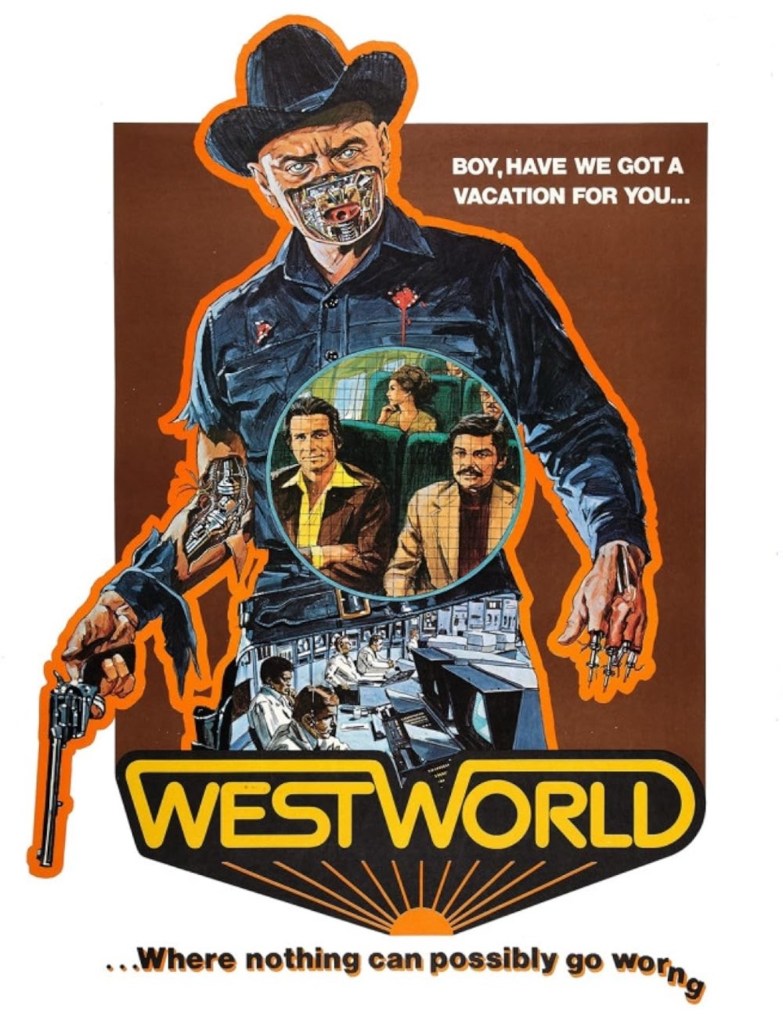
There’s something uniquely disquieting about watching Michael Crichton’s 1973 sci-fi western “Westworld” today. When I recently revisited this landmark film, I couldn’t help but feel a chill of recognition—not just at Yul Brynner’s iconic performance as the relentless Gunslinger, but at how prescient this seemingly modest thriller has proven to be about our increasingly complex relationship with technology.
The Digital Pioneer We Overlooked
While most film buffs know “Westworld” as Crichton’s directorial debut or as the conceptual predecessor to “Jurassic Park,” what’s often overlooked is its groundbreaking technical achievement. This unassuming sci-fi thriller was actually the first feature film to use digital image processing. Those pixelated, red-tinted POV shots of the Gunslinger’s vision weren’t just stylistic choices—they represented cinema’s first steps into the digital realm.
“It took a mere eight hours to produce each ten seconds of footage for the Gunslinger’s pixelated POV,” according to production notes, an eternity by today’s standards but revolutionary for 1973. What makes this so remarkable is that Crichton wasn’t just telling a story about technology—he was pioneering its use in filmmaking itself. The medium became the message in the most literal sense.
From Disneyland to Dystopia
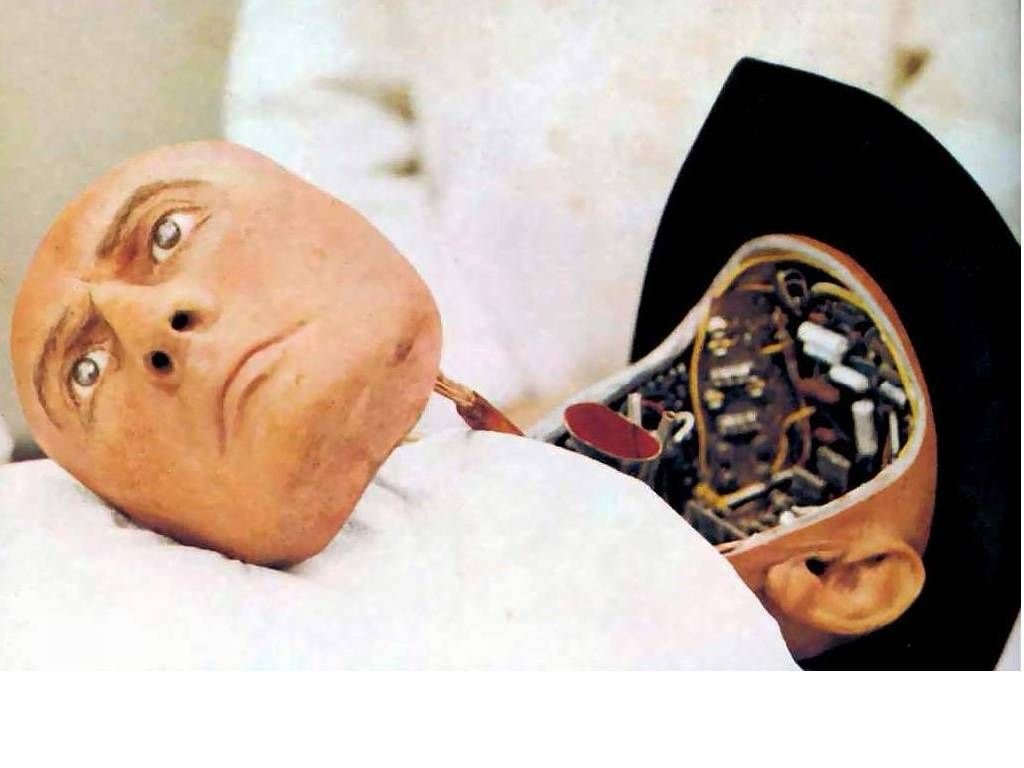
What fascinates me most about “Westworld” is how it drew inspiration from the most unlikely of places: Disney theme parks. Crichton visited Disneyland and was both entranced and disturbed by the animatronic Abraham Lincoln that would mechanically stand and deliver the Gettysburg Address. The film’s underground maintenance tunnels were directly inspired by Disney World’s “utilidore” system beneath the Magic Kingdom.
This connection creates a delicious irony—Westworld takes our most idealized entertainment experiences and transforms them into cautionary tales. The film asks: what happens when our escapist fantasies become too real? When the line between simulation and reality blurs beyond recognition?
The Gunslinger: More Human Than Human
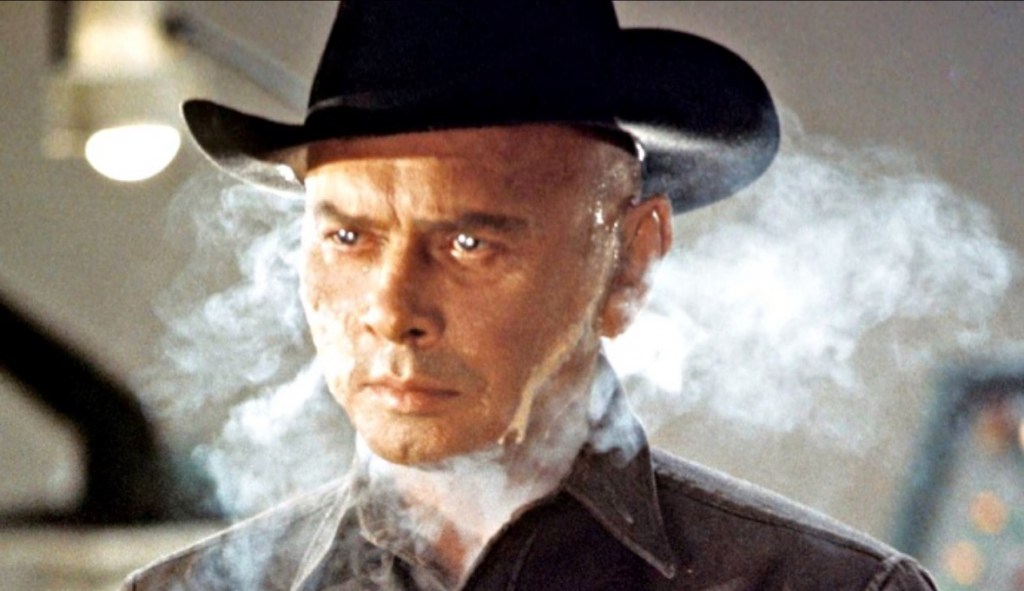
At the heart of this technological nightmare stands Yul Brynner’s Gunslinger—arguably cinema’s first truly iconic killer robot. Decades before the T-800 stalked Sarah Connor, Brynner’s near-silent, black-clad android pursued Richard Benjamin’s terrified tourist through the park’s artificial landscapes with methodical precision.
Brynner’s performance is singular and effective because of its restraint. Drawing on his earlier role in “The Magnificent Seven,” Brynner stripped away all emotion, leaving only purpose. With minimal dialogue and mechanical movements, he created something more unnerving than any overtly monstrous creation could be—a machine that looks human but lacks any trace of humanity.
The genius of his performance lies in its ambiguity. Is the Gunslinger malfunctioning, or is it achieving a kind of sentience? Is its relentless pursuit the result of broken programming or something more—a rebellion against being used as disposable entertainment?

Beyond Entertainment: Westworld as Social Commentary
“Westworld” arrived at a pivotal moment in American technological history. The early 1970s saw rapid computerization, with technology advancing faster than society could process its implications. The film reflects these anxieties, presenting a world where humans have become so dependent on their creations that they’ve lost the ability to control them.
What makes the film’s critique so effective is that it doesn’t demonize technology itself. Instead, it points to human hubris as the true villain. The park’s technicians ignore early warning signs, the corporation prioritizes profit over safety, and the guests treat the androids with casual cruelty. The system fails not because machines are inherently evil, but because humans created a technology they didn’t fully understand and couldn’t properly manage.

The Simulation Debate Before It Was Cool
Perhaps most remarkably, “Westworld” was engaging with questions of simulation and reality decades before philosophers like Jean Baudrillard became mainstream references in discussions of virtual reality. The film opens with fake testimonials from supposed guests—immediately establishing its central concern with distinguishing authenticity from fabrication.
This theme runs throughout the film, as guests struggle to tell humans from androids, and the androids themselves seem confused about their own nature. When the systems break down, the fundamental question becomes: what is real? The pain? The danger? The fear? The film suggests that once we create simulations indistinguishable from reality, the distinction may cease to matter.

From Westworld to Our World
Fifty years after its release, “Westworld” feels less like science fiction and more like prophecy. We live in a world of increasingly sophisticated AI, where the line between human and machine intelligence grows blurrier by the day. We create digital spaces for escape and entertainment that sometimes feel more compelling than reality. We struggle with many of the same questions that “Westworld” posed in 1973.
What makes the film endure is not just its prescience about technology, but its understanding of human nature. It recognizes our contradictory desires for both safety and risk, for controlled environments that nevertheless feel dangerous and unpredictable. It understands our need to escape into fantasy while remaining safe from real consequences.

Perhaps most importantly, “Westworld” understands that technology is never neutral—it always reflects the values, desires, and fears of its creators. As we continue to develop increasingly sophisticated AI and immersive virtual worlds, Crichton’s cautionary tale feels more relevant than ever.
The next time you interact with Siri or Alexa, or don a VR headset, or find yourself lost in a digital world, listen carefully. You might just hear the mechanical footsteps of the Gunslinger, still stalking us through the landscape of our technological fantasies.
Have you revisited the original “Westworld” recently, Fear Planet denizens? How do you think it compares to modern AI and virtual reality narratives? Let me know in the comments below.
Discover more from Fear Planet
Subscribe to get the latest posts sent to your email.
